Families across central Nigeria are literally turning their compounds into small mine sites, digging narrow shafts in their backyards to search for tin, columbite and related minerals that once powered the country’s early mining boom.
Where this is happening
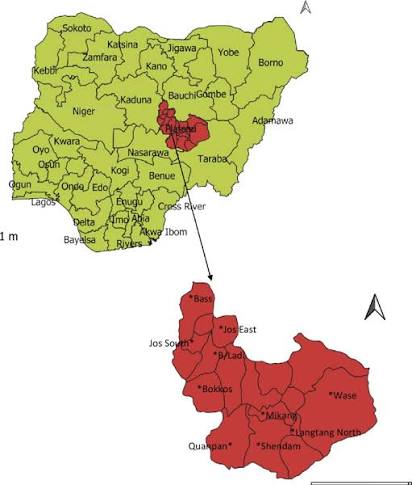
The new wave of backyard mining is most visible in Plateau State, particularly around the Jos Plateau and surrounding communities where tin and columbite have been mined for over a century.[1][4][5] Reuters and other outlets specifically locate many of the backyard pits in central Plateau communities, where families now sink shafts a few metres from their homes instead of travelling to distant mine fields.[1][6][3]
Geologically, these communities sit in Nigeria’s north‑central “tin belt,” stretching across Plateau into neighbouring Nasarawa and parts of Bauchi, which still host significant but largely untapped deposits of cassiterite (tin ore) and columbite.[4][7][5] Historically, British and Nigerian companies held leases across the Jos Plateau and into present‑day Nasarawa and Adamawa, leaving behind abandoned pits and spoil heaps that artisanal miners and now local families are returning to as poverty deepens.[7][8][5]
In simple map terms, the core of this activity lies in the Middle Belt, roughly east of Abuja: around Jos and Bukuru in Plateau State, spreading into nearby rural districts that sit atop the same mineralised granitic bedrock.[4][7][9] Contemporary mineral resource maps from the Nigerian Geological Survey show Plateau as a hotspot for tin and columbite, with additional occurrences marked in Bauchi and Kaduna States to the north and northeast, forming an arc of tin‑columbite mineralisation across central Nigeria.
Main minerals being dug up
The primary target for these backyard miners is cassiterite, the main ore of tin, which has long been extracted on the Jos Plateau and remains valuable for use in solder, electronics and various alloys. Closely associated with cassiterite in the same pegmatite and granite formations is columbite, a niobium‑bearing mineral that, along with tantalite, feeds the global market for niobium and tantalum used in capacitors and high‑strength steels.
In some central Nigerian locations, families and artisanal miners also encounter monazite and other heavy minerals alongside tin and columbite, reflecting the complex mineral mix of the plateau gravels and weathered granites.[12][7] Beyond Plateau, mineral inventories list columbite and tin in adjacent states like Bauchi and Kaduna, with related minerals such as wolframite and tantalite indicating a broader rare‑metal province that backyard miners are only scratching at on a very small scale.
The shift from organised mine fields to backyards is driven by a harsh livelihood calculus: with little formal employment, families gamble on narrow, hand‑dug shafts beneath their houses, sometimes 20 metres or more deep, for modest weekly earnings that can cover school fees or fertilizer but come with serious safety and environmental risks.
🇳🇬 “Digging Under Our Homes”: Backyard Tin And Columbite Mining Sweeps Central Nigeria
Leave a Reply