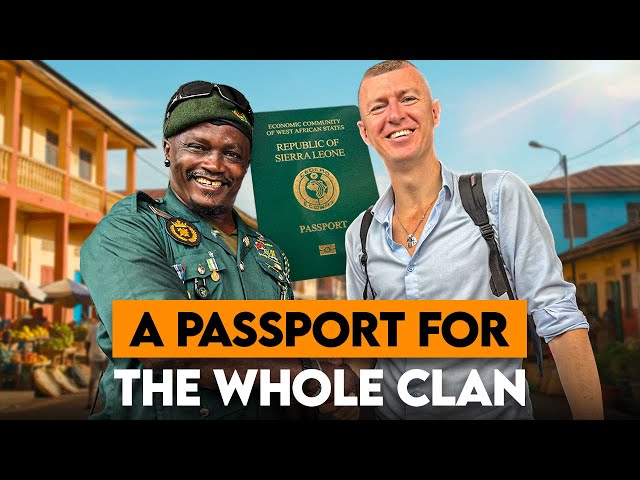
Sierra Leone’s evolving citizenship program is doing more than issuing passports; it is quietly building a platform for rehabilitation, shelter, and education that ties the African diaspora to concrete social projects on the ground.[1][2][3]
Reconnecting the Diaspora through Citizenship
Sierra Leone is one of the few African countries that offers citizenship to members of the African diaspora who can prove ancestral ties through DNA testing.[1][2][4][5] Since the first conferment ceremony in 2019, more than 250 African‑descendant applicants from the United States, the Caribbean, and elsewhere have received Sierra Leonean citizenship and passports.[2][6][7]
The program is coordinated primarily by the Ministry of Tourism and Cultural Affairs and the Monuments and Relics Commission, in partnership with AfricanAncestry.com and approved local tour operators.[2][4][5] Applicants are required to spend at least 10 days in the country, participate in guided heritage tours, and engage with local communities, anchoring citizenship in lived experience rather than paperwork alone.[2][5]
New Pathways: GO‑FOR‑GOLD and Special Naturalisation
Beyond ancestry‑based citizenship, Sierra Leone has introduced the GO‑FOR‑GOLD program, a fast‑track route that links residency, investment, and facilitated naturalisation.[8][9][3] Under recent reforms, qualifying investors can obtain permanent residency and then citizenship within roughly 60–90 days, with clear due‑diligence checks and defined investment thresholds.[8][9][3]
These changes are codified under the planned Citizenship Special Naturalization Regulation 2025, which will formally allow offshore processing, automatic residency waivers for investors, and interim identity documents while final approval is pending.[3] Officials and program architects describe the reformed framework as inclusive and culturally sensitive, designed to accommodate diverse African and diaspora family structures often overlooked by Western‑style investment schemes.[9][3]
Rehabilitation: Healing People and Communities
While the citizenship framework itself focuses on legal status, it is closely linked to broader national recovery and social rehabilitation efforts built up since the civil war.[10][11] Disarmament, demobilization and reintegration programs in Sierra Leone have long emphasized helping ex‑combatants and war‑affected youth re‑enter civilian life through vocational training, psychosocial support, and community‑based reintegration.[10][11]
In recent years, the Ministry of Social Welfare and partner organizations have expanded rehabilitation work to new vulnerable groups, including drug‑addicted youth, with structured programs that combine detoxification, counselling, and pathways back into school or vocational training.[10][12] Some beneficiaries of these rehabilitation efforts have successfully returned to secondary school and university, demonstrating how social policy is turning broken lives into people who can participate in and benefit from national programs, including diaspora‑supported initiatives.[10][12]
Shelter and Education: Building a Livable Future
Post‑war recovery and citizenship‑linked engagement both feed into Sierra Leone’s long‑term agenda to rebuild infrastructure for shelter and learning.[10][11] Recovery strategies have directed resources into rehabilitating schools, restoring basic services, and supporting community‑level projects that repair or expand educational facilities in conflict‑affected districts.
Diaspora citizenship and investment programs are increasingly framed as tools to reinforce these efforts by channelling capital and expertise into housing, hospitality, and community‑scale real estate.[2][9][3] Heritage tourism packages often include visits to historic sites and local communities, creating opportunities for new citizens to fund classroom rehabilitation, sponsor scholarships, or invest in dormitories and safe hostels for students and low‑income families.[2][3][5]
For children and youth whose schooling was disrupted by war or poverty, transitional education and reintegration programs help them move back into mainstream education or apprenticeships.[10] Schools that welcome vulnerable children, including demobilized minors, can receive teaching materials, educational supplies, and sometimes infrastructure support, tightening the link between social rehabilitation and educational renewal.
A Citizenship Model Tied to Responsibility
What makes Sierra Leone’s citizenship approach stand out in Africa is that it links status with responsibility: the right to belong is tied to the duty to rebuild. For the diaspora, that means that acquiring a passport comes with an invitation to invest in shelters, classrooms, and rehabilitation programs that touch real lives, not just balance sheets.
If the government continues to align its diaspora citizenship, GO‑FOR‑GOLD, and social‑sector strategies, Sierra Leone could solidify a model where new citizens help finance and shape projects in rehabilitation, shelter, and education—turning a legal process into a long‑term partnership for national recovery.
Leave a Reply