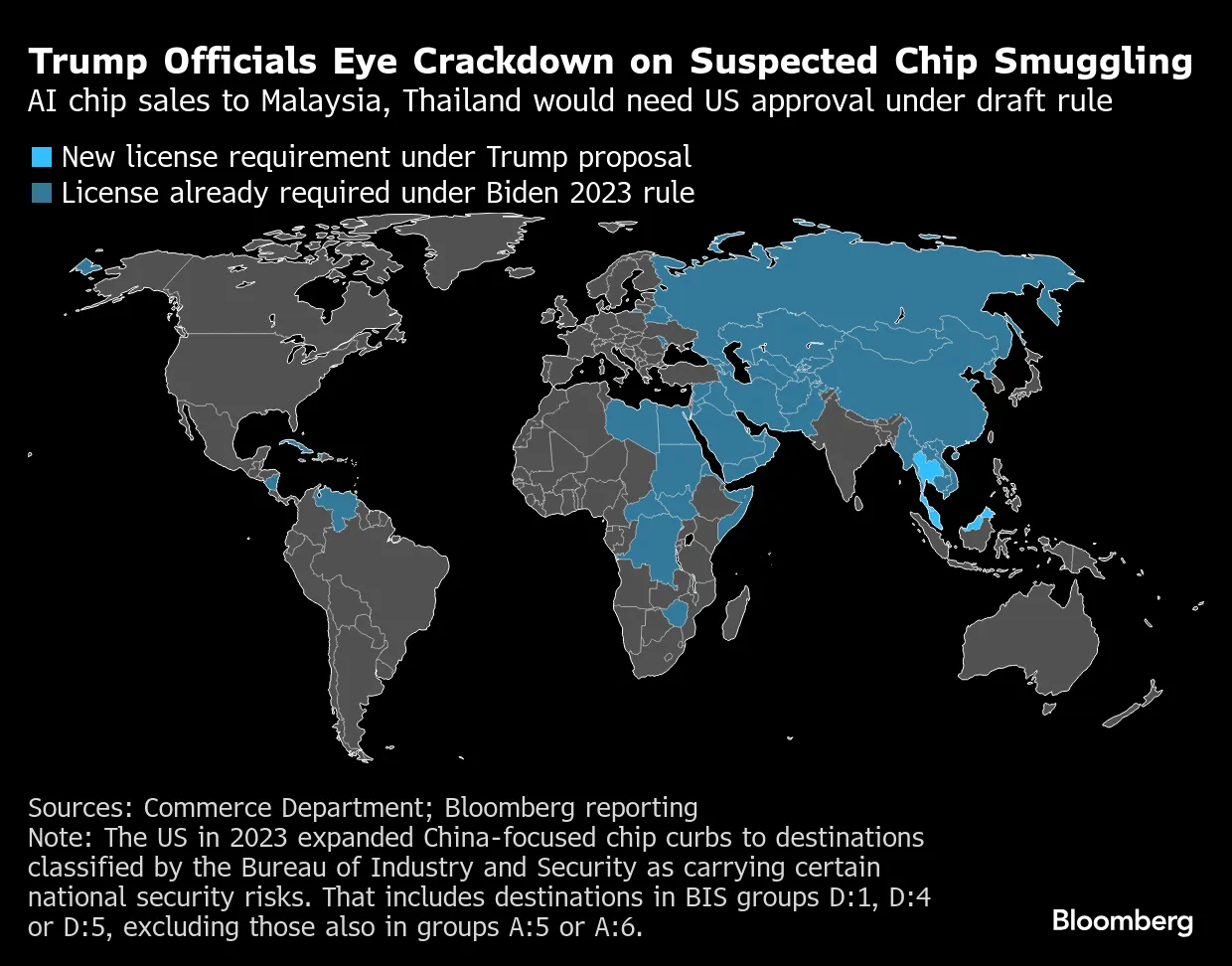
Federal authorities in the United States have unveiled a major international operation, arresting several individuals implicated in a complex scheme to illegally export advanced artificial intelligence (AI) technology. The operation, which investigators describe as “widespread,” has identified links to China, reigniting global debates about tech sovereignty, innovation access, and the geopolitical race for AI supremacy—a conversation with profound implications for the African continent.
According to a joint statement from the U.S. Department of Justice and Department of Commerce, the network allegedly used shell companies and false documentation to procure and ship restricted AI chips and related manufacturing equipment from the U.S. to China, bypassing stringent export controls enacted to maintain a competitive edge. These controls are designed to prevent cutting-edge dual-use technology, with both civilian and military applications, from falling into the hands of geopolitical rivals.
“The defendants sought to accelerate China’s AI advancement by illegally acquiring the very building blocks of innovation that our laws protect,” stated a senior law enforcement official during a press briefing. “This is not merely a trade violation; it is a matter of national and economic security.”
The African Context: Sovereignty, Access, and a “Third Way”
For African observers, the case underscores a critical tension in the continent’s own digital transformation journey. As African nations increasingly harness AI for economic development, agriculture, healthcare, and governance, the question of who controls the underlying technology becomes paramount.
The U.S.-China tech cold war, exemplified by this crackdown, presents both a challenge and a cautionary tale. On one hand, restrictive export controls can limit access to the latest hardware for African researchers and startups, potentially widening the digital divide. On the other, it highlights the risks of over-reliance on any single external tech ecosystem for critical infrastructure.
“Africa’s AI future must be built on strategic autonomy,” commented Dr. Naledi Kgosi, a tech policy analyst based in Accra. “This news is a stark reminder. We cannot afford to be mere consumers or battlegrounds in a proxy tech war. Our focus must be on developing local capacity, regulating data ethically, and fostering partnerships that transfer genuine skills and ownership, not just hardware.”
The case also brings into focus the deepening strategic partnerships between China and numerous African nations under initiatives like the Belt and Road, which often include significant digital and surveillance technology components. Analysts suggest this arrest will intensify scrutiny on the flow of such technologies and the data they manage.
The Path Forward
As the legal proceedings unfold in the United States, the ripple effects will be felt in boardrooms and government chambers worldwide. For Africa, the incident reinforces the urgent need for:
- Clear Continental Tech Governance: Strengthening frameworks like the African Union’s Digital Transformation Strategy to ensure technology imports align with ethical standards and development goals.
- Investment in Homegrown R&D: Prioritizing education, open-source collaborations, and investment in continental semiconductor and computing initiatives.
- Diversified Partnerships: Engaging with a multitude of global players to avoid vendor lock-in and ensure competitive, equitable access to technology.
The arrests mark a significant escalation in the enforcement of tech export controls. While the immediate drama plays out in courtrooms abroad, the long-term narrative will be written in how Africa navigates the increasingly fractured global tech landscape to secure its own prosperous and sovereign digital future.
Leave a Reply