
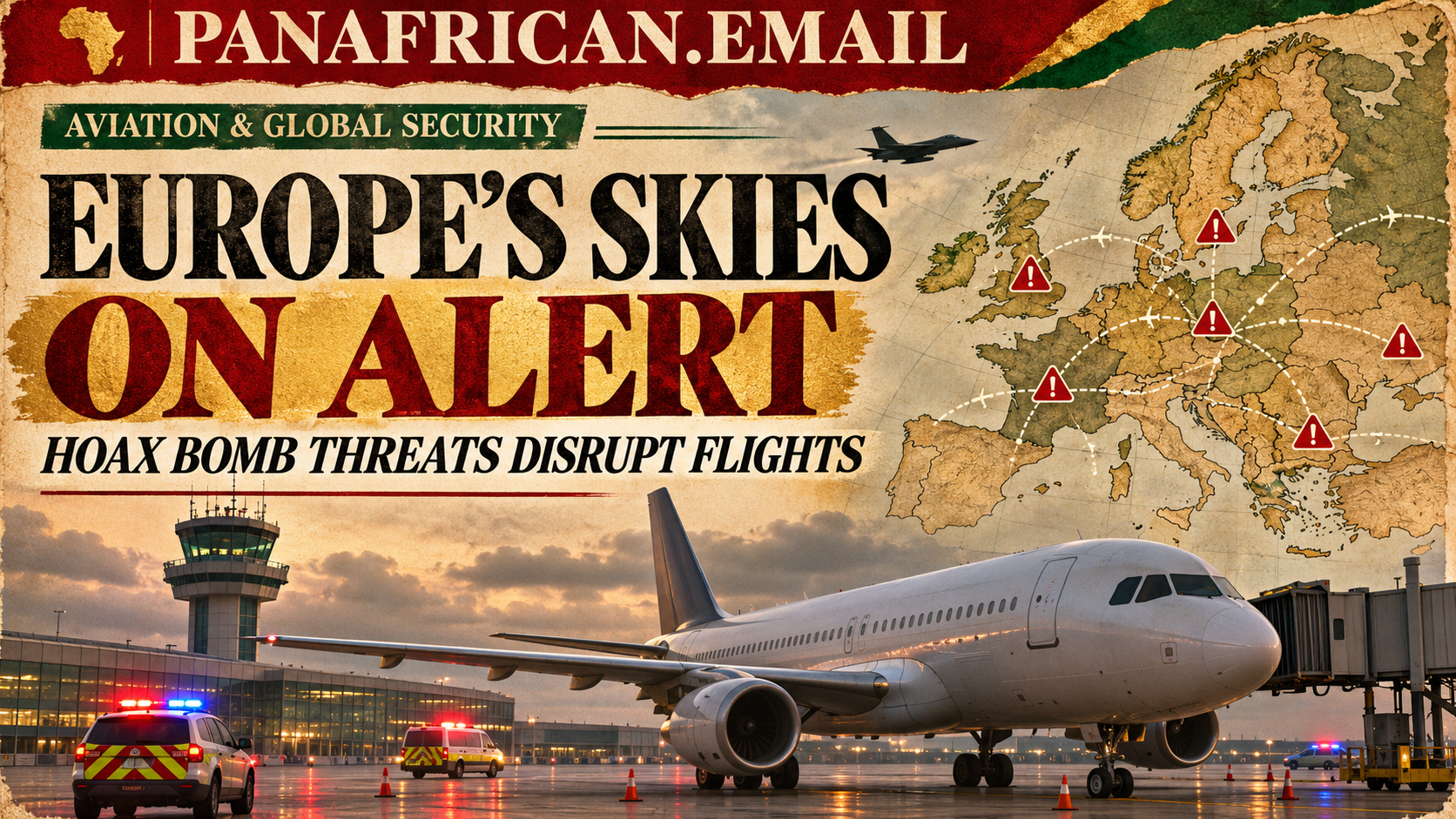
Bomb Threats Disrupt European Flights: What African Travellers Need to Know
Diversions, aircraft searches and military escorts expose the disruptive power of hoax alerts—and raise questions about how international aviation should respond.
A wave of bomb threats against passenger aircraft has disrupted European air travel, forcing security inspections and unplanned landings across several countries. Reuters reported that at least 27 flights were affected on 5 November alone, following earlier alerts that week. For passengers on the targeted services, the consequences were immediate: uncertainty, interrupted journeys and intensive security checks. [1]
The central distinction is that these were reported threats, rather than confirmed bomb attacks. Associated Press reporting on 7 November said searches had found no suspicious items and no injuries had been reported in the incidents it covered. Investigators had not established who was responsible or whether all the alerts were connected. [2]
Watch: the report shown in the supplied screenshot
What happened across Europe?
Airlines responded differently depending on the flight and the assessment of the threat. An Aer Lingus service from Dublin to Rome was diverted to France’s Évreux military air base. Italian fighter aircraft escorted a Finnair flight from Helsinki to Rome. Three Ryanair services heading for Sofia were also affected, with one diverted to Plovdiv. These examples illustrate how a warning received electronically can rapidly become a cross-border aviation response. [3]
| Date | Development | Reported result |
|---|---|---|
| 3 November | Several European flights received threats, including a LOT service from Heathrow to Warsaw. | The LOT aircraft diverted to Modlin; searches and diversions affected other services. [6] |
| 5 November | Reuters reported at least 27 affected passenger flights across Europe. | Some aircraft diverted; others received military escorts or inspections. [1] |
| 7 November | AP reviewed the week’s incidents. | No suspicious items or injuries reported in the cases covered; responsibility unresolved. [2] |
| 12 November | Wizz Air’s chief executive called for stronger European coordination. | Reuters reported 14 Wizz Air flights had received hoax alerts the previous week; two diverted. [4] |
Those figures describe different reporting periods and overlapping sets of flights. They should not be added together as a single total.
Hybrid warfare: a concern, not a proven attribution
The concentration of threats has fuelled questions about coordinated disruption. AP reported several possibilities raised by specialists, including copycats, repeated threats from an individual or group, and state-linked activity. Its 7 November account said authorities had not attributed the airline threats to a government or organisation. A suspicious pattern alone cannot identify a perpetrator. [2]
European Union transport commissioner Apostolos Tzitzikostas said on 5 November that investigations were continuing and an aviation-security information-sharing mechanism had been activated. [3]
The broader concern is now shaping industry policy. On 12 November, airport association ACI EUROPE released a strategy addressing hybrid threats and airport resilience. It called for faster intelligence sharing, clearer responsibilities, stronger cooperation and dedicated funding. Its argument extends beyond preventing physical damage: repeated disruption can consume resources and undermine public confidence. [7]
Why African passengers and businesses should pay attention
Panafrican.email analysis: For an African traveller connecting through Europe, a disruption on one leg can create difficulties far beyond the airport where it occurs. A missed onward departure may complicate a work trip, family visit or time-sensitive appointment. Travellers with transit-document restrictions may also have fewer practical alternatives when a journey changes unexpectedly.
The same network effect can matter for businesses. Delayed aircraft can affect cargo connections, while uncertainty can complicate delivery planning. These are potential consequences of disrupted connections; the reporting reviewed here does not establish a measured loss to African trade or show that African routes were specifically targeted.
African aviation authorities can also draw a practical lesson: secure communications, cooperation between agencies and clear passenger information belong alongside physical screening. A response needs to protect lives while helping the transport network recover.
The cost of an empty threat
On 12 November, Wizz Air chief executive József Váradi urged a more coordinated European security approach, Reuters reported. The carrier’s experience—14 threatened flights and two diversions in the preceding week—shows why airlines are pressing for collective action. [4]
A false warning can still produce a real operational burden. Aircraft inspections take time, passengers need updates, and interrupted journeys require attention. Yet the scale should remain in perspective: AP’s 7 November account said Europe’s air traffic authority characterised the overall disruption to aviation as minimal, despite the serious inconvenience on individual services. [2]
Practical steps for travellers
- Check your airline’s official flight-status page and messages before departure and during connections.
- If a service changes, ask the carrier about the onward itinerary and baggage arrangements.
- Keep booking references, essential medicines and travel documents accessible.
- Follow instructions from the crew and airport authorities; avoid circulating unverified threat messages.
- Retain notices and receipts if your journey is disrupted.
For African passengers, the priority is reliable information and a workable onward journey. For aviation authorities, it is a response that combines safety, coordination and public trust while investigators establish the facts.
Leave a Reply