
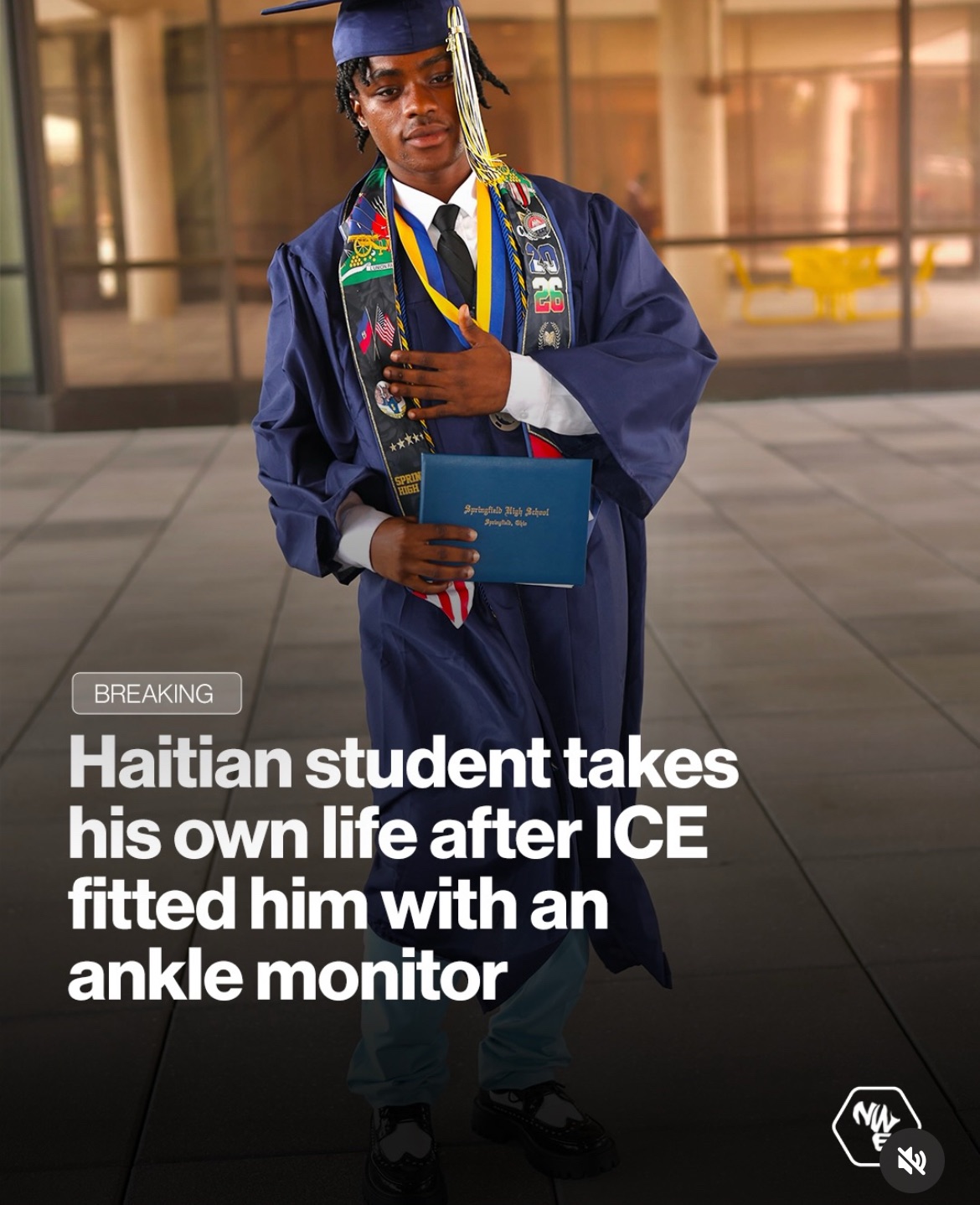
Springfield, Ohio — Pierre Damas Bel was only 20 years old, but he had already begun building a future around education, service and the pursuit of medicine.
A high-achieving graduate of high school in Springfield, Ohio, Bel had recently begun studying physiology and neuroscience at Wright State University, with aspirations of eventually becoming a doctor. His family and friends say he was focused on his education and the possibilities ahead of him.
That future was disrupted after Bel lost his Temporary Protected Status (TPS) and was placed under immigration enforcement supervision with an ICE ankle monitor. In an Instagram post, he described the shame and humiliation he experienced—feelings he said he had never imagined he would have to endure.
Days later, Bel died in circumstances his family believes were the result of suicide.
His death has brought renewed attention to the emotional and human consequences of immigration policies affecting Haitians living in the United States. His story comes amid changes to TPS protections that have placed hundreds of thousands of Haitians at risk of losing the temporary immigration protections they had relied upon.
According to estimates cited in reporting surrounding the policy changes, approximately 350,000 Haitians could be affected.
For Haitian communities across the United States, Bel’s story represents more than an immigration-policy debate. It is the story of a young person who was pursuing higher education and dreaming of becoming a physician, only to face profound uncertainty about his ability to remain in the country he called home.
The case has also raised questions about the psychological toll that immigration enforcement, legal uncertainty and the threat of losing protected status can have on young people and families.
Bel’s story is a reminder that behind immigration statistics are individuals with families, ambitions and futures—and that policy decisions can have consequences reaching far beyond courtrooms and government offices.
Pan African News will continue to follow developments affecting Haitian communities and the broader African and Caribbean diaspora in the United States.
Leave a Reply