
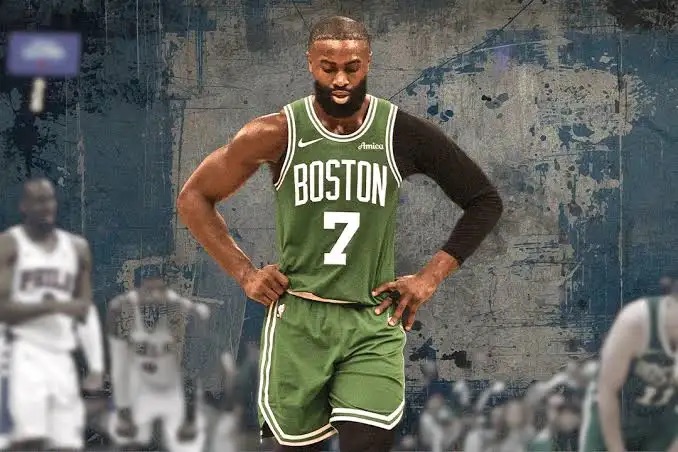
BOSTON — NBA star Jaylen Brown is challenging the next generation of athletes to take a harder look at the companies and institutions they choose to partner with, arguing that financial opportunities should not come at the expense of community investment and social responsibility.
Brown’s comments have renewed a broader conversation about the growing relationship between professional athletes, major corporations and the communities that helped shape their careers.
In remarks criticizing corporate influence in sports, Brown questioned whether some companies genuinely care about the neighborhoods and communities connected to the athletes they sponsor.
“They do not care about our communities. They just care about dollars.”
Athletes Are More Than Endorsements
For decades, professional sports have provided corporations with access to some of the world’s most recognizable personalities. Athletes routinely become ambassadors for banks, technology companies, apparel brands, beverage companies, financial institutions and entertainment businesses.
But Brown’s criticism reflects a growing belief among athletes that endorsement relationships should involve more than a paycheck.
For young athletes coming from historically underserved communities, corporate partnerships can represent an opportunity to redirect resources toward youth programs, education, entrepreneurship, recreation facilities and local businesses.
The question, Brown’s comments suggest, is whether athletes should demand measurable community benefits as part of those relationships.
The Pan-African Connection
Brown’s message also resonates with conversations taking place throughout Africa and the African diaspora.
Across Ghana, Nigeria, Liberia, South Africa, Kenya and other African countries, sports stars increasingly function as cultural and economic leaders. Footballers, basketball players, boxers, track athletes and entertainers often have influence that extends well beyond their professional careers.
African athletes are increasingly partnering with international brands while also establishing foundations, academies, clothing companies, investment ventures and charitable organizations in their home countries.
This creates an important opportunity: African sporting success can become a vehicle for community ownership and economic development.
Rather than simply becoming the face of a multinational corporation, an athlete can potentially use the visibility and capital generated through sports to build businesses and institutions that remain within the community.
From Endorsements to Ownership
Brown’s argument points toward a larger shift in the economics of professional sports.
An athlete who signs a traditional endorsement agreement receives compensation for promoting a product. An athlete who becomes an investor, business partner or owner can potentially participate in the long-term value created by that company.
That distinction is particularly important in African markets, where a rapidly expanding youth population and digital economy are creating opportunities in sportswear, media, entertainment, technology, tourism and financial services.
For Pan-African entrepreneurs, the model raises a powerful question: What happens when athletes stop being only brand ambassadors and become owners of the brands themselves?
Building Stronger Communities Through Sports
The impact of professional athletes can be particularly significant at the grassroots level.
A successful athlete can help finance basketball courts, football academies, scholarships, training centers, healthcare initiatives and entrepreneurship programs. They can also provide young people with mentorship and exposure to opportunities that may otherwise be inaccessible.
In Africa, where sports often serve as one of the strongest cultural connections between young people and global audiences, investments by successful athletes can have an enormous multiplier effect.
Brown’s comments therefore fit into a much larger debate about who benefits when corporations enter communities through sports and entertainment.
A New Generation of Athletes
The next generation of African and diaspora athletes is entering a sports economy that looks very different from previous generations.
Social media allows athletes to communicate directly with millions of supporters. Streaming platforms have created new distribution channels. Digital payments and e-commerce make it easier to build international businesses, while African creative industries continue attracting global investment.
With that influence comes greater negotiating power.
Athletes can ask potential sponsors questions that go beyond compensation:
How much will be invested in our communities?
Will local entrepreneurs benefit?
Are young people being given opportunities?
Does the partnership create ownership, jobs or infrastructure?
What happens after the sponsorship ends?
These questions could become increasingly important as African athletes and members of the global African diaspora negotiate their place within the international sports economy.
The Business of Black Culture
Brown’s remarks also highlight a long-running issue surrounding the commercialization of Black culture.
Sports, music, fashion and entertainment generate enormous revenues, while the communities that produce much of that cultural influence do not always capture a proportional share of the economic value.
The challenge for the next generation may therefore be not simply to secure larger endorsement deals, but to build ownership around their cultural influence.
From NBA arenas in the United States to football stadiums in Accra and Lagos, the opportunity exists to connect global sporting success with local economic development.
Beyond the Court
Jaylen Brown’s comments are ultimately about more than corporate sponsorships.
They raise questions about responsibility, ownership and the relationship between athletes and the communities from which they emerge.
For Pan-African communities, the message has particular relevance. Africa possesses extraordinary sporting and cultural talent, but converting that talent into lasting economic power requires investment in infrastructure, businesses, education and institutions.
The future of African sports may therefore depend not only on producing world-class athletes, but on producing athlete-entrepreneurs, investors and community builders capable of turning visibility into ownership.
Brown’s warning is a reminder that every partnership represents more than a transaction. For athletes with significant cultural influence, the companies they choose to support can help determine where money, attention and opportunity ultimately flow.
Leave a Reply