
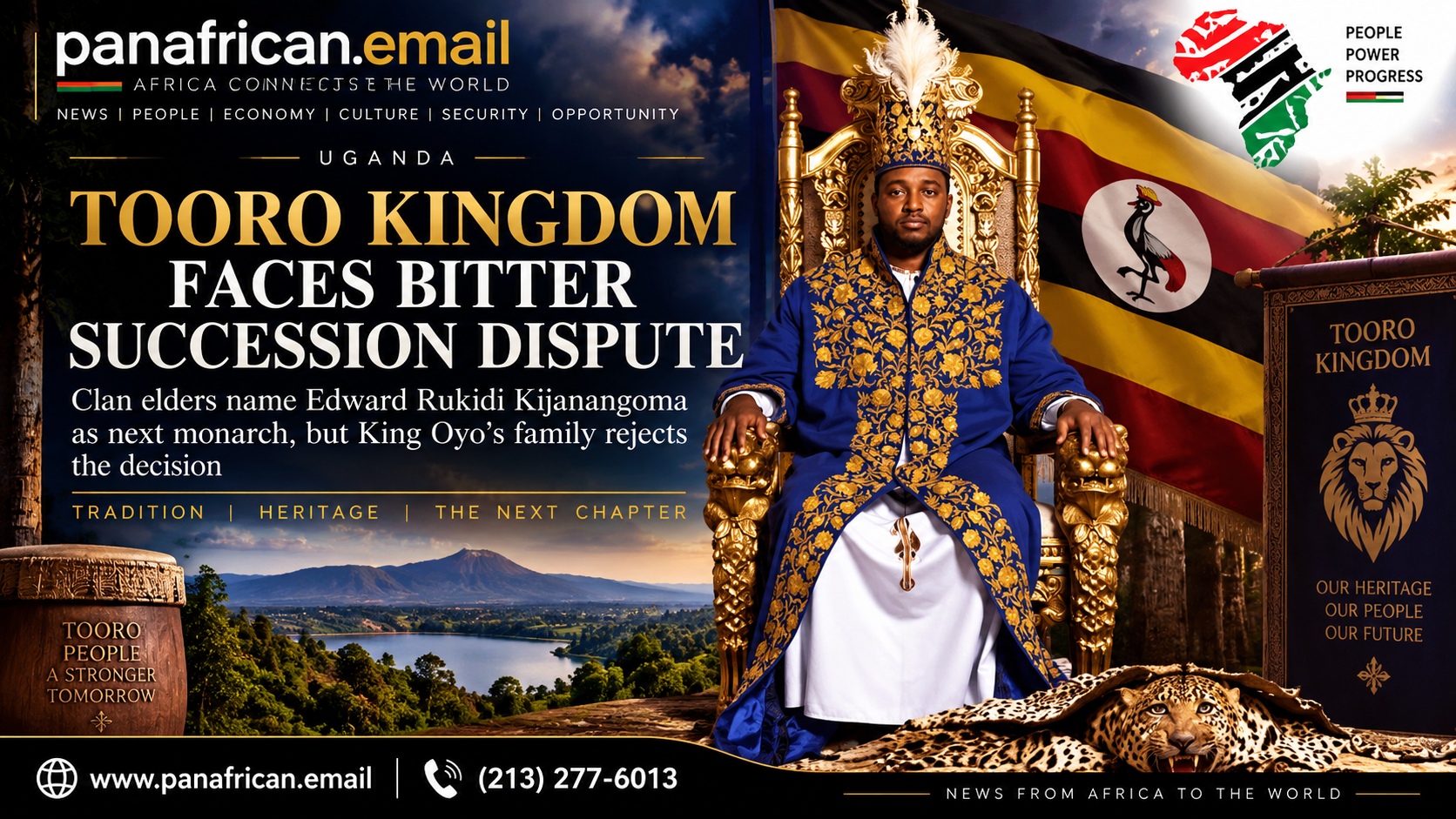
FORT PORTAL, Uganda — September 12, 2026 — A bitter succession dispute has emerged within one of Uganda’s most prominent traditional institutions following the death of King Oyo Nyimba Kabamba Iguru Rukidi IV, who had ruled the Tooro Kingdom for more than three decades.
Oyo, who became king as a child, was widely known internationally as the world’s youngest reigning monarch when he ascended the throne. His death has now opened a contested succession process involving royal family members, clan elders and other stakeholders in the kingdom.
The Tooro Kingdom, based in western Uganda, is one of the country’s traditional kingdoms and traces its history through the Omukama, or king, of Tooro.
Clan elders name successor
Following the king’s death, royal clan elders reportedly selected Edward Rukidi Kijanangoma as the proposed successor.
The decision, however, has been rejected by members of Oyo’s close family, creating uncertainty over who should ultimately occupy the Tooro throne.
The disagreement highlights the complex relationship between traditional succession customs, royal family interests and the authority of clan structures within Uganda’s cultural institutions.
Oyo’s extraordinary reign
Oyo became Omukama of Tooro in 1995, following the death of his father, King Patrick Matthew Kaboyo Olimi III. He was only three years old at the time.
His coronation attracted international attention because of his extremely young age. A regency was established while he grew up, and Oyo eventually assumed greater responsibilities as monarch.
Over the years, he became an important cultural figure in Uganda, representing Tooro at national and international events while supporting initiatives connected to education, health, tourism and community development.
His reign also coincided with Uganda’s broader revival of traditional cultural institutions following their restoration in the 1990s.
A sensitive moment for Tooro
The succession dispute comes at a particularly sensitive moment for the kingdom.
Traditional kingdoms in Uganda do not exercise the political authority they once held before the country’s post-independence political transformations, but they remain influential cultural institutions with significant historical and social importance.
For Tooro, the identity of the next Omukama carries implications beyond the royal palace. The monarch serves as a cultural symbol for communities across the kingdom, making legitimacy and acceptance particularly important.
The disagreement between the clan elders and Oyo’s close family could therefore require extensive consultations before a final succession arrangement is accepted across the royal establishment.
What happens next?
The immediate focus is expected to be on negotiations among the royal family, clan leaders and other traditional authorities.
A contested succession could potentially produce competing claims if the parties fail to reach consensus. At the same time, the dispute underscores the importance of maintaining unity within one of Uganda’s historic kingdoms during a period of transition.
For the people of Tooro, the succession is not simply a question of who inherits a royal title. It is also about preserving the continuity of an institution that has played a central role in the cultural history of western Uganda.
As consultations continue, attention will remain on whether the royal family and clan elders can reach an agreement capable of securing broad legitimacy for the next Omukama.
Panafrican.email will continue following developments surrounding the Tooro Kingdom succession and its implications for Uganda’s traditional institutions.
Leave a Reply