The Nobel & The Snub: A Venezuelan Opposition Leader’s Bold Gambit with Trump
A Pan-African Perspective on Symbolism, Power, and the Politics of Recognition
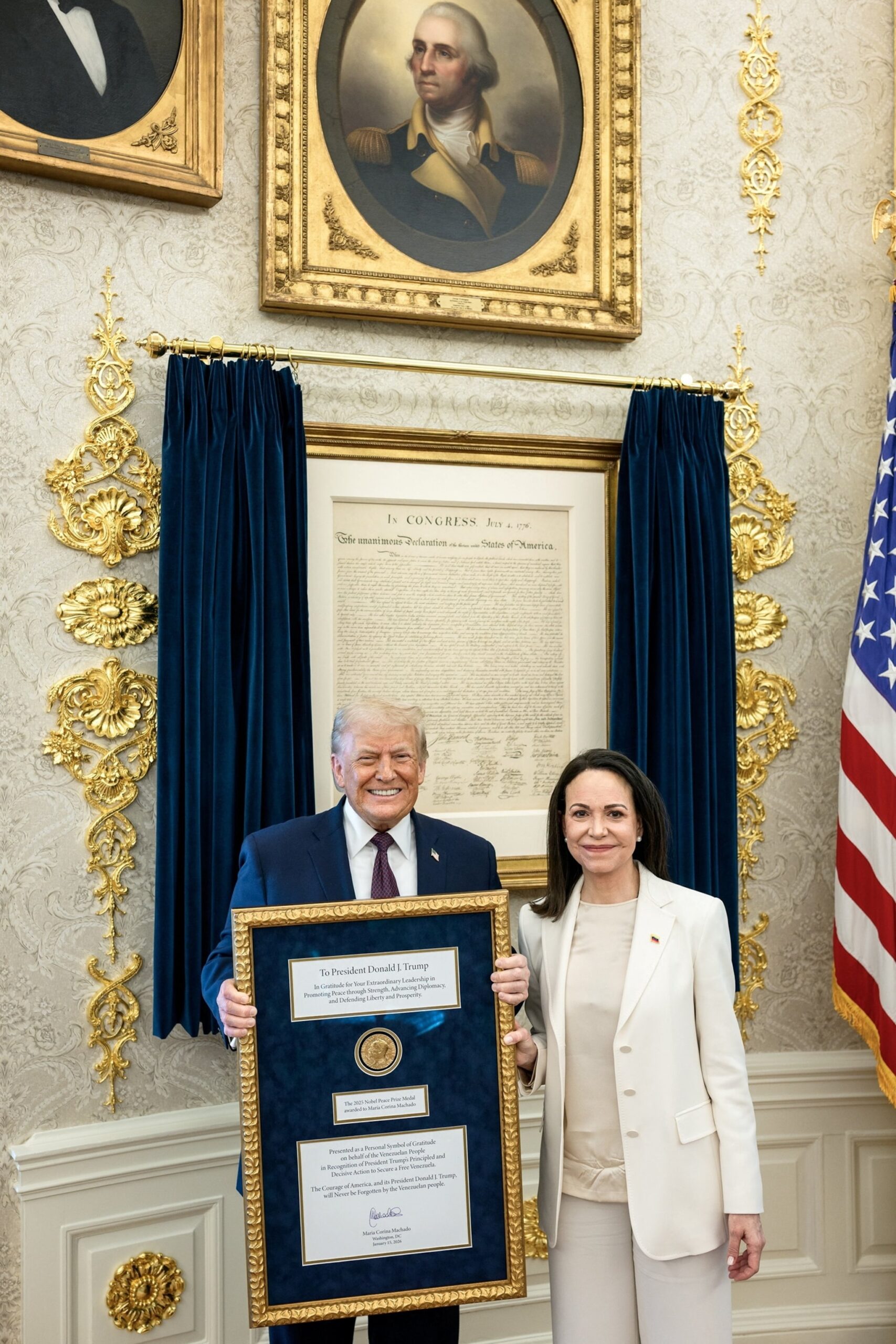
In a move rich with political theatre, Venezuelan opposition figure María Corina Machado presented her 1985 Nobel Peace Prize medal to former US President Donald Trump during a recent meeting at the White House. The gesture, captured in photographs, was immediately dissected by global observers: a calculated attempt to win favor with a mercurial ally, and a bizarre acceptance by a leader famously overlooked by the Nobel committee. For an African audience, well-acquainted with the complex dynamics of foreign intervention and the symbolic currency of Western approval, the episode offers a stark lesson in the performative politics of resistance and patronage.
The Gesture: A Bid for Influence in the Halls of Power
Machado, a staunch critic of the governments of both Hugo Chávez and Nicolás Maduro, is no stranger to controversy. Her decision to hand over one of the world’s most prestigious symbols of peace to Donald Trump is a multilayered diplomatic gambit. Analytysts see it as a direct appeal to Trump’s well-documented affinity for flattery and tangible symbols of success. By offering her personal medal—awarded for work with a different organization decades prior—Machado appears to be purchasing political capital, attempting to solidify Trump’s support for her cause against Maduro’s socialist government. The message is clear: I align my legacy with your power.
For many watching from Africa, where opposition movements often must navigate the treacherous waters of Western backing—gaining essential support while avoiding the stain of being labelled a foreign puppet—Machado’s move is high-risk. It exchanges an independent moral symbol for potential geopolitical clout, a trade-off that can undermine domestic credibility even as it seeks to secure international leverage.
The Acceptance: The Ultimate Irony for a President “Snubbed”
The second, perhaps more telling, layer of this story is Donald Trump’s acceptance. The former president, who frequently expressed public bitterness over not receiving a Nobel Peace Prize despite multiple nominations, finally held one in his hand—even if it wasn’t his name engraved on it. His willingness to accept the medal speaks volumes about his political persona: a focus on the imagery of victory over the substance of the award. It transforms the Nobel from an achievement of peace into a prop, a trophy in the spectacle of political endorsement.
This act resonates with a global pattern where symbols of institutional validation are co-opted by populist leaders to bolster their narrative of peerless success. In the African context, where colonial medals and Western accolades have a complicated history—both as honours and as instruments of soft power—the sight of a Nobel medal changing hands in a political transaction is a potent reminder of how such symbols can be emptied of their original meaning and repurposed for realpolitik.
A Pan-African Lens: Sovereignty, Symbols, and Foreign Patrons
Beyond the personal dynamics between Machado and Trump, this incident prompts critical reflection for the Pan-African world. It underscores the precarious position of political movements that seek external salvation. The dependence on a capricious foreign patron, whose domestic politics can shift overnight, is a familiar and often painful story on the continent.
Moreover, the spectacle highlights the ongoing use of Latin America and Africa as arenas for great power competition, where local struggles are sometimes amplified or distorted to serve external agendas. The genuine aspirations of Venezuelans for democracy and stability, like those of people across Africa, deserve more than symbolic transactions. They require principled, consistent foreign policy focused on dialogue, sovereignty, and the welfare of ordinary people, not on photo opportunities that feed the vanity of powerful men.
Conclusion: A Medal’s Weight in the Balance of Power
María Corina Machado’s presentation and Donald Trump’s acceptance is more than a curious news item. It is a vivid snapshot of contemporary geopolitics: the exchange of symbolic capital for political support, the hunger for validation from institutions one publicly scorns, and the continued journey of nations in the Global South navigating a world where their futures are too often pawns in others’ games. The Nobel medal, in this instance, shed its aura of peace to become a stark currency in a transaction of power—a reminder that in international politics, even the most revered symbols are not immune to being traded.
Leave a Reply