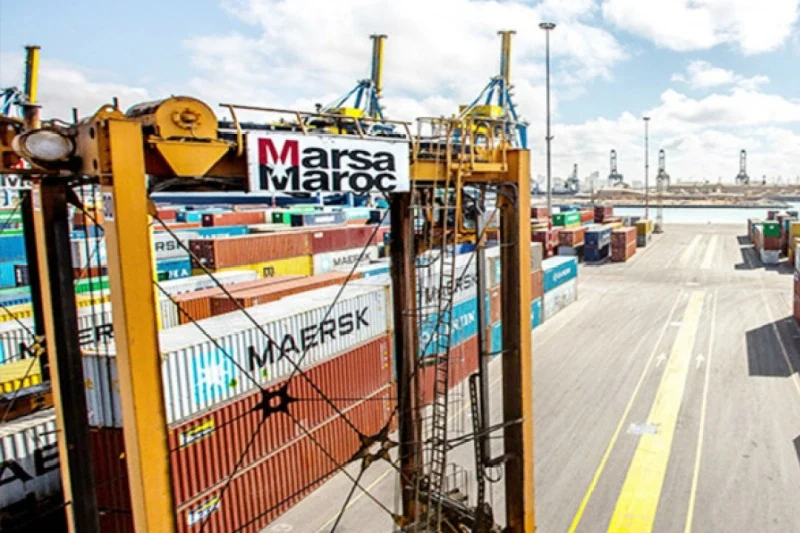
Monrovia, Liberia — In a strategic move that signals Liberia’s ambition to position itself as a critical maritime hub in West Africa, Marsa Maroc, Morocco’s leading port operator, has recently signed a major contract with Liberia’s National Port Authority (NPA) to operate key assets at the Port of Monrovia — the country’s main deep‐water seaport handling over 90 % of its maritime trade.
A New Partnership for Regional Competitiveness
The management contract, awarded following an international tender process, authorizes Marsa Maroc’s logistics arm — Marsa Maroc International Logistics (MMIL) — to run two jetties at the Port of Monrovia beginning in the first half of 2026. Under the agreement, MMIL will rehabilitate infrastructure, supply modern cargo handling equipment, and enhance bulk handling operations to improve efficiency and throughput.
This deal marks an important step in Marsa Maroc’s broader African expansion strategy, seeking to strengthen the company’s footprint beyond North Africa into key West African commercial arteries. The Liberia project comes as part of the company’s “Marsa 2030” vision to become a leading port and logistics operator across the continent — an effort that complements ongoing investments in Benin, Djibouti, and other markets.
What Happened to the Previous Contract Framework?
Prior to this new management deal, Liberia and Marsa Maroc had signed a Memorandum of Understanding (MoU) in late 2024 to jointly modernize the Freeport of Monrovia and the Port of Buchanan. This MoU laid out an 18-month planning process to structure public-private partnerships aimed at creating a multipurpose terminal and upgrading port facilities.
While detailed concession agreements had not been finalized at the time, the recent contract represents the first operationalisation of that cooperation — albeit initially limited to managing two piers rather than full servitude of the entire port. It reflects both pragmatic progress and caution as stakeholders move toward a deeper concession that would encompass a new multipurpose terminal, expanded cargo capacity, and long-term operational rights.
Project Value and Economic Impact
Although the public release has not specified the exact financial value of the current management contract, the investment and scope embed significant economic potential:
Marsa Maroc brings with it capacity to handle over 60 million tonnes of cargo annually across its 34 terminals — experience that can grow Liberia’s trade volumes.
Liberia’s port modernization is expected to reduce cargo dwell times and lower transport costs, enhancing the country’s appeal to international shippers and improving trade access for landlocked neighbours like Mali and Guinea.
The phased approach anticipates a future concession agreement to develop a multipurpose container and bulk terminal — a move that would significantly boost throughput and revenue generation.
Investments in port infrastructure are widely seen as catalysts for broader economic growth. For Liberia, enhanced port efficiency could stimulate foreign direct investment (FDI) into sectors ranging from mining to agriculture and provide a more robust gateway for intra-African commerce.
Strategic Importance in Continental Trade
Liberia’s geographical position — with the Port of Monrovia as its primary deep-water maritime gateway — places it at a strategic crossroads in West African shipping lanes. Modernization and expansion of these facilities are critical not just for national development but for regional competitiveness as low-cost, high-capacity ports rise across Ghana, Côte d’Ivoire, Senegal, and Nigeria.
By linking with established port operators like Marsa Maroc, Liberia is tapping into cross-continental expertise that blends local opportunity with international logistics standards.
Looking Ahead
The next phase of negotiations will be critical: securing a long-term concession deal for a multipurpose terminal and fully modernising Liberia’s port infrastructure could attract further global partners and transform the nation’s ability to service rising trade flows across Africa.
As the first phase of the deal rolls out in 2026, all eyes will be on whether this strategic partnership can deliver on its promise — unlocking new economic opportunities and affirming Liberia’s role as a cornerstone in Africa’s maritime future.
🇱🇷 Liberia’s Main Port Takes Centre Stage in Africa’s Trade Expansion
Leave a Reply