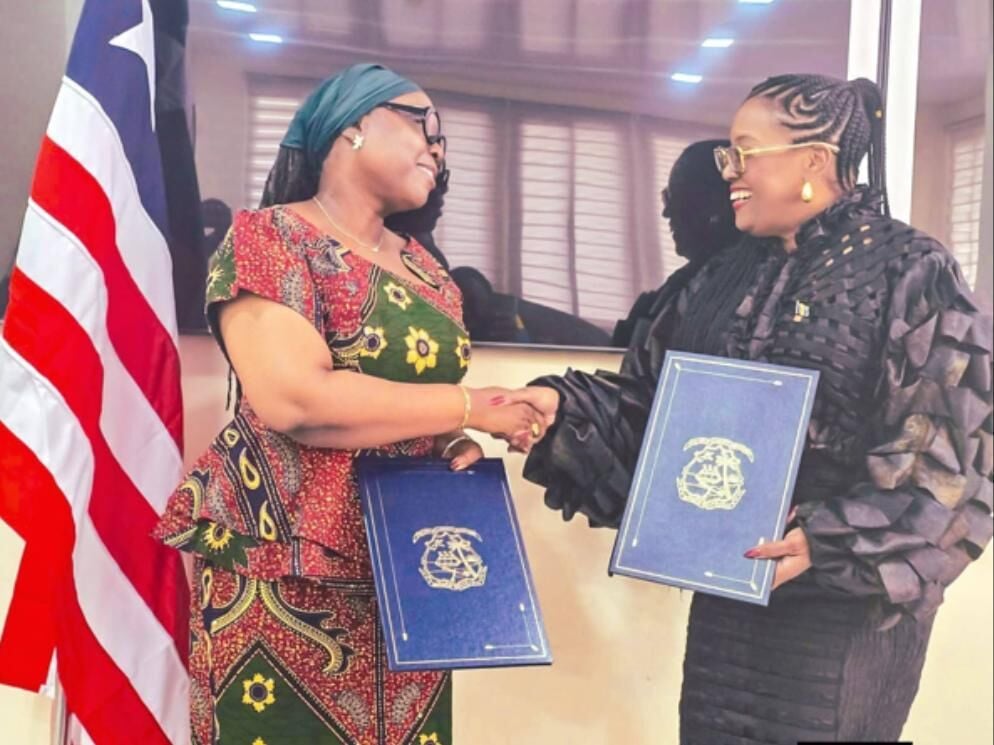
In a historic step toward strengthening South-South cooperation and reviving historic transatlantic ties, Liberia and Barbados have signed landmark agreements on visa waiver and political consultations—moves expected to unlock new opportunities in trade, labor mobility, and cultural exchange.
The agreements, signed on Wednesday, March 18, 2026, at Liberia’s Ministry of Foreign Affairs in Monrovia, signal a renewed commitment by both nations to transform long-standing historical connections into tangible economic and diplomatic outcomes.
Liberia’s Foreign Minister, Sara Beysolow Nyanti, described the agreements as a “new chapter” in relations between the two countries—one that prioritizes practical cooperation and people-centered diplomac
“The relationship between Liberia and Barbados is rooted in shared history and mutual respect,” she said. “These agreements will further open doors for economic cooperation and cultural exchange between our two nations.”
At the core of the development is a visa waiver agreement, which will remove travel barriers for citizens of both countries, alongside a political consultation framework designed to institutionalize regular diplomatic dialogue on issues of mutual interest.
The Liberia–Barbados relationship is deeply rooted in history. Barbados, like other Caribbean nations, shares ancestral and cultural links with Liberia dating back to the era of transatlantic migration and settlement.
Minister Nyanti emphasized that Barbadians have historically contributed to Liberia’s development, particularly in sectors such as media, law, and governance—connections that continue to shape bilateral relations today.
This shared heritage is now being repositioned as a foundation for modern cooperation in Tourism, Agriculture and fisheries, and Human capital development.
One symbolic initiative highlighted during the signing is the proposed establishment of a Barbadian museum in Crozerville, Montserrado County—an area historically associated with returnee communities. According to Nyanti, the museum will serve as “a lasting symbol of the enduring historical connection between the two countries.”
Beyond diplomacy, one of the most consequential aspects of the engagement is Liberia’s plan to negotiate a labor mobility agreement, particularly for nurses and healthcare professionals.
Minister Nyanti revealed that discussions are underway to enable Liberian health workers to access employment opportunities in Barbados—a move that could reduce unemployment pressures at home, increase remittance inflows, provide international exposure and skills development.
In a global context where skilled labor migration is increasingly structured through bilateral agreements, this initiative positions Liberia to benefit from orderly and mutually beneficial workforce mobility.
Barbados’ High Commissioner to Liberia, Juliette Bynoe Sutherland, welcomed the agreements as a milestone in deepening cooperation between the two countries.
“These agreements reflect our shared vision for stronger collaboration and mutual development,” she said. “Barbados remains committed to working closely with Liberia to ensure that the benefits of these agreements are realized for our people.”
Her remarks underscore a key challenge often associated with bilateral agreements in developing regions—not the signing itself, but effective implementation.
Analytically, the agreements represent more than bilateral progress—they reflect a broader trend of strengthening ties between Africa and the Caribbean, particularly among countries with shared historical experiences.
For Liberia, the move aligns with its foreign policy objective of expanding diplomatic reach beyond traditional partners, leveraging historical connections for economic gain, and promoting South-South cooperation.
The political consultation framework, in particular, is expected to provide a structured mechanism for coordinating positions in international forums, addressing shared development challenges, and enhancing cooperation on global issues such as climate change and migration.
The visa waiver agreement is widely seen as a catalyst for people-to-people engagement, a critical but often underdeveloped aspect of international relations.
By easing travel restrictions, the agreement is expected to encourage tourism and cultural exchange, facilitate business and investment opportunities, and strengthen diaspora connections.
Such measures are particularly important for countries like Liberia and Barbados, where historical and cultural ties can be leveraged to drive soft diplomacy and economic interaction.
The signing ceremony also carried a message from President Joseph Nyuma Boakai to his Barbadian counterpart, reaffirming Liberia’s commitment to deepening ties and exploring new avenues of cooperation.
Observers note that while the agreements themselves are significant, their true impact will depend on how effectively both governments translate them into measurable outcomes—from increased travel and trade to concrete employment opportunities.
The Liberia–Barbados agreements mark a deliberate effort to transform shared history into a platform for modern partnership.
By combining visa liberalization, structured diplomacy, and potential labor mobility, both countries are laying the groundwork for a relationship that is not only symbolic but also economically and socially impactful.
As Minister Nyanti aptly noted, the agreements are about “opening doors”—and for Liberia and Barbados, those doors may now lead to a more dynamic and mutually beneficial future.
Leave a Reply