




The Ghana Private Road Transport Union (GPRTU) occupies a unique and powerful position in Ghana’s public transportation system. For millions of Ghanaians, particularly those who rely on commercial minibuses and other privately operated vehicles, the union is an indispensable part of daily life.
From the early morning rush to the evening commute, GPRTU-affiliated drivers and operators connect communities, markets, workplaces and regional centres across the country. In a transport system where state-operated public transit has historically struggled to meet the needs of a growing population, private commercial transport has become the practical lifeline for millions.
But the union’s importance has also placed it under intense scrutiny.
Questions about financial transparency, internal accountability, political influence and the conduct of some of its members have increasingly raised concerns about how an organization with such a significant role in Ghanaian society is governed.
A Transport System Built Around Private Operators

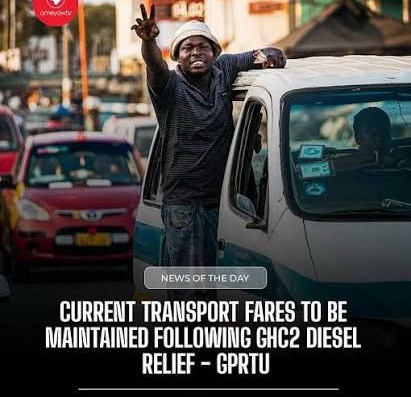
Ghana’s urban and intercity transport landscape is heavily dependent on private operators. Commercial minibuses, popularly known as trotros, have become one of the most accessible and affordable ways for people to move around the country.
The GPRTU has played a central role in organizing many of these operators. Its influence extends beyond simply providing a platform for drivers. Through its branches and structures, the union has become involved in the management of transport stations, route operations and the representation of drivers’ interests.
For commuters, however, the relationship with the union can be complicated.
The same system that provides relatively affordable transportation can also produce overcrowding, unpredictable fares, disputes over loading points and disagreements between drivers, passengers and transport authorities.
With public transportation demand continuing to rise alongside Ghana’s urban population, the pressure on this privately dominated system is unlikely to disappear.
The Question of Accountability
The GPRTU’s prominence has inevitably brought questions about its financial and administrative practices.
Critics have raised concerns about transparency in the collection and management of fees, the administration of transport terminals and the distribution of resources within the union’s structures.
These concerns are particularly significant because transport unions operate at the intersection of commerce, local governance and public life. Their activities can affect thousands of drivers and millions of passengers every day.
For an organization with such broad influence, greater transparency would not simply be an internal matter. It would be a question of public interest.
Clear financial reporting, stronger internal oversight and accessible mechanisms for resolving disputes could help strengthen confidence among drivers, passengers and government institutions alike.
Politics and the Power of Transport Unions
The GPRTU’s influence also extends into Ghana’s political landscape.
Transport unions are strategically important because their members interact directly with large sections of the population. Drivers and station operators are deeply embedded in local communities, making transport organizations potentially influential during political campaigns and elections.
Over the years, this relationship between organized transport and politics has generated debate about whether unions are sufficiently independent from political parties and governments.
The concern is not unique to Ghana. Across Africa, transport associations, informal-sector organizations and labour groups often operate within an environment where economic interests and political networks overlap.
For Ghana, the challenge is to ensure that political relationships do not undermine the union’s primary responsibility to its members and the travelling public.
A transport organization should be able to engage with governments regardless of which political party is in power, while maintaining clear boundaries between legitimate advocacy and partisan political activity.
Controversies Over Enforcement
The union has also faced criticism over incidents involving drivers and alleged attempts to enforce rules or punish alleged violations outside the formal authority of state institutions.
Such controversies raise a fundamental question: where should the authority of a transport union end and the authority of the state begin?
Transport unions have a legitimate role in representing their members, maintaining order within their operations and working with regulators. But law enforcement is ultimately a function of the state.
Whenever private organizations or their members are accused of taking enforcement actions that resemble policing, concerns about due process and individual rights inevitably arise.
For drivers, these disputes can become particularly sensitive. A commercial driver depends on the ability to work, and disciplinary action can have an immediate impact on their livelihood. At the same time, passengers and the wider public have an interest in ensuring that transport operations are safe, orderly and governed by the law.
The solution cannot be the absence of regulation. Instead, it requires clearly defined responsibilities and effective cooperation between transport unions, local authorities, regulators and law enforcement agencies.
A Mirror of Ghana’s Wider Transport Challenge

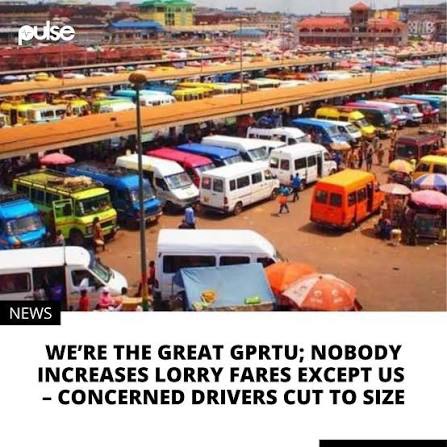
The controversies surrounding the GPRTU should also be viewed within the broader context of Ghana’s transportation challenges.
The country’s rapid urbanization has increased demand for reliable, affordable and efficient public transportation. Accra and other major urban centres face persistent congestion, while commuters often have limited alternatives to privately operated commercial vehicles.
This dependence gives transport unions considerable practical power.
When a system relies heavily on private operators to provide a public service, the organizations representing those operators inevitably become important actors in the national economy.
That reality creates both opportunities and risks.
A strong, accountable transport union can help organize an otherwise fragmented sector, advocate for drivers and cooperate with government to improve transportation. A poorly regulated or opaque structure, however, can become a source of conflict and public frustration.
Reform Rather Than Abandonment
The debate around the GPRTU should therefore not simply be framed as a choice between supporting or opposing the union.
The more important question is how Ghana can modernize its transport system while protecting the livelihoods of drivers and improving the experience of passengers.
That could include stronger financial disclosure requirements, transparent station management, clearer disciplinary procedures and improved mechanisms through which drivers and commuters can lodge complaints.
It could also involve closer coordination between the union and state transport regulators, particularly on road safety, fares, driver conduct and the management of transport terminals.
For the drivers themselves, reform should not mean losing their collective voice. Many commercial drivers operate in difficult economic conditions and depend on unions for representation and support.
The goal should be to build institutions that are both powerful enough to represent workers and accountable enough to serve the public interest.
The Bigger Pan-African Question
Ghana’s experience reflects a wider issue across Africa: the growing importance of informal and semi-formal economic institutions in delivering essential services.
In many African cities, transportation is not provided exclusively by government-owned companies. Private operators, cooperatives, unions and informal associations fill gaps left by limited public investment.
These organizations can become remarkably influential because they perform functions that governments struggle to provide efficiently.
But influence must come with accountability.
As African cities continue to expand, governments across the continent will face growing pressure to regulate transport networks without destroying the informal economic structures on which millions of people depend.
Ghana’s GPRTU provides an important case study in that balancing act.
Its history demonstrates the value of organized private transport. Its controversies demonstrate why stronger governance is necessary. And its continuing importance demonstrates that any meaningful reform of Ghana’s transportation sector must include, rather than simply bypass, the people and organizations already operating within it.
A Union at a Crossroads
The GPRTU remains an important institution in Ghanaian public life. Its vehicles move people to work, school, markets and hospitals every day, making the union’s activities inseparable from the everyday functioning of the economy.
Yet its importance also means that questions about accountability, political influence and the limits of private authority cannot be ignored.
For Ghana, the challenge is not merely to keep people moving. It is to create a transportation system that is affordable, safe, transparent and responsive to the public.
The future of the GPRTU will therefore be closely connected to the future of Ghana’s broader transport system. Whether through institutional reform, stronger regulation or improved cooperation with government, the union faces an opportunity to demonstrate that an organization built around private operators can evolve to meet the demands of a modern African economy.
For millions of Ghanaians, the issue is more than politics or organizational governance.
It is about how they get home.