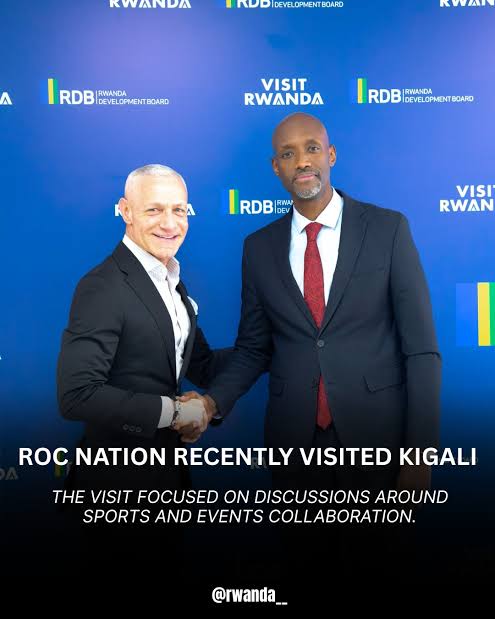
Roc Nation’s top brass have quietly opened a new chapter in Africa’s sports business story with a high‑profile visit to Rwanda, signalling serious intent to turn Kigali into a hub for premium sports and live events on the continent.[1][2] Beyond photo‑ops, the trip aligns with Roc Nation Sports International’s wider push to capture a slice of Africa’s fast‑growing, multi‑billion‑dollar sports economy and deepen Pan‑African commercial linkages.[3][4][5]
Who came to Kigali – and why it matters
Roc Nation executives, led by Roc Nation Sports International president Michael Yormark, were hosted in Kigali for a series of closed‑door meetings with Rwanda’s sports, tourism and events leadership.[1][2][6] The delegation met stakeholders in government and the private sector to explore collaboration in athlete representation, event promotion and global storytelling around “Brand Rwanda.”[1][3][7]
Yormark has become the face of Roc Nation’s African strategy after spearheading expansions into markets such as Ghana, Nigeria, Ivory Coast and Senegal, positioning the company as a culture‑driven partner rather than a fly‑in‑fly‑out rights buyer.[3][5] His presence in Kigali signals that Rwanda is not a peripheral stop, but a candidate to become a central node in Roc Nation’s Pan‑African portfolio.
Kigali’s sports infrastructure and locations in play
Rwanda has spent the past decade building one of Africa’s most concentrated sports and events infrastructures, and these assets were central to the Kigali discussions.[7]
Key locations likely on the table include:
- BK Arena, Kigali: A 10,000‑plus‑seat indoor arena built in 2019 at a reported cost of about 104 million dollars, already the flagship venue for the Basketball Africa League (BAL) playoffs and finals.[7]
- Kigali Convention Centre & surrounding hotel cluster: A purpose‑built meetings and events zone that has hosted continental summits, concerts and corporate showcases for global brands.[7]
- Citywide “Visit Rwanda” assets: From pitch‑side LED boards to tourism campaigns activated through partnerships with clubs such as Arsenal, PSG and Bayern Munich, which together are estimated to cost Rwanda over 32 million dollars per year in sponsorship commitments.[7]
These platforms give Roc Nation plug‑and‑play venues for premium boxing nights, music‑anchored sports events, off‑season NBA and football showcases, and talent‑driven festivals that can be filmed and syndicated globally.[3][8][7]
The money: Africa’s 20 billion dollar sports horizon
Roc Nation’s interest sits atop a larger macro story: Africa’s sports market, currently valued at around 12 billion dollars, is projected to approach 20 billion dollars by 2035 as investment flows into leagues, arenas, media and merchandising.[4] For a company that already manages global stars and negotiates high‑value sponsorships, plugging into that growth curve is as much about deal‑flow as it is about influence.
Rwanda’s own strategy shows how sports can be used as economic policy. The state’s football‑club partnerships and BAL hosting rights, combined with arena‑driven tourism, have generated millions of dollars in visitor spending; early BAL seasons alone are estimated to have brought in about 9 million dollars in tourism and hospitality revenue.[7] A Roc Nation alliance could layer new revenue lines on top of that base: athlete endorsement deals, content licensing, brand activations around tournaments, and packaged sports‑and‑music weekends designed to attract high‑spending regional travellers.[3][8][7]
What this means for Pan‑African relations
The Kigali visit is not just a Rwanda‑Roc Nation story; it is a test case for a new model of Pan‑African sports cooperation.[3][4][5] Several dynamics stand out:
- Continental talent pipelines: Roc Nation has already moved into football markets across South, West and Central Africa, identifying and signing players from South Africa, Ghana, Nigeria, The Gambia, Guinea, Zimbabwe and beyond.[3][5][9] With Kigali as a showcase hub, athletes from different regions could converge for camps, showcases and tournaments, turning Rwanda into a neutral “meeting ground” for the continent’s best emerging talent.
- Cross‑border event circuits: A Kigali anchor makes it easier to design Pan‑African event calendars that rotate between cities like Johannesburg, Accra, Lagos, Abidjan and Dakar, but return to Rwanda for finals, awards shows or flagship festivals.[3][8][7] This kind of circuit would deepen intra‑African travel, air links and business relationships tied to sports and entertainment.
- Soft‑power diplomacy: Rwanda has already used sports partnerships to project an image of stability, ambition and modernity; similar collaborations in other African countries could create a web of states leveraging sport as a form of economic diplomacy.[7][3] Roc Nation’s emphasis on athlete storytelling and community investment gives governments and federations a partner that can package those narratives for global consumption.[3][8]
In a continent where traditional political summits often fail to translate into youth‑level opportunities, sport‑driven alliances offer a more tangible, emotionally resonant route to Pan‑African integration.[3][4][5] Each sponsorship, showcase game or multi‑city tournament becomes a micro‑bridge between economies, fan bases and creative industries.
The bigger picture: from representation to co‑creation
Roc Nation’s African playbook has evolved from signing a few iconic names to building ecosystems around them, and Kigali fits neatly into that trajectory.[3][8][5] The company’s African roster already includes athletes positioned as “global ambassadors,” with expectations to lead on social impact and narrative change, not just performance.[3][9]
If the Rwanda talks harden into formal agreements, expect:
- Co‑owned events where Rwandan and other African investors share upside with Roc Nation in ticketing, media and sponsorship.
- Structured pathways for African athletes to move from local academies to regional competitions in Kigali, then into global leagues under professional brand‑management.
- A new generation of African sports stories, produced in Africa but monetised globally, shifting value and intellectual property ownership closer to the continent.
For Pan‑African relations, that would mark a shift from being merely a source of raw talent to being a co‑author of the global sports economy’s next chapter — with Kigali, and Rwanda’s deal‑making statecraft, at the centre of the script.[3][4][7]
Leave a Reply