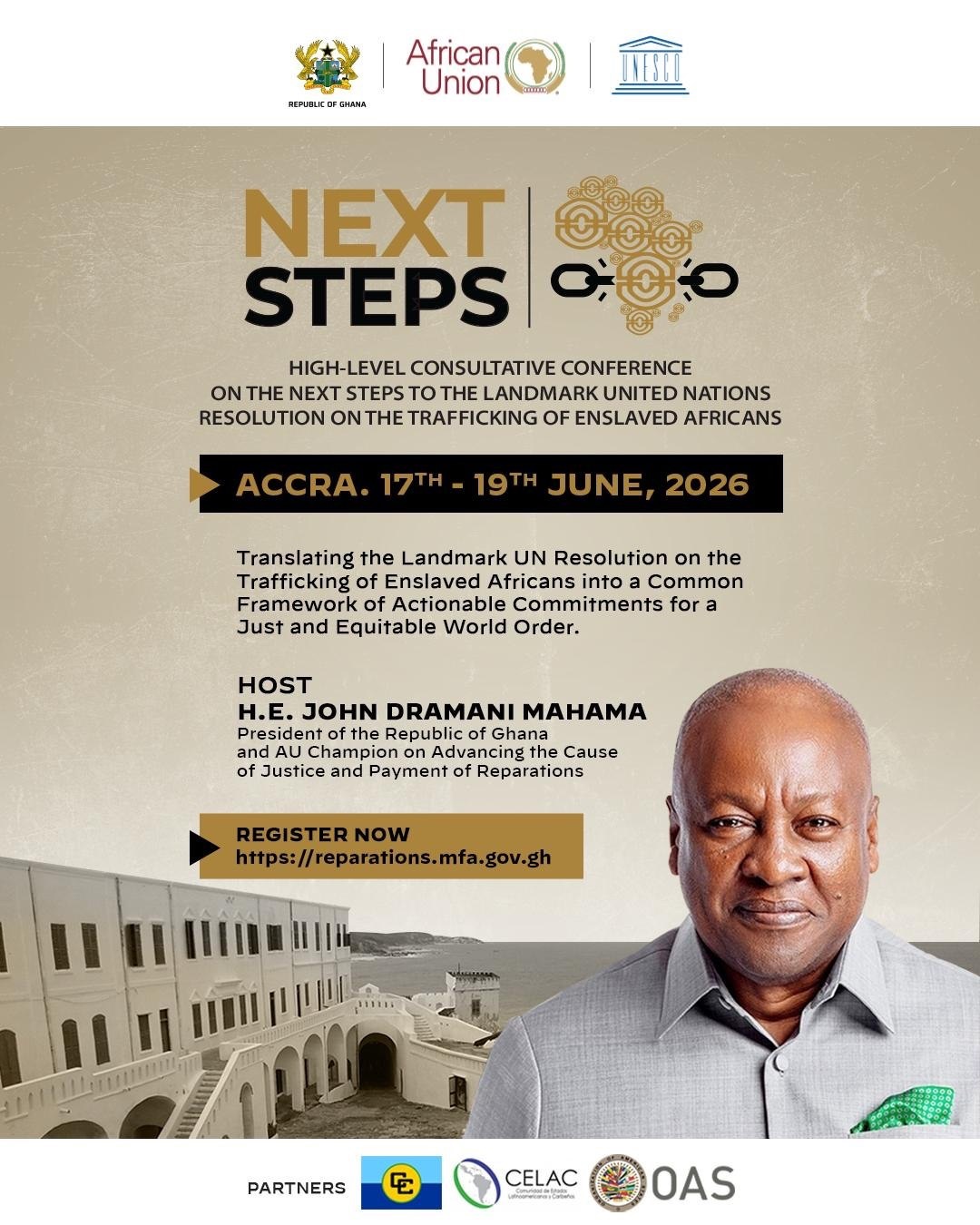
ACCRA, GHANA — June 17–19, 2026 — Ghana is set to become the center of a historic international dialogue on reparatory justice when government leaders, diplomats, scholars, civil society organizations, and representatives of the African diaspora gather in Accra for the “Next Steps” High-Level Consultative Conference on the Landmark United Nations Resolution on the Trafficking of Enslaved Africans.
The three-day conference, organized in partnership with the Government of Ghana, the African Union, and UNESCO, aims to transform recent international recognition of the transatlantic slave trade’s legacy into concrete policies and actionable commitments. The event will be hosted under the leadership of Ghanaian President John Dramani Mahama, who also serves as the African Union Champion for Advancing the Cause of Justice and Payment of Reparations.
A Turning Point in the Global Reparations Movement
The conference comes at a time when calls for reparatory justice have gained momentum across Africa, the Caribbean, Latin America, Europe, and North America. Advocates argue that the economic and social consequences of the transatlantic slave trade, colonial exploitation, and systemic discrimination continue to impact millions of people of African descent worldwide.
Organizers describe the gathering as a critical next step toward translating the recent United Nations resolution on the trafficking of enslaved Africans into a unified international framework. Delegates are expected to discuss how governments, international organizations, and civil society groups can work together to establish mechanisms that address historical injustices while promoting sustainable development and equitable partnerships.
Why Ghana?
Ghana has long positioned itself as a leading voice in global discussions surrounding African heritage, diaspora engagement, and reparations. The country is home to several historic slave forts and castles, including Cape Coast Castle and Elmina Castle, which served as major departure points during the transatlantic slave trade.
In recent years, Ghana has launched initiatives such as the “Year of Return” and “Beyond the Return,” encouraging descendants of enslaved Africans to reconnect with the continent. Hosting this conference further strengthens Ghana’s role as a bridge between Africa and the global African diaspora.
Key Issues Expected on the Agenda
Participants are expected to examine several major themes, including:
- Reparations frameworks and compensation models
- Economic development partnerships between Africa and the diaspora
- Educational programs focused on slavery and colonial history
- Preservation of historical sites connected to the slave trade
- Cultural restitution and the return of African artifacts
- International legal pathways for addressing historical injustices
- Youth engagement and future generations’ role in advancing reparatory justice
Delegates will also explore how international institutions can support policies that reduce inequalities rooted in centuries of exploitation.
International Participation
The conference is expected to attract representatives from across Africa, the Caribbean, Latin America, Europe, and North America. Partner organizations highlighted in conference materials include the African Union, UNESCO, the Community of Latin American and Caribbean States (CELAC), and the Organization of American States (OAS).
Observers believe the gathering could help strengthen cooperation among nations that have advocated for reparatory justice while creating a common diplomatic platform for future negotiations.
Beyond Symbolism
While discussions about reparations often generate intense debate, organizers emphasize that the conference is focused on practical outcomes. The objective is to move beyond symbolic recognition and develop measurable commitments that can guide governments and institutions in addressing the enduring consequences of slavery and human trafficking.
The theme of the conference—“Translating the Landmark UN Resolution on the Trafficking of Enslaved Africans into a Common Framework of Actionable Commitments for a Just and Equitable World Order”—reflects the ambition to create lasting policy recommendations rather than merely issue declarations.
Looking Ahead
As delegates prepare to convene in Accra from June 17–19, 2026, many view the meeting as one of the most significant international gatherings on reparatory justice in recent years. The outcomes could influence future African Union initiatives, United Nations discussions, and global conversations about historical accountability.
For Ghana, the conference represents another opportunity to lead an important international dialogue. For supporters of reparations and restorative justice, it may mark a significant step toward transforming decades of advocacy into coordinated global action.

Registration information: reparations.mfa.gov.gh
Leave a Reply