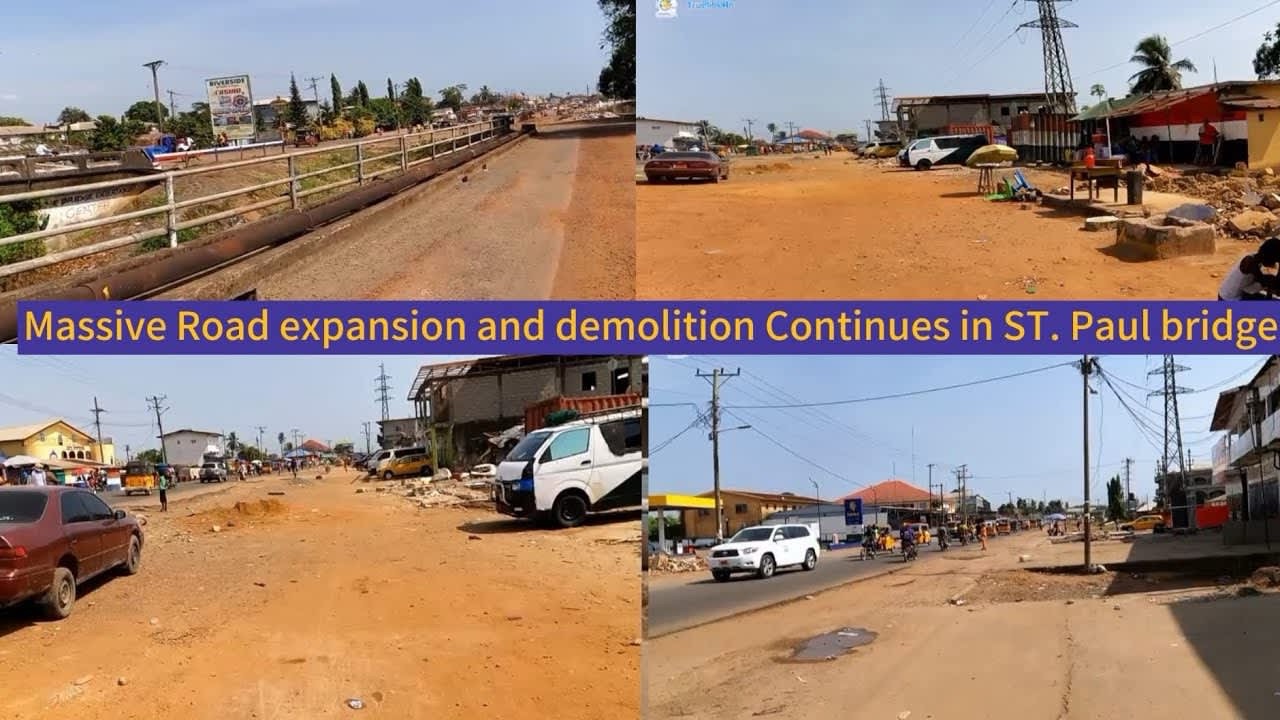
Efforts to rehabilitate and modernize the Freeport–St. Paul Bridge corridor in Liberia are gathering pace, signaling renewed commitment to one of the country’s most vital economic routes. The corridor, which links the bustling Freeport of Monrovia to key parts of the capital and beyond, is a lifeline for trade, transport, and daily commuter movement.
Recent developments indicate accelerated work along the stretch, with construction teams advancing on road expansion, structural reinforcements, and drainage improvements. The project aims to ease chronic congestion, enhance road safety, and improve the overall efficiency of goods movement between the port and inland destinations.
For years, the Freeport–St. Paul Bridge corridor has been plagued by heavy traffic bottlenecks, deteriorating road surfaces, and inadequate infrastructure to support growing urban demand. As Liberia’s main port handles a significant share of imports and exports, delays along this route have had ripple effects across the national economy, increasing costs for businesses and consumers alike.
Authorities say the ongoing upgrades are designed to transform the corridor into a more resilient and high-capacity transport link. Key components of the project include road widening to accommodate increased traffic volume, reinforcement of critical bridge structures, and improved drainage systems to address flooding—an issue that has historically disrupted movement, particularly during the rainy season.
Urban planners and economic analysts view the project as a strategic intervention that could unlock greater productivity. By reducing transit times and vehicle operating costs, the improved corridor is expected to boost commercial activity, facilitate regional trade, and strengthen Liberia’s position as a gateway for maritime commerce in West Africa.
Commuters and transport operators have already begun to notice incremental improvements, although some have raised concerns about temporary disruptions caused by construction activities. Traffic diversions and delays remain part of the short-term trade-off, but many residents see the inconvenience as a necessary step toward long-term gains.
Government officials have reiterated their commitment to ensuring that the project is completed efficiently and meets quality standards. They also emphasize the importance of maintaining the infrastructure once completed, noting that sustainability will be key to preserving the corridor’s benefits.
The Freeport–St. Paul Bridge corridor project comes at a time when infrastructure development is increasingly recognized as central to Liberia’s economic recovery and growth strategy. With urbanization accelerating and trade volumes expected to rise, investments in transport networks are becoming more urgent.
If sustained, the current momentum could mark a turning point for Monrovia’s transport landscape—transforming a historically congested route into a modern economic artery that supports both national development and regional integration.
:::
Leave a Reply