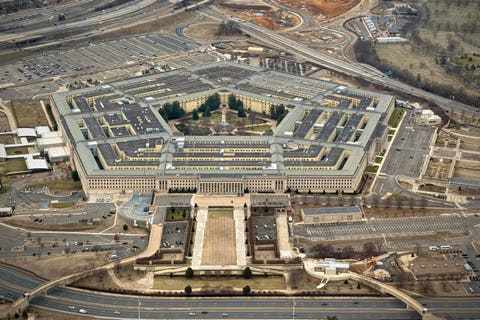
President Trump’s call for a defense budget larger than the entire economic output of most African nations signals a dramatic shift in U.S. priorities, with global repercussions.
A Historic Increase for a “Dream Military”
In a move that has reshaped the U.S. political and fiscal landscape, President Donald Trump has announced a proposal to increase the national defense budget to an unprecedented $1.5 trillion for the 2027 fiscal year. This figure represents a staggering increase of roughly 50-66% over the current 2026 budget of $901-$950 billion. Announced via social media, the president framed this “Dream Military” as essential for national security in “very troubled and dangerous times”.
The proposal has received immediate and strong backing from key Republican leaders in Congress. The chairmen of both the Senate and House Armed Services Committees, Senator Roger Wicker and Representative Mike Rogers, issued a joint statement commending the move, arguing it is necessary to “rebuild our military and restore American leadership” against threats from China, Russia, and Iran. They noted this would bring U.S. defense spending to approximately 5% of GDP, a benchmark they have urged NATO allies to meet.
The Political and Fiscal Reality Check
Despite the presidential fanfare and congressional support, the path to a $1.5 trillion budget is fraught with obstacles. The sheer scale of the increase—$500 billion more than the already historic $1 trillion mark recently breached— raises immediate questions about affordability.
· Financing the Dream: President Trump has asserted that revenue from his administration’s tariffs will easily cover the cost. However, analysis from the non-partisan Committee for a Responsible Federal Budget (CRFB) suggests otherwise. They estimate that the $500 billion annual increase would be nearly twice the expected annual revenue from tariffs. Over a decade, this spending surge could add $5.8 trillion to the national debt.
· The Legislative Path: Achieving this budget will likely require a complex and contentious legislative process. The current $1 trillion defense budget for 2026 was only reached through a special “reconciliation” bill, passed on a party-line vote, which added $150 billion to the base request. Experts and lawmakers suggest a similar, politically arduous reconciliation process would be necessary to fund even a portion of the new $1.5 trillion request.
Funding a New Generation of Weapons
So, what would this astronomical sum pay for? The “Dream Military” is not an abstract concept but is tied to several of President Trump’s signature and costly defense priorities:
· The “Golden Dome”: A comprehensive, next-generation missile defense system designed to protect the entire continental United States. Experts note this program alone could cost trillions of dollars over the next decade.
· Modernizing the Nuclear Arsenal: A central pillar of Pentagon spending is the modernization of America’s nuclear triad. A Congressional Budget Office report estimates the U.S. will spend $946 billion over the next decade (2025-2034) on nuclear forces, with costs peaking in the early 2030s. Key programs include the new Sentinel intercontinental ballistic missile and the B-21 Raider stealth bomber.
· The “Golden Fleet” and Air Power: The proposal includes ambitions for a vastly expanded and modernized naval fleet, as well as new advanced aircraft like the conceptual Boeing F-47 fighter jet.
A Crackdown on the Defense Industry
In a parallel and unusual move, the budget announcement came with a sharp threat to the very defense contractors who would build this new military. President Trump and the Pentagon have vowed to crack down on major contractors like Lockheed Martin, Northrop Grumman, and Raytheon over stock buybacks and executive pay.
The president accused these firms of issuing “massive dividends” and buybacks to shareholders at the expense of investing in new plants and equipment, slowing the delivery of critical weapons. He specifically singled out Raytheon as the “least responsive” and threatened to cut off its business with the Department of War unless it changes course.
The Pentagon’s chief spokesperson stated the new policy ensures the department’s obligation is to “our warfighters, not Wall Street”. This confrontational stance initially caused defense stocks to dip, though some later recovered.
Global Implications and the African Context
This proposed military surge does not occur in a vacuum. It comes amidst significant global friction, including the recent U.S. capture of Venezuelan leader Nicolás Maduro, heightened tensions with China over Taiwan, and a major U.S. military presence in the Caribbean.
For African nations and the Global South, this development is highly significant. A U.S. military budget of this magnitude—larger than the combined GDPs of all African nations—represents a profound consolidation of hard power. It signals a U.S. foreign policy overwhelmingly predicated on military deterrence and dominance, potentially at the expense of diplomatic engagement or development aid. As global tensions rise, nations across Africa may face increased pressure to align with great power competitors, while also navigating the economic spillover of a U.S. fiscal policy that could exacerbate global debt and inflation.
Leave a Reply