
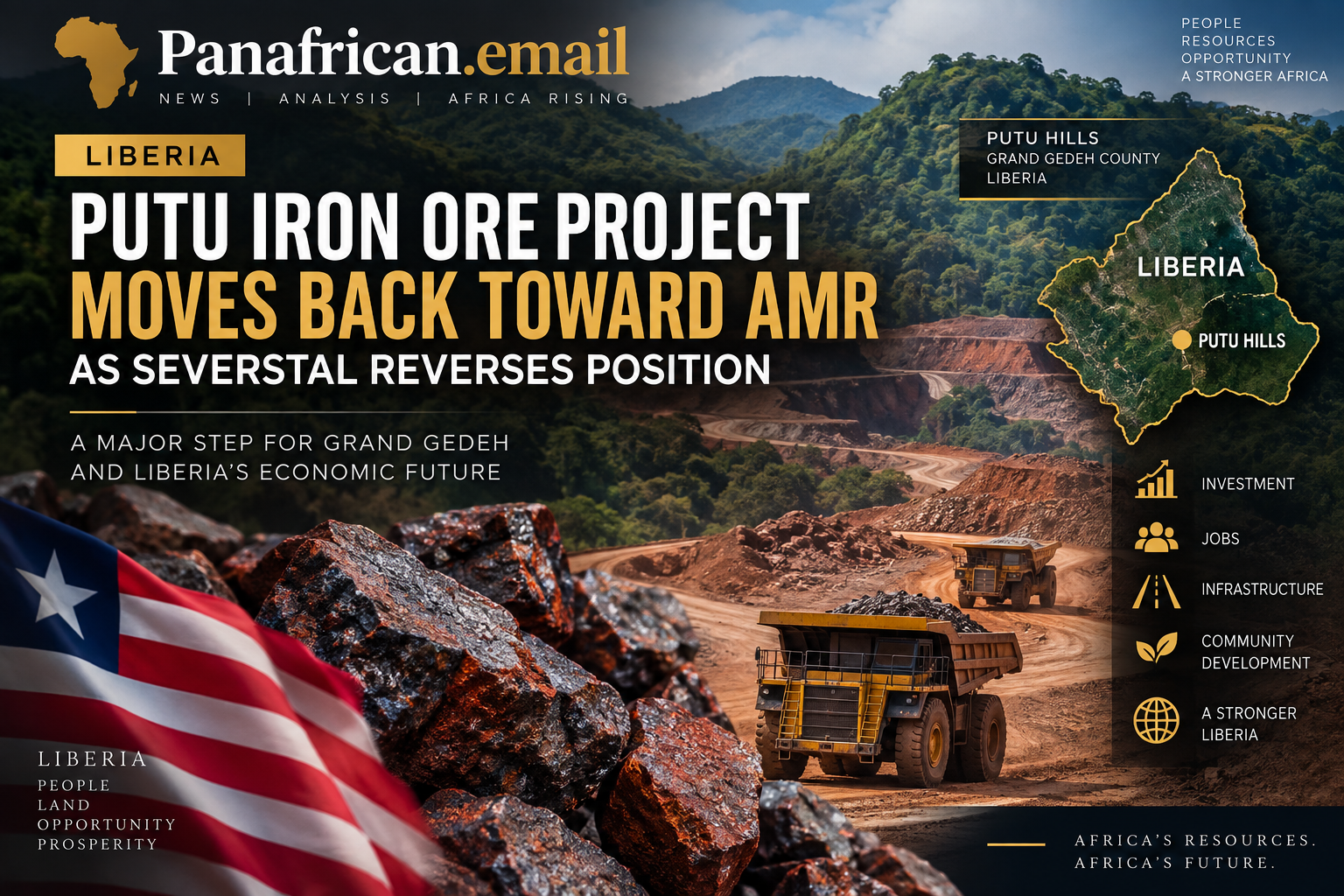
MONROVIA, LIBERIA — Liberia’s long-delayed Putu Iron Ore Project in Grand Gedeh County has taken another significant turn, with Russian steelmaker Severstal informing the Government of Liberia that Africa Metallic Resources Inc. (AMR) has submitted a binding offer that it considers superior to a competing proposal from Planet One Natural Resources Holdings.
The development represents the latest chapter in a prolonged effort to transfer and restart one of Liberia’s largest undeveloped iron ore projects.
The Putu deposit is estimated to contain approximately 2.37 billion tonnes of iron ore and has remained largely inactive for more than a decade despite a 25-year Mineral Development Agreement ratified by Liberia in 2010. (FrontPage Africa)
Severstal Changes Position
In a letter dated September 11, 2026, Severstal informed Liberia’s Ministry of Mines and Energy that AMR’s binding proposal was superior to Planet One’s offer in terms of price and other transaction conditions, according to recent reports.
The announcement marks a reversal from Severstal’s position earlier this year, when the company supported Planet One as the preferred successor to the Putu concession.
The change follows several months of controversy surrounding the proposed transfer of the project and the Government of Liberia’s competitive evaluation process. (Liberia News Network)
AMR Had Previously Emerged as the Preferred Bidder
AMR was identified as the Government of Liberia’s preferred developer following a competitive evaluation in December 2025.
Reports on the evaluation placed AMR at 88.6 points out of 100, compared with 66.2 for JSW and 55.6 for Planet One.
Despite that result, Severstal subsequently argued that AMR had not demonstrated sufficient progress on financing, due diligence and other transaction requirements. By April 2026, the Government had granted consent for a transfer involving Planet One, triggering objections from affected communities and other stakeholders. (FrontPage Africa)
President Joseph Nyuma Boakai subsequently intervened.
Boakai Administration Orders Putu Process Accelerated
On March 5, 2026, President Boakai issued a Cabinet directive calling for the expedited finalization and operationalization of the Putu Mining Project.
The directive placed Vice President Jeremiah Kpan Koung in charge of coordinating the government agencies involved in the transaction and required an inter-agency task force to address outstanding legal, financial and administrative matters.
The President described the prolonged delay surrounding Putu as unacceptable and identified the project’s revival as a national priority. (Ministry of Information)

Financing and Sanctions Issues
A significant part of the dispute earlier this year concerned AMR’s financing and sanctions-related status.
Recent reports indicate that AMR subsequently obtained clearance following a review involving the U.S. Treasury Department’s Office of Foreign Assets Control and secured financing commitments involving the Africa Finance Corporation.
Those developments appear to have addressed some of the concerns previously raised regarding AMR’s ability to proceed with the transaction. (Liberia News Network)
Grand Gedeh Communities Await Concrete Benefits
The renewed movement around Putu has generated expectations in Grand Gedeh and southeastern Liberia, where communities have waited for years for the project’s promised economic impact.
The Grand Gedeh Bar Association, led by President Cllr. Kanio Bai Gbala, welcomed the latest developments and said the project could create opportunities for employment, investment, transportation, construction and related businesses.
At the same time, the Association has called for AMR to engage directly with county authorities, traditional leaders, communities, youth, women and other stakeholders as the project advances. (FrontPage Africa)
The Putu Contact Group has similarly raised concerns about ensuring that affected communities are included in decisions concerning the project’s future.
A Major Project Still Has Major Steps Ahead
Despite the latest development, Putu has not yet returned to commercial mining operations.
Severstal’s support for AMR’s binding offer does not by itself constitute completion of the transfer. Further contractual, regulatory and governmental steps remain before the project can move from negotiations into development and eventually production.
That distinction is particularly important given Putu’s long history of agreements, ownership discussions and delays.
For Liberia, the immediate issue is therefore not simply which company controls the project, but whether the eventual transaction can produce a legally sound, financially credible and implementable development plan.
What Comes Next
The next major milestones will include completion of the transaction documentation, government approvals, financing arrangements, technical preparations and continued engagement with communities in Grand Gedeh.
If completed, the development of Putu could become a major new investment in southeastern Liberia and could generate activity extending beyond the mine itself, including transportation, infrastructure, construction, logistics and supporting businesses.
For now, however, the Putu project remains in the transaction and development phase rather than active commercial production.
After more than a decade of inactivity, the latest Severstal decision has reopened the path toward AMR—but the ultimate test will be whether the transaction closes and whether the long-promised mining development actually reaches Grand Gedeh.
Leave a Reply