
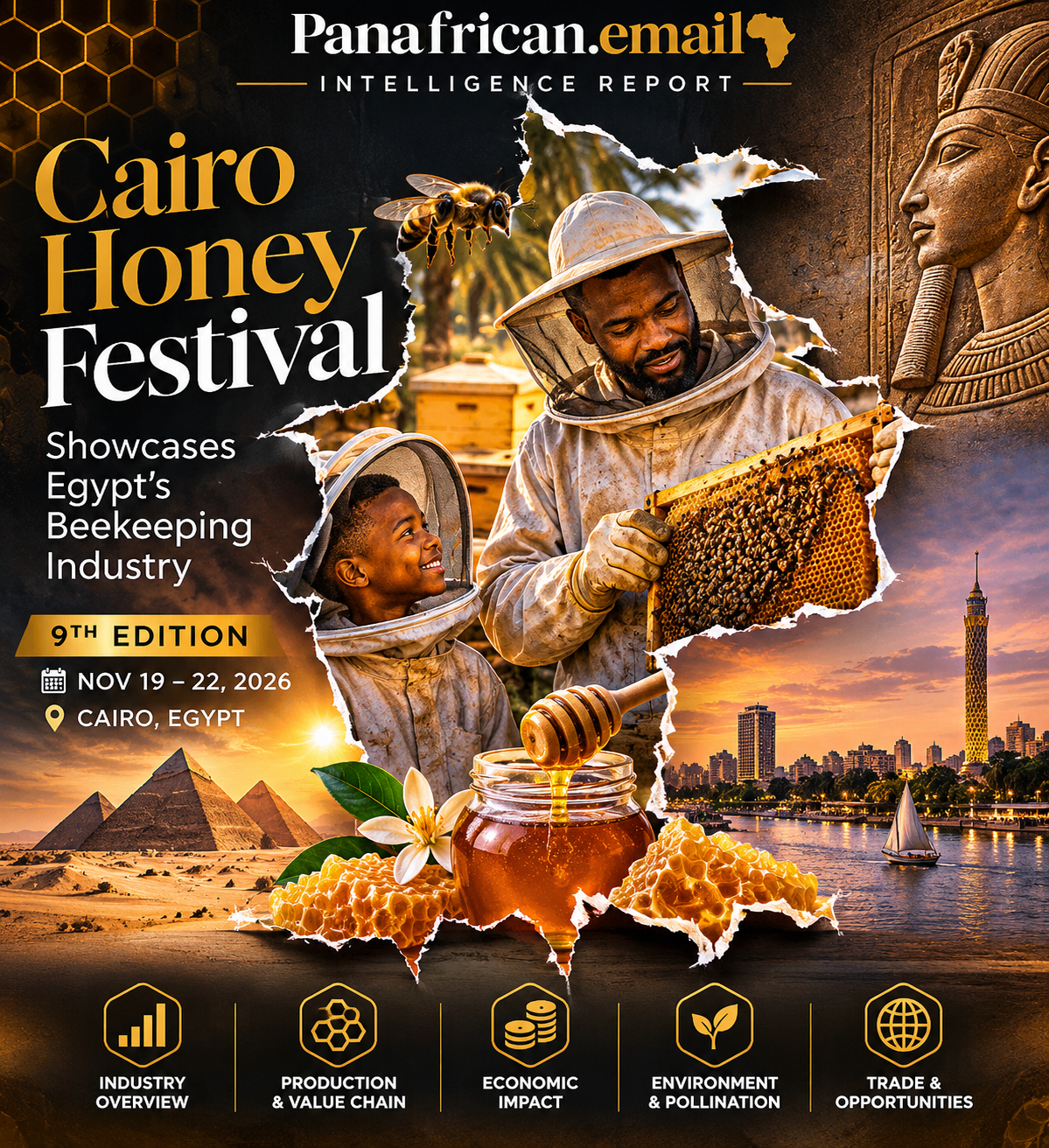
Cairo’s Honey Festival and the Economics of Egyptian Beekeeping
From pollination and rural livelihoods to honey processing, authenticity and regional commerce: an intelligence-led examination of Egypt’s apiculture ecosystem.
EVENT RISK: LOW (SOURCE ASSESSMENT)23 November 2026 · Public-source operating picture · Agriculture / Trade / Environment
Festival intelligence brief
The event title, dates, edition, source, location, and LOW assessment are transcribed from the supplied intelligence card. The card does not provide a primary event notice, attendance count, exhibitor count, production volumes, or a numerical confidence score. LOW is an event risk label, not a measured economic impact or evidence-confidence rating.
Why the festival matters
Honey festivals can connect beekeepers, retailers, food processors and consumers. The sector also supports crop pollination, small enterprise formation and agricultural diversification. These are sector-level mechanisms, not verified outcomes of this particular festival.
Apiaries
Colony care, forage access and hive healthHarvest
Extraction, moisture control and handlingVerification
Origin records, quality tests and labelingMarkets
Retail, food service and potential export channelsIllustrative value-chain exposure
Use the controls to explore a hypothetical allocation of 100 units of sector value across stages. These are adjustable scenario assumptions, not Egyptian production or revenue statistics.
Threats and verification priorities
| Factor | Economic pathway | Signal to monitor | Evidence required |
|---|---|---|---|
| Forage and climate | Changes in nectar availability and seasonal yield | Heat, rainfall and flowering patterns | Local weather and apiary records |
| Colony health | Losses or higher husbandry costs | Mortality, parasites and disease | Veterinary and beekeeper reporting |
| Honey authenticity | Consumer trust and price differentiation | Origin and adulteration concerns | Accredited laboratory testing |
| Market access | Margins, packaging and logistics | Input costs and buyer requirements | Verified trade and price data |
| Pollination | Crop yield and farm resilience | Demand for managed pollination | Crop-specific field studies |
How resilience measures may change exposure
Qualitative scenario model scored from 1 (low exposure) to 5 (high exposure). Values are editorial assumptions for discussion and do not represent surveyed Egyptian beekeepers.
Video and reporting sources
Featured video
Sector data desk
Cross-check honey production, agricultural trade and pollinator research using authoritative datasets.
FAOSTAT crop and livestock data ↗Evidence register for a quantified follow-up
| Question | Required data | Potential source | Current state |
|---|---|---|---|
| How much honey does Egypt produce? | Annual tonnage, reference year and methodology | FAOSTAT / Egyptian statistics | Not verified here |
| What is Egypt’s honey trade balance? | Imports and exports under HS 0409, year and units | UN Comtrade | Not verified here |
| What did the festival achieve? | Attendance, exhibitors, sales and organizer statement | Organizer / Africanews reporting | Not verified here |
| How are beekeeper margins changing? | Farmgate price, feed, packaging and transport costs | Primary interviews and market surveys | Not verified here |
Assessment
The reported Cairo festival is a useful lens on Egypt’s beekeeping ecosystem, but a public event alone cannot establish sector growth, export competitiveness or income gains. The next intelligence step is to confirm the event against a primary source, then combine dated production and trade data with verified beekeeper and buyer observations.
Editorial distinction: Event details are sourced from the user’s uploaded assessment; sector discussion and chart scenarios are analytical context. No invented festival attendance, revenue, export volume or production ranking is presented as fact.
Leave a Reply