
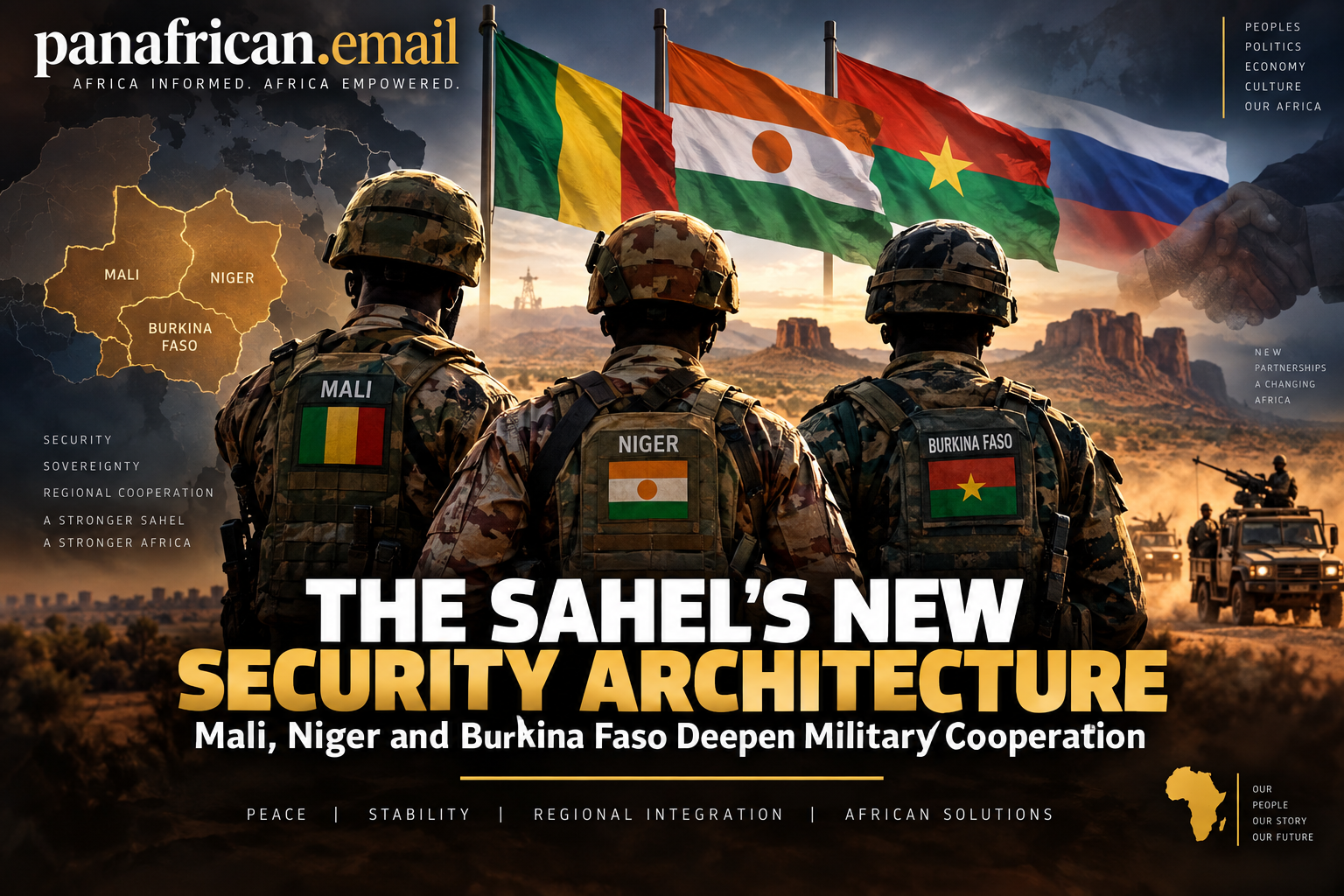
NIAMEY — Mali, Niger and Burkina Faso are continuing to build a shared security framework through the Alliance of Sahel States (AES) as armed insurgencies remain a major challenge across the region.

The three countries have increasingly coordinated their military and diplomatic policies since creating the AES and subsequently withdrawing from the Economic Community of West African States (ECOWAS). Their security strategy has also included a significant expansion of cooperation with Russia.
In July, Russian Foreign Minister Sergei Lavrov met with counterparts from Mali, Niger and Burkina Faso in Niamey. According to Reuters, the governments pledged to strengthen military and military-technical cooperation, including continued Russian support for the armed forces of the three AES members and their planned Unified Force.
The agreement comes as insurgent groups continue to operate across borders. Al-Qaeda-linked JNIM and other armed groups have carried out attacks against military positions and transport routes in Mali, while violence also continues to affect Burkina Faso and Niger. Recent fighting has demonstrated that the security challenges confronting the three countries cannot easily be contained within national borders.
A New Regional Security Framework
The AES represents more than a military arrangement. Mali, Niger and Burkina Faso are attempting to construct a broader regional framework for security and strategic cooperation outside the traditional structures that previously shaped West African diplomacy.
Their withdrawal from ECOWAS formally took effect in January 2025, further separating the three governments from the regional organization while encouraging them to develop their own institutions and external partnerships.
Russia has become an important component of that new external security network. Moscow has pledged continued assistance to the AES armed forces, while Russian Africa Corps personnel have operated alongside local forces, particularly in Mali.
However, the continuing violence illustrates an important distinction: military cooperation does not automatically eliminate the underlying security crisis.
The Insurgency Remains the Central Challenge
Despite increased military coordination, armed groups continue to adapt.
In Mali, coordinated attacks by JNIM and Tuareg-led forces have placed additional pressure on government forces and their Russian partners. The fighting around strategic locations such as Anéfis has demonstrated the ability of armed groups to operate across multiple fronts and challenge military positions and supply routes.
This creates a difficult strategic environment for the AES. The governments are attempting to integrate their security structures while confronting armed organizations whose operations already cross national boundaries.
The result is an evolving contest between regional state integration and transnational insurgent networks.
Beyond the Battlefield
The consequences extend beyond military affairs.
The three AES countries remain connected to coastal West African economies through trade, fuel supplies and transportation corridors. Recent developments involving fuel supplies from Ghana, for example, demonstrate how instability and changing economic relationships in the Sahel can affect neighbouring coastal states.
At the same time, the growing relationship with Russia places the AES within a wider restructuring of Africa’s external partnerships.
For the governments in Bamako, Niamey and Ouagadougou, the emerging model emphasizes greater control over national security policy and new relationships with non-Western partners. For neighbouring countries, the development raises questions about how security, trade and diplomacy will evolve across the wider West African region.
panafrican.email Assessment
The Sahel is developing a distinct regional security ecosystem built around three interconnected forces: AES military integration, external defence partnerships and persistent insurgent pressure.
The significance of this transformation extends beyond Mali, Niger and Burkina Faso. Decisions made within the AES increasingly affect regional trade corridors, relations with coastal West Africa, external military partnerships and the broader balance of power across the continent.
The central question is therefore no longer simply how the three countries are responding individually to insurgency.
It is how the emergence of the AES will reshape West Africa’s security architecture, economic relationships and strategic autonomy over the coming years.
Leave a Reply