
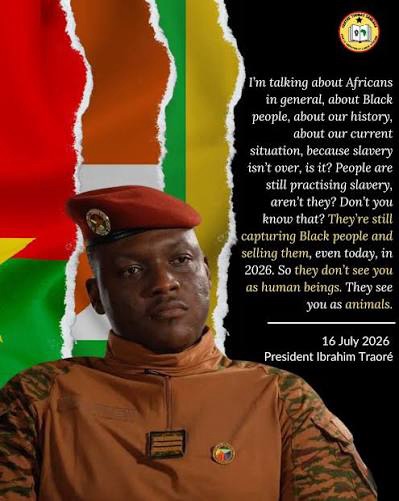
The greatest challenge confronting many Pan-African nations today may not be military weakness, economic hardship, or technological dependence. It may be something less visible but far more dangerous: the persistence of a colonial mindset that causes people to identify with systems that historically oppressed them. While the term “Stockholm syndrome” originates from psychology, many Pan-African thinkers use it as a metaphor to describe how formerly colonized societies sometimes defend political, economic, and cultural structures that continue to limit their sovereignty.
This metaphor should not be confused with the clinical psychological condition. Rather, it describes a pattern in which individuals or societies become emotionally or intellectually attached to institutions that have historically exercised power over them.
The Historical Roots
The history of Africa’s relationship with colonial powers spans centuries.
The trans-Atlantic slave trade displaced millions of Africans, fractured kingdoms, and disrupted indigenous systems of governance and commerce. The nineteenth-century “Scramble for Africa,” formalized at the Berlin Conference of 1884–1885, divided the continent into colonial territories with little regard for existing ethnic, cultural, or political boundaries.
Colonial administrations reorganized African economies around the extraction of raw materials for foreign industries. Local education systems frequently emphasized European history, languages, and administrative values while often marginalizing African knowledge systems. Independence movements across the 1950s and 1960s brought political freedom to many countries, but economic dependence, unequal trade relationships, foreign military influence, and external control over strategic sectors often remained.
Many Pan-African leaders—including Kwame Nkrumah, Thomas Sankara, Julius Nyerere, Patrice Lumumba, and Amílcar Cabral—argued that political independence without economic and intellectual independence was incomplete.
The Stockholm Syndrome Analogy
Within Pan-African discourse, the Stockholm syndrome analogy suggests that some societies unconsciously defend systems that continue to disadvantage them.
Examples frequently cited include:
- Celebrating foreign products while undervaluing African industries.
- Trusting external political prescriptions more than locally developed solutions.
- Viewing African history through colonial narratives rather than indigenous perspectives.
- Measuring success solely by foreign approval instead of national development.
- Accepting the export of raw materials while importing expensive finished products.
Whether one agrees with every aspect of this analysis, it reflects a longstanding concern among advocates of African self-determination.
Ibrahim Traoré’s July 16, 2026 Message
During his speech on July 16, 2026, Burkina Faso’s President Ibrahim Traoré argued that Africa’s greatest struggle is not only against poverty or insecurity but also against what he described as mental colonization. He called on Africans to understand their own history, reject dependency, and build confidence in African institutions and capabilities. (Instagram)
Traoré emphasized that centuries of slavery and colonial domination had left psychological as well as political scars. According to reports of the speech, he argued that liberation requires changing how Africans think about themselves, their resources, and their future. (Instagram)
His remarks echoed themes long associated with Thomas Sankara, who maintained that true independence requires economic self-reliance, cultural confidence, and national dignity.
Why This Matters for Pan-Africanism
Pan-Africanism is more than a political movement; it is the belief that African people share common interests that can be advanced through cooperation, unity, and self-determination.
If nations continue to rely primarily on external actors for security, industrialization, finance, education, and technology, many Pan-African thinkers argue that meaningful sovereignty remains incomplete.
The Stockholm syndrome metaphor therefore becomes a warning. It suggests that liberation cannot be achieved merely by changing flags or governments. It also requires changing mindsets, educational priorities, and economic structures.
A Balanced Perspective
At the same time, it is important to distinguish between dependence and cooperation.
International partnerships, foreign investment, and global trade can contribute positively to development when they are transparent, mutually beneficial, and respect national sovereignty. Likewise, criticism of colonial legacies does not mean rejecting every foreign relationship. The central question is whether African nations are making independent choices that serve their own long-term interests.
The Path Forward
Breaking this metaphorical Stockholm syndrome requires deliberate action:
- Teaching African history from African perspectives alongside global history.
- Investing in science, technology, and manufacturing.
- Processing natural resources within Africa rather than exporting them primarily in raw form.
- Strengthening regional trade through African institutions.
- Promoting accountable governance and reducing corruption.
- Encouraging cultural confidence while remaining open to international collaboration.
Conclusion
The metaphor of Stockholm syndrome challenges Africans to examine whether inherited patterns of dependency still shape political and economic decisions. It is not a clinical diagnosis but a call for reflection about sovereignty, identity, and development.
Ibrahim Traoré’s July 16, 2026 speech renewed this debate by urging Africans to reclaim confidence in their own capacities and to resist what he described as mental colonization. (Instagram)
Whether one fully agrees with Traoré’s views or not, the broader historical question remains significant: Can Africa achieve lasting political and economic independence without first transforming how it sees itself?
For many advocates of Pan-Africanism, the answer is clear. The struggle for Africa’s future is not fought only in parliaments, battlefields, or markets—it is also fought in classrooms, in culture, and in the minds of its people.