
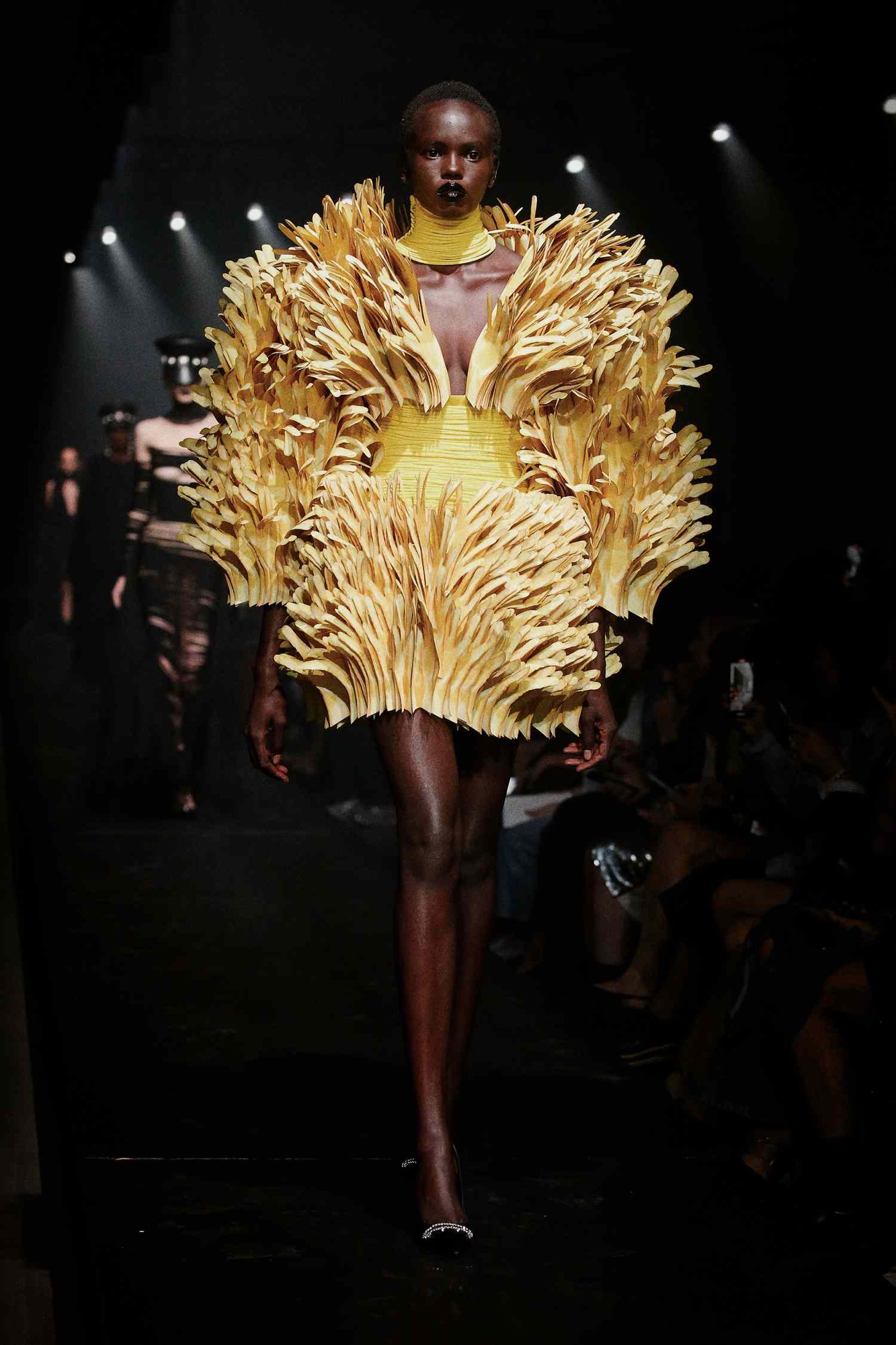
From Accra to New York, African creativity is stepping into one of fashion’s biggest global arenas
By Pan African News
New York is preparing for another major fashion moment—and this September, Africa’s creative industries are once again making their presence felt.
At the center of the excitement is Ghana, where a new generation of designers and creatives is pushing African fashion beyond cultural representation and into the global business of fashion.
For the first time, a Ghanaian creative is reportedly preparing to participate across three separate New York fashion events, bringing Ghanaian creativity directly into the New York fashion ecosystem and placing West African design, craftsmanship and cultural identity in front of international audiences.
The significance goes beyond a runway.
It represents a continuing shift in how African fashion is being perceived: not simply as inspiration for Western designers, but as a source of original brands, creative direction, manufacturing, textiles, cultural storytelling and global commerce.
NEW YORK BECOMES A STAGE FOR AFRICA
The official September 2026 New York Fashion Week schedule, organized by the Council of Fashion Designers of America, runs from Thursday, September 10 through Tuesday, September 15 and features approximately 70 runway shows and designer presentations. (CFDA)
The schedule includes established names such as Ralph Lauren, Carolina Herrera, Michael Kors, Tory Burch and LaQuan Smith alongside emerging designers.
But the African story extends beyond the names on the traditional American fashion calendar.
African and African-diaspora designers have spent years building a presence in New York.
Nigeria’s Maki Oh made her NYFW debut in 2012, followed by Nigerian designer Deola Sagoe and South Africa’s David Tlale in 2014. Earlier African participation included the African Fashion Collective, which brought designers including South Africa’s Stoned Cherrie, Mali’s Xuly Bet and Nigeria’s Momo Couture and Tiffany Amber into the NYFW conversation. (okayafrica)
That history matters.
Today’s African designers are walking through doors opened by an earlier generation.
GHANA’S FASHION MOMENT
Ghana has developed an increasingly influential position in global fashion.
From Kente and handwoven textiles to contemporary tailoring, streetwear, jewelry and sustainable production, Ghanaian creatives have demonstrated that traditional African aesthetics can exist comfortably within international luxury and contemporary fashion.
One of the strongest examples is Studio 189, the Ghana-based fashion and social enterprise founded by Abrima Erwiah and Rosario Dawson. The company operates between Ghana and the United States and has worked with artisans in Accra while incorporating techniques including natural dyeing and indigenous textile production. (Essence)
British-Ghanaian designer Ozwald Boateng has also played a major role in bringing Ghanaian cultural influence into international menswear, particularly through modern tailoring and references to Ghanaian textile traditions. (InsideFashionDesign)
Now another generation is stepping forward.
THE GHANAIAN CREATIVE REPRESENTING AT THREE EVENTS
The reported three-event participation by a Ghanaian creative is significant because it demonstrates a move away from the idea that African designers should receive only a single cultural showcase.
Three appearances create three opportunities:
Three runways.
Three audiences.
Three opportunities to build relationships with buyers, press, stylists, investors and international fashion professionals.
For Ghana’s creative economy, this is the kind of exposure that can turn fashion from cultural expression into an export industry.
It also demonstrates the importance of the African diaspora.
New York contains one of the world’s largest concentrations of African and Caribbean communities, making it a natural meeting point between African heritage and American popular culture.
THE AFRICAN DESIGNERS TO WATCH
The African fashion presence in New York cannot be reduced to one country.
Across the continent and diaspora, designers have created distinctive approaches to contemporary African fashion.
🇬🇭 GHANA
Ghana’s influence can be seen through designers and brands working with Kente, traditional weaving, sustainable production, tailoring, jewelry and contemporary African luxury.
Among the Ghana-connected names with international recognition are Ozwald Boateng, Studio 189 and Korlekie.
Korlekie, founded by British-Ghanaian designer Beatrice Korlekie Newman, has drawn inspiration from Ghanaian craft while developing a contemporary womenswear identity. The brand has previously been part of NYFW’s African designer ecosystem. (okayafrica)
🇳🇬 NIGERIA
Nigeria remains one of Africa’s strongest fashion exporters.
Maki Oh, Deola Sagoe, Tiffany Amber, Onalaja, Tia Adeola, Head of State and other Nigerian-connected brands have helped establish Nigerian fashion within international fashion conversations.
Taofeek Abijako’s Head of State is particularly notable. He founded the brand as a teenager in Nigeria and later became the youngest designer to debut at NYFW at the age of 19. (Asake Oge)
🇿🇦 SOUTH AFRICA
South Africa has also produced designers with a powerful international presence.
David Tlale became one of the country’s most recognizable designers on the global fashion circuit, while South African fashion has continued to influence New York through contemporary tailoring, print, streetwear and luxury design.
🇲🇱 MALI
Malian design has a historic relationship with New York fashion.
Xuly Bet, founded by Malian designer Chris Seydou, was among the African brands that participated in the African Fashion Collective during the late 2000s, helping demonstrate the commercial and creative potential of African fashion on an international platform. (okayafrica)
🇨🇮 IVORY COAST AND THE DIASPORA
The broader African diaspora is equally important.
Designers with African and Caribbean heritage increasingly use New York as a laboratory for merging traditional identity with contemporary American fashion.
This is creating something bigger than “African fashion.”
It is creating global African fashion.
SEPTEMBER 2026: THE KEY NEW YORK FASHION DATES
SEPTEMBER 9 — PRE-NYFW
Ralph Lauren — Spring/Summer 2027
Ralph Lauren is scheduled to present its Spring 2027 collection on September 9, one day before the official NYFW calendar begins. (CFDA)
SEPTEMBER 10 — OFFICIAL NYFW OPENS
The official NYFW schedule begins.
The opening day includes designers and brands such as:
- Diane von Furstenberg
- Proenza Schouler
- Bad Binch TongTong
- Tommy Hilfiger
- Christian Siriano
- Tory Burch
- Public School New York
The CFDA lists Henry Zankov’s debut collection for Diane von Furstenberg as the official opening of the week. (CFDA)
SEPTEMBER 11 — AFRICAN & DIASPORA FASHION ENERGY BUILDS
Friday’s official schedule includes:
- Michael Kors Collection
- Calvin Klein Collection
- Christian Cowan
- Monse
- Kim Shui
- Simkhai
- Eckhaus Latta
- Rio
Additional independently produced NYFW events and African-diaspora fashion activations are also scheduled around New York.
SEPTEMBER 11–13 — AFRIKREA NYFW POP-UP
One particularly relevant event for African fashion is the Afrikrea NYFW Pop-Up: Created by Africa and the African Diaspora, scheduled for September 11–13, 2026, from 12 p.m. to 7 p.m. daily at 124 West 36th Street, New York City.
The event brings together Black-owned brands from around the world and includes designers and brands such as:
- Imani Line
- Gbenga Artsmith
- Dexy Creation
- Ornoircrochet
- Beadsbynaya
- Bibire International
The event is positioned as a celebration of Black creativity, fashion and community. (Eventbrite)
SEPTEMBER 12 — INTERNATIONAL DESIGN
Saturday’s official NYFW calendar includes:
- Nardos
- Altuzarra
- Anna Sui
- Prabal Gurung
- Khaite
- threeASFOUR
- Elena Velez
(Fashion Week Official)
SEPTEMBER 13 — THE GLOBAL RUNWAY
Sunday includes:
- Area
- COS
- Sergio Hudson
- Brandon Maxwell
- Grace Ling
- Private Policy
(Fashion Week Official)
SEPTEMBER 14 — AFRICAN-DIASPORA DESIGN REPRESENTATION
Monday is particularly interesting for African-diaspora fashion watchers.
The official schedule includes Diotima, Bibhu Mohapatra, Luar and LaQuan Smith, among others. (Fashion Week Official)
SEPTEMBER 15 — CLOSING DAY
The official NYFW schedule concludes with designers including:
- Heirlome
- Collina Strada
- Andrew Kwon
- Frederick Anderson
- Sabyasachi
- Thom Browne
(CFDA)
BEYOND THE RUNWAY
The most important development may not happen on the runway at all.
Fashion Week is a business ecosystem.
Designers meet retailers.
Models meet agencies.
Brands meet buyers.
Journalists discover new talent.
Investors search for emerging companies.
Stylists search for new aesthetics.
And consumers discover new brands.
For an African designer, being physically present in New York can therefore be more valuable than simply having photographs published online.
The opportunity is to build relationships.
AFRICA’S FASHION INDUSTRY IS AN ECONOMIC OPPORTUNITY
Africa possesses something the global fashion industry increasingly values: cultural originality.
The continent contains thousands of textile traditions, craft techniques, regional aesthetics and histories that can inspire contemporary design.
But inspiration alone does not create an industry.
Africa needs manufacturing.
It needs financing.
It needs intellectual-property protection.
It needs distribution.
It needs fashion education.
It needs international marketing.
And most importantly, African designers need to retain ownership of their brands and creative intellectual property.
The goal should not simply be for New York, Paris, London or Milan to discover Africa.
The goal should be for African fashion companies to become global companies themselves.
FROM ACCRA TO NEW YORK
The reported Ghanaian participation across three events this September should therefore be viewed as part of a much larger movement.
It is a story about Ghana.
It is a story about Africa.
It is a story about the African diaspora.
And it is a story about ownership.
The runway is only the beginning.
The real victory will come when African designers leave New York with contracts, buyers, investors, international distribution and new markets.
Because African fashion does not need permission to be global.
It needs the infrastructure, capital and platforms to own the global market.
And this September, New York is once again becoming one of the places where that future is being designed.
Leave a Reply