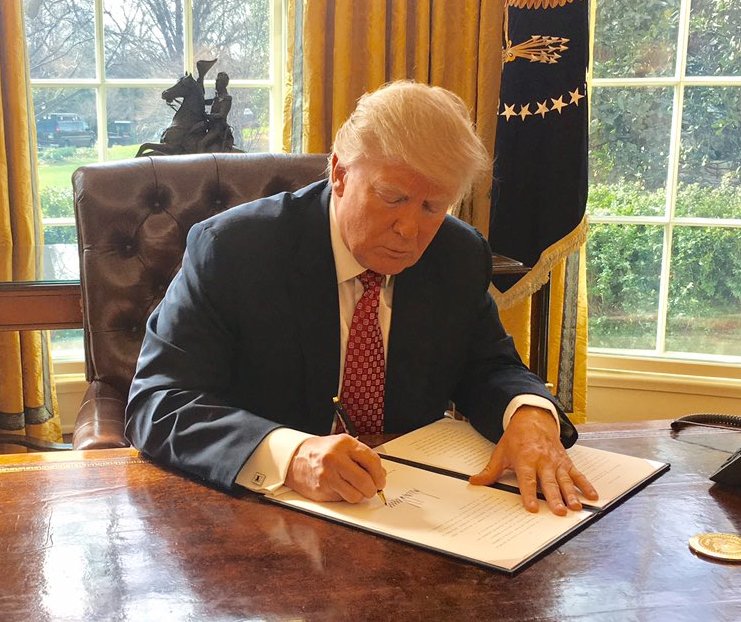
The new year ushered in stricter U.S. travel rules, with citizens from seven additional countries now completely barred from entering the United States, a policy that continues to separate families and complicate international exchange.
The United States has significantly expanded its controversial travel restrictions, adding seven countries to its list of nations whose citizens are fully barred from entry. The new rules, which took effect on January 1, 2026, come from a proclamation signed by President Donald J. Trump in mid-December.
This expansion brings the total number of countries under full or partial restrictions to 39. For a Pan-African audience, the update is particularly consequential: five of the seven newly added “full ban” countries are in Africa, and the list of nations under “partial restrictions” includes over a dozen African states.
The policy, a revival and expansion of the travel bans from Trump’s first term, is officially framed as a national security measure to address deficiencies in foreign vetting procedures. Critics, however, see it as a targeted policy that disproportionately affects African and Muslim-majority nations, disrupting family unity, educational opportunities, and professional exchanges.
- The Seven Newly Restricted Countries
The latest proclamation moves seven countries onto the list for “full restrictions,” meaning entry is suspended for both immigrants (those seeking permanent residency) and all nonimmigrants (including tourists, business visitors, and students).
Newly Added Under Full Ban (Effective Jan. 1, 2026):
· Burkina Faso: Cited for terrorist activity throughout the country and a high visa overstay rate (9.16% for business/tourist visas).
· Mali: Cited due to common armed conflict and terrorist organizations operating freely in certain areas.
· Niger: Cited for terrorist planning of kidnappings and a high visa overstay rate (13.41% for business/tourist visas).
· Sierra Leone (moved from partial to full ban): Cited for an “extremely high” visa overstay rate (16.48% for business/tourist visas and 35.83% for student/exchange visas).
· South Sudan: Cited for a high student/exchange visa overstay rate (26.09%).
· Syria: Cited for lacking adequate central authority for issuing passports and having compromised vetting abilities.
· Laos (moved from partial to full ban): Cited for an “extremely high” business/tourist visa overstay rate (28.34%).
Important Note: While Laos and Syria are among the seven new “full ban” countries, five of the seven—Burkina Faso, Mali, Niger, Sierra Leone, and South Sudan—are African nations.
- The Policy’s Evolution: From “Muslim Ban” to Expanded Restrictions
The current policy has deep roots in Trump’s first term. In January 2017, one of his first acts was signing an executive order that barred nationals from seven Muslim-majority countries (Iran, Iraq, Libya, Somalia, Sudan, Syria, and Yemen), a move immediately labeled a “Muslim Ban” and met with nationwide protests and legal challenges.
After several revised versions and legal battles, the U.S. Supreme Court ultimately upheld a third iteration of the ban in 2018. President Joe Biden revoked the order upon taking office in 2021, but Trump reinstated and expanded it upon his return to power in 2025.
The stated legal authority comes from a section of U.S. immigration law (INA 212(f)) that grants the president broad power to suspend entry when it is deemed “detrimental to the interests of the United States”. The White House states the restrictions are “country-specific” to encourage cooperation from listed nations in improving their identity-management and information-sharing practices.
- The Broader Impact on African Nations
Beyond the five African nations newly facing a full ban, the impact across the continent is wider. Several other African countries are subject to “partial restrictions.”
What is a “Partial Restriction”?
For these countries,entry is suspended for immigrants and for nonimmigrants on specific visas: B-1 (business), B-2 (tourism), F (academic students), M (vocational students), and J (exchange visitors). This directly targets common paths for education, cultural exchange, and business.
African Countries Under Partial Restrictions include:
· Angola
· Benin
· Burundi
· Cote d’Ivoire
· Gabon
· The Gambia
· Malawi
· Mauritania
· Nigeria
· Senegal
· Tanzania
· Togo
· Zambia
· Zimbabwe
The justifications provided by the U.S. government include high visa overstay rates, refusal to accept repatriated nationals, issues with civil documentation, and the presence of terrorist groups that complicate vetting. Notably, the proclamation also criticizes countries that offer “Citizenship by Investment (CBI) without residency,” stating these programs can be used to evade travel restrictions.
- Who Is Exempt? Understanding the Exceptions
The ban is not absolute. Key exemptions exist for:
· Lawful Permanent Residents (green card holders)
· Individuals who already have a valid U.S. visa on the effective date (January 1, 2026)
· Dual nationals traveling on a passport from a non-banned country
· Diplomats and individuals traveling on certain international organization visas
· Athletes invited specifically to compete in events like the 2026 World Cup
· Individuals whose entry is deemed in the “national interest” and granted a case-by-case waiver
- Practical Guidance for Affected Travelers
For individuals from the affected countries:
· Check Your Visa Status: If you already possess a valid U.S. visa, you are exempt from this proclamation and should be able to travel.
· New Applications Are Barred: If you are outside the U.S. without a valid visa, you cannot be issued a new visa for entry while these restrictions are in place, with very narrow exceptions.
· Seek Authoritative Advice: Travelers with specific concerns should consult the website of their nearest U.S. embassy or consulate or seek guidance from an experienced immigration attorney.
The expansion of this policy signals a continued focus on restrictive immigration measures. For the African diaspora, the ramifications are personal and profound, affecting family reunification, academic aspirations, and economic ties with the United States. The policy’s longevity will likely depend on the outcomes of future U.S. elections and continued legal and political advocacy.
What are your thoughts on how this evolving policy impacts Pan-African mobility and international cooperation? Do you see viable pathways for affected students or professionals from these nations?
Leave a Reply