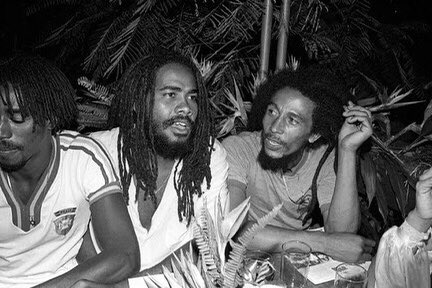
In a now-famous interview from the late 1970s, Bob Marley and Jacob Miller offered a blunt critique of America and Russia, rejecting the idea that one superpower was morally superior to the other. Speaking from a Caribbean perspective, Marley argued that both nations were effectively working the same game: using fear, influence, and political pressure to shape the fate of smaller countries ��.
Marley’s comments landed with unusual force because they came at a time when the Cold War often forced people to choose sides. But Marley refused that framing. He described the United States and Russia as “the same thing,” saying they were both engaged in psychological warfare against poor people and that the real danger was foreign control, not just which flag was doing the controlling ��.
Jacob Miller reinforced the point in his own style, comparing the two powers to “Heckle and Jeckle,” a pair of mischievous twins. His message was that Caribbean people should not depend on either side and should instead stand on their own rights and dignity ��.
Together, the two artists turned a political interview into a statement of black sovereignty and anti-imperial resistance ��.
What makes the exchange still relevant is that Marley and Miller were not simply talking about geopolitics in the abstract. They were speaking about the historical reality of colonialism, neocolonial influence, and the vulnerability of small islands to outside pressure. Their criticism was rooted in a larger Pan-African and anti-colonial worldview that saw freedom as more than independence on paper ��.
For Marley, the answer was not capitalism, Marxism, America, or Russia. It was self-determination. He insisted that Black people should decide their own future, rather than letting powerful nations define the terms of their existence ��.
That is why the interview continues to resonate: it was not just a comment on two superpowers, but a declaration that oppressed people should refuse both domination and dependency
Leave a Reply