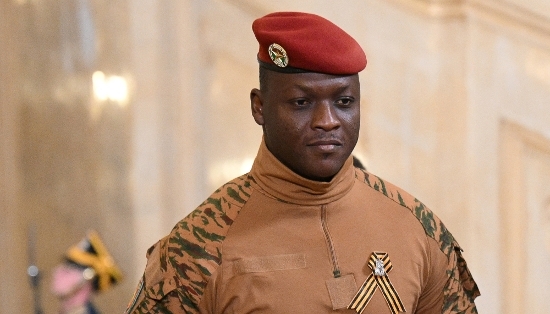
Burkina Faso’s military leader, Captain Ibrahim Traoré, has built much of his political identity around a hardline anti-Western posture and public alignment with states that challenge Western influence, especially Iran. Yet behind that rhetoric, he is also said to be maintaining discreet channels with Israel, including approving the credentials of Israel’s ambassador to the wider region �.
The picture that emerges is one of strategic dual-track diplomacy. On one side, Traoré projects defiance toward former colonial powers and their allies; on the other, he appears willing to preserve working ties with Tel Aviv, even while publicly emphasizing his closeness to Tehran �.
What the relationship means
This does not necessarily mean Burkina Faso has openly normalized relations with Israel in the same way some other African or Arab states have done. Rather, the evidence points to quiet diplomatic contact, a limited but deliberate engagement that can help a junta maintain external options while avoiding the political cost of full public alignment �.
Such relationships are often driven by security, intelligence, technology, and diplomatic leverage rather than ideology alone. For military governments under pressure, back-channel contact can be a way to broaden international options while still speaking the language of sovereignty and resistance at home ��.
Agreements being upheld
Based on the available reporting, the most relevant framework is not a newly publicized treaty between Burkina Faso and Israel, but the broader pattern of diplomatic normalization and informal cooperation that has characterized Israel’s outreach to African states for decades ��.
In Africa, these ties commonly revolve around security cooperation, technical assistance, trade, and diplomatic recognition, rather than a single sweeping treaty ��.
In Israel’s Africa policy, the recurring “agreements” being upheld are usually practical arrangements: diplomatic recognition, trade links, security coordination, and technical cooperation. The reporting on Sudan’s normalization process also shows how Israel frames such deals as opening the door to broader security and commercial relations, often alongside US-backed incentives �.
In this context, Burkina Faso’s quiet contact appears consistent with a wider Israeli strategy of sustaining ties with African governments even when those governments publicly cultivate anti-Western rhetoric �.
Does Israel provide funding?
There is no evidence in the reporting reviewed here that Israel is providing direct financial support to Traoré’s government in Burkina Faso �.
More broadly, Israel’s historical engagement in Africa has been described more often in terms of technical assistance, training, security links, and limited trade than large-scale cash transfers �.
That said, diplomatic normalization can carry indirect economic benefits. For some governments, contact with Israel may help unlock cooperation in agriculture, security, surveillance, investment signaling, or access to Western partners who view Israeli ties favorably ��.
So while “financial support” is not established here, diplomatic engagement can still have material value.
Regional significance
Traoré’s reported balancing act reflects a wider reality across Africa and the Sahel: regimes facing isolation often try to diversify their foreign partnerships. That can mean publicly leaning toward anti-Western partners while quietly keeping channels open to Israel, Gulf states, or other powers that can offer political or practical advantages ��.
For Pan-African audiences, the important point is not only who a junta praises in public, but which interests it protects in practice. Quiet diplomacy with Israel, if confirmed, would suggest that Burkina Faso’s foreign policy is less about rigid ideology than about survival, leverage, and regime consolidation
Leave a Reply