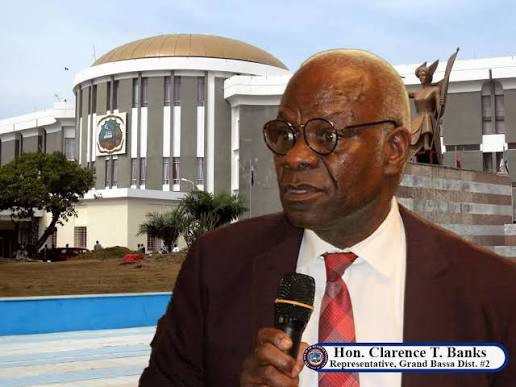
In a significant move aimed at accelerating grassroots development, Representative Clarence Banks has unveiled a fleet of equipment valued at over $500,000 for District 2 in Grand Bassa County, Liberia. The initiative marks one of the most tangible infrastructure interventions in the district in recent years, signaling a shift toward practical, community-centered governance.
The equipment, which includes earth-moving machinery, road maintenance tools, and sanitation support vehicles, is expected to address long-standing challenges in road connectivity, waste management, and local infrastructure development. For many residents of District 2, poor road conditions and limited public works capacity have hindered economic activity, especially in agriculture and small-scale trade.
Speaking during the unveiling ceremony, Rep. Banks emphasized that the investment is part of a broader commitment to improving living conditions and creating economic opportunities at the local level. He noted that development should not remain an abstract promise but must be visible in the daily lives of citizens.
“This equipment represents more than just machinery—it is a tool for transformation,” Banks stated. “We are empowering our communities to take charge of their development and ensuring that government support reaches the grassroots.”
Local leaders and community members welcomed the initiative, describing it as timely and impactful. Many believe that improved road access will enhance market connectivity, reduce transportation costs, and open up rural areas for investment. Others highlighted the potential for job creation, as the operation and maintenance of the equipment will require trained personnel.
Grand Bassa County, one of Liberia’s key economic hubs, has long struggled with uneven development between urban and rural areas. District 2, in particular, has faced infrastructural deficits that have slowed growth despite its strategic location. Analysts suggest that targeted interventions like this could help bridge that gap if sustained over time.
However, some observers also caution that the success of such initiatives will depend on transparency, proper management, and long-term maintenance. Without structured oversight, similar projects in the past have faced challenges ranging from equipment breakdowns to misallocation of resources.
Rep. Banks acknowledged these concerns, assuring constituents that mechanisms are being put in place to ensure accountability and effective use. He also called for community participation in safeguarding the equipment and supporting development efforts.
The unveiling of the $500,000 equipment package comes at a time when citizens across Liberia are increasingly demanding visible returns from elected officials. As political expectations evolve, initiatives like this could redefine how leadership is measured—shifting focus from rhetoric to results.
If effectively implemented, this investment could serve as a model for constituency-driven development across Liberia and beyond, reinforcing the idea that localized solutions remain central to Africa’s broader development agenda.
Leave a Reply