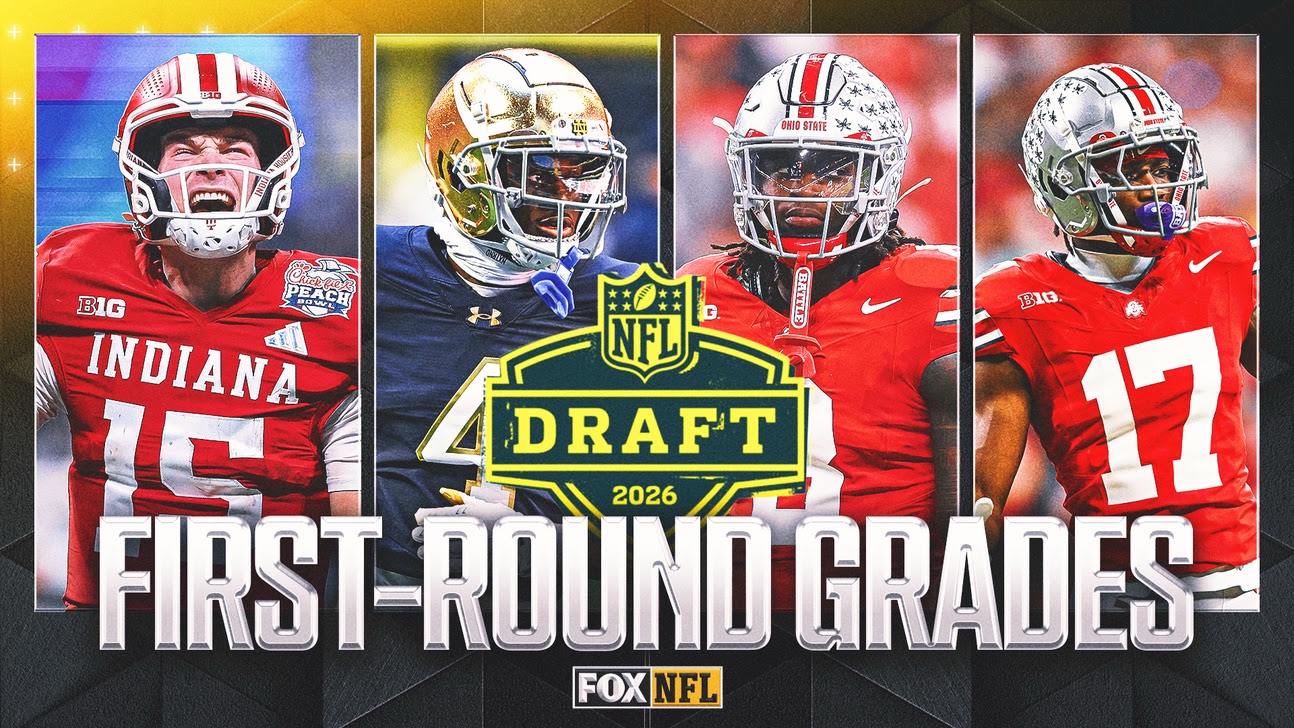
The 2026 NFL Draft opened with a moment that surprised few but still carried historic weight. After months of speculation, debate, and even ridicule in sports circles, the Las Vegas Raiders made it official Thursday night by selecting quarterback Fernando Mendoza as the No. 1 overall pick.
What had once been dismissed as rumor evolved into certainty, signaling not only a new era for the Raiders but also reflecting broader shifts in how NFL franchises evaluate leadership, mobility, and global marketability in quarterbacks.
Yet, while Mendoza’s selection dominated headlines, the real drama unfolded further down the board—particularly in Pittsburgh, where the rest of the first round exposed the increasingly strategic and unpredictable nature of the modern NFL Draft.
The New York Jets emerged as one of the night’s most aggressive franchises, executing multiple trades to secure three first-round picks. Their approach underscores a growing trend in American football: teams are no longer content with incremental rebuilding. Instead, they are leveraging draft capital as a currency, aggressively reshaping rosters in a single night.
In contrast, eight teams did not make a single first-round selection, opting instead to trade away their picks in pursuit of future assets or established talent. This divergence highlights a league increasingly split between “win-now” contenders and long-term rebuilders.
For observers across Africa, where American football continues to gain traction both as a sport and a commercial product, the 2026 Draft offers several important takeaways.
First, the globalization of talent pipelines is accelerating. While Mendoza himself represents the traditional American collegiate system, the NFL’s scouting networks are expanding deeper into international markets—including Africa, where programs such as the NFL Academy and International Player Pathway are steadily producing prospects. The league’s long-term growth strategy increasingly views Africa not just as an audience, but as a talent reservoir.
Second, the economics of the draft reflect broader global sports trends familiar to African football (soccer) fans. Much like European clubs trading players and accumulating transfer assets, NFL teams are embracing a similar model—treating draft picks as flexible instruments in a larger financial and competitive strategy.
Third, the spectacle of the draft itself continues to evolve into a global media event. With digital streaming, social media engagement, and international broadcasting expanding each year, African audiences are becoming a more visible part of the NFL’s global viewership. This has implications for sponsorships, merchandising, and future games potentially hosted on the continent.
Back on the field, analysts have begun grading the Day 1 selections, with early reactions suggesting a mix of calculated risks and bold gambles. The Raiders’ decision to build around Mendoza will ultimately be judged over seasons, not headlines, while the Jets’ aggressive maneuvering could either accelerate their playoff ambitions—or leave them exposed if their picks fail to deliver.
What is clear, however, is that the 2026 NFL Draft reinforced a central truth about modern sports: success is no longer determined solely by talent, but by strategy, timing, and the ability to navigate an increasingly complex ecosystem of data, media, and global influence.
For African fans and stakeholders watching closely, the message is equally significant. As the NFL continues to expand its footprint, the continent’s role—both as a market and as a source of future stars—is likely to grow in tandem.
The draft may have taken place in the United States, but its ripple effects are being felt far beyond—reaching audiences, ambitions, and opportunities across Africa.
:::
Leave a Reply