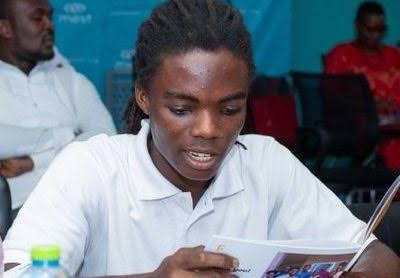
ACCRA, GHANA — Few court cases in recent Ghanaian history have sparked as much national debate about religious freedom, identity, and education as the Rastafarian students’ case involving Achimota School. What began as a dispute over dreadlocks evolved into a landmark legal battle that challenged long-standing institutional policies and raised important questions about constitutional rights in modern Ghana.

The controversy emerged in 2021 when two Rastafarian students, Tyrone Marhguy and Oheneba Kwaku Nkrabea, were denied enrollment at Achimota School after gaining admission through Ghana’s Computerized School Selection and Placement System. School authorities insisted that the students cut their dreadlocks before they could be admitted, citing the institution’s grooming regulations. (Wikipedia)

For the students and their families, however, dreadlocks were not merely a hairstyle. They represented an important expression of their Rastafarian faith and identity. The families argued that forcing the students to cut their hair violated their constitutional rights, including freedom of religion, dignity, and access to education. (Wikipedia)

The case quickly gained national attention, dividing public opinion. Supporters of the students argued that Ghana’s Constitution protects religious expression and that public institutions should accommodate cultural and religious diversity. Others maintained that schools should retain the authority to enforce uniform rules and grooming standards for all students. (Wikipedia)

The matter eventually reached the Human Rights Division of the Accra High Court. In a landmark ruling delivered by Justice Gifty Agyei Addo, the court held that denying admission to the students based on their dreadlocks was unconstitutional. The judge ruled that there was no legal justification for restricting the students’ right to education because of their religious beliefs and appearance. The court ordered Achimota School to admit both students immediately. (Wikipedia)

The judgment was widely celebrated by Rastafarian communities in Ghana and across the African diaspora. Many viewed it as a significant victory for religious liberty and a rejection of discriminatory practices rooted in colonial-era perceptions of acceptable appearance and conduct. The ruling also strengthened legal protections for minority religious groups within Ghana’s educational system. (Face2Face Africa)
Beyond the courtroom, the case became a symbol of broader conversations about African identity, cultural expression, and the lingering influence of colonial standards in public institutions. Advocates argued that hairstyles historically associated with African traditions should not be treated as barriers to education or professional advancement.
The story did not end with the court victory. Tyrone Marhguy went on to excel academically at Achimota School, earning outstanding results in the West African Senior School Certificate Examination. In 2024, he secured a full scholarship to study Computer Engineering at the University of Pennsylvania in the United States, transforming a moment of exclusion into a story of perseverance and achievement. (Wikipedia)
Today, the Rastafarian students’ case stands as one of the most significant human rights decisions in Ghana’s recent history. It reaffirmed that access to education cannot be conditioned on the abandonment of sincerely held religious beliefs and demonstrated the role of the judiciary in safeguarding constitutional freedoms.
For many Pan-African observers, the ruling represents more than a legal victory. It symbolizes an ongoing effort across Africa to reconcile institutional traditions with constitutional principles of equality, diversity, and human dignity. As nations continue to examine questions of identity and inclusion, the Achimota Rastafarian case remains a powerful reminder that education should be a gateway to opportunity, not a test of conformity.
Leave a Reply