

Pan African News | Culture & Music
There are recording studios, and then there are spaces that feel like an extension of the artist themselves.
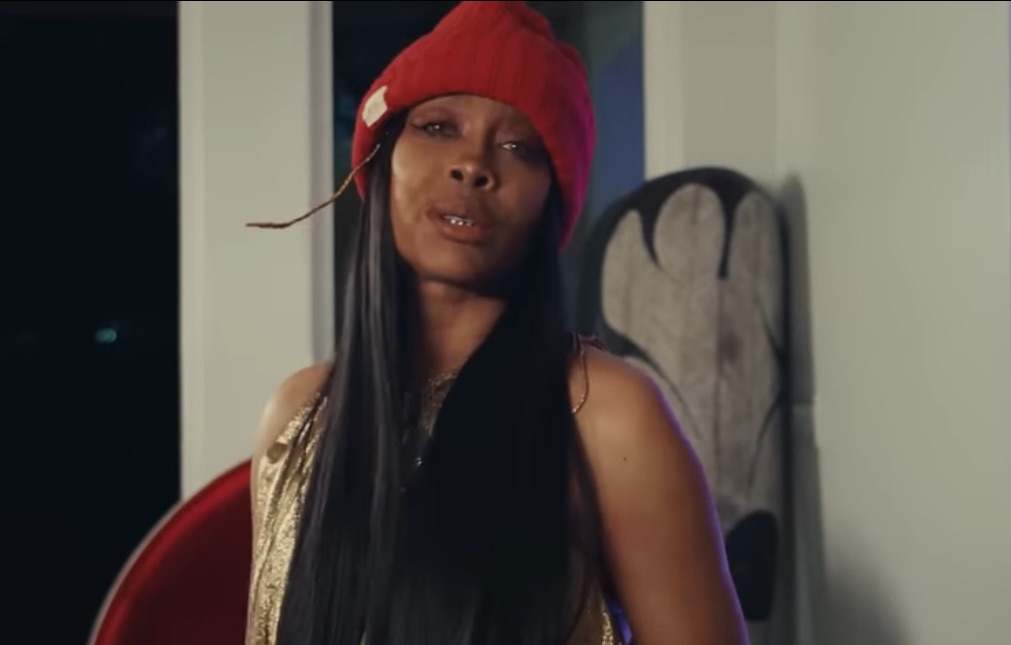
For legendary neo-soul artist Erykah Badu, that space is “The Badudio”—her personal home studio, a creative sanctuary filled with instruments, sounds, spiritual objects and artifacts that reflect the unmistakable imagination behind her music.
In a special edition of Vogue’s “Objects of Affection,” Badu invites audiences inside the Badudio and offers a rare glimpse into the environment where music, experimentation and personal expression come together.
“An OK Keyboard Player”
With her trademark humor, Badu introduces one of the studio’s instruments by saying:
“I’m an OK keyboard player, but when I play this one… Liberace.”
The joke captures something essential about Badu’s relationship with music. She is not simply presenting expensive equipment or memorabilia. Each object represents a potential sound, memory or creative possibility.
Among the treasures she showcases is a vintage Rhodes keyboard, an instrument deeply associated with soul, jazz, funk and R&B.
For an artist whose work has consistently blurred the boundaries between hip-hop, soul, jazz and spiritual exploration, the Rhodes feels perfectly at home in the Badudio.
A Studio Filled With Sound
Badu’s collection goes far beyond keyboards.
She shows viewers ankle bells, massive tuning forks and other unusual sound-producing objects, revealing a creative environment where music doesn’t necessarily begin with a conventional instrument.
The studio becomes almost a laboratory.
A bell can become rhythm.
A tuning fork can become vibration.
A keyboard can become an entire musical universe.
This approach reflects the experimental spirit that has defined Badu throughout her career.
More Than a Recording Room
What makes the Badudio fascinating is its intimacy.
Unlike a commercial recording facility designed primarily for efficiency, Badu’s home studio appears to function as an extension of her personality and creative philosophy.
The objects surrounding her are part of the experience.
They suggest an artist who approaches sound not merely as entertainment but as something physical, emotional and potentially transformative.
That philosophy has long been present in Badu’s work.
From Baduizm to Mama’s Gun and beyond, her music has consistently explored identity, love, spirituality, womanhood, consciousness and Black cultural expression.
The Badudio provides a physical environment for that exploration.
Erykah Badu and the African Diaspora
For Pan-African audiences, Badu’s creative world is particularly significant.
Her artistic identity has frequently drawn from African diasporic traditions, spirituality, fashion and musical history.
She belongs to a generation of Black artists who helped demonstrate that contemporary Black music could embrace ancient references, futuristic ideas and deeply personal spirituality without having to fit neatly into one category.
That freedom is part of Badu’s legacy.
The Badudio represents that same philosophy in physical form.
It is eclectic.
It is unconventional.
It is deeply personal.
And it refuses to separate music from culture.
The Power of the Object
Vogue’s “Objects of Affection” series is built around the idea that personal objects can reveal something deeper about the people who own them.
Badu takes that concept in a particularly interesting direction.
The objects in her studio aren’t simply possessions.
They are tools.
They are memories.
They are instruments.
They are pieces of a larger creative language.
A vintage keyboard tells one story.
Ankle bells tell another.
Massive tuning forks introduce another dimension entirely.
Together, they create a portrait of an artist whose creativity exists beyond the boundaries of a conventional recording booth.
A New Look at a Musical Icon
For decades, Erykah Badu has maintained a unique position in global music.
She is simultaneously a singer, songwriter, producer, performer, fashion icon and cultural figure.
Her influence extends far beyond the traditional categories of R&B and soul.
Artists across hip-hop, alternative music, neo-soul and contemporary African diasporic music have drawn inspiration from the world she helped create.
The Badudio offers fans an opportunity to see where some of that imagination lives.
It also reinforces an important lesson about creativity:
The tools don’t make the artist. The artist gives meaning to the tools.
A keyboard is just a keyboard—until Badu sits down to play it.
Then, as she jokes, perhaps it becomes Liberace.
Behind the Vogue Special
The Vogue production was directed by Araeia Robinson, with cinematography by Karissa Leicht and editing by Tajah Smith.
The production team included Senior Producer Jordin Rocchi, Coordinating Producer Qieara Lesesne, Associate Director of Creative Development Billie JD Porter, and Associate Producer Natalie Harris.
The production and post-production teams included Ava Kashar, Kit Fogarty, Romeeka Powell, Jessica Schier, Justin Symonds, Jovan James, Kameron Key and Nicholas Ascanio, among others.
Vogue’s senior leadership and entertainment teams included Sergio Kletnoy, Rahel Gebreyes, Linda Gittleson, Thespena Guatieri and Executive Producer Ruhiya Nuruddin.
The Badudio as a Cultural Statement
Ultimately, the Badudio is more than a room filled with fascinating instruments.
It is a glimpse into the mind of one of the most distinctive artists of her generation.
Badu demonstrates that creativity can be built from anything—a keyboard, a bell, a vibration, an unusual object or an idea that refuses to fit inside conventional boundaries.
For a global African diaspora that continues to redefine music and culture, that message resonates.
The Badudio is Erykah Badu’s laboratory of sound—but it is also a reminder that Black creativity has never needed permission to be unconventional.
And when Erykah Badu sits down at that Rhodes and transforms “an OK keyboard” into something extraordinary, the joke becomes a statement about artistic power:
The instrument is only the beginning.