



Ouagadougou, Burkina Faso — Burkina Faso is taking a significant step toward preserving and modernizing its traditional medical heritage through a government-led initiative aimed at integrating indigenous medicine into the country’s healthcare system.
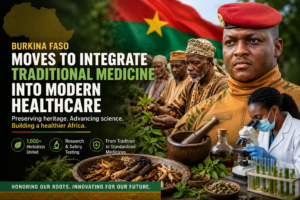
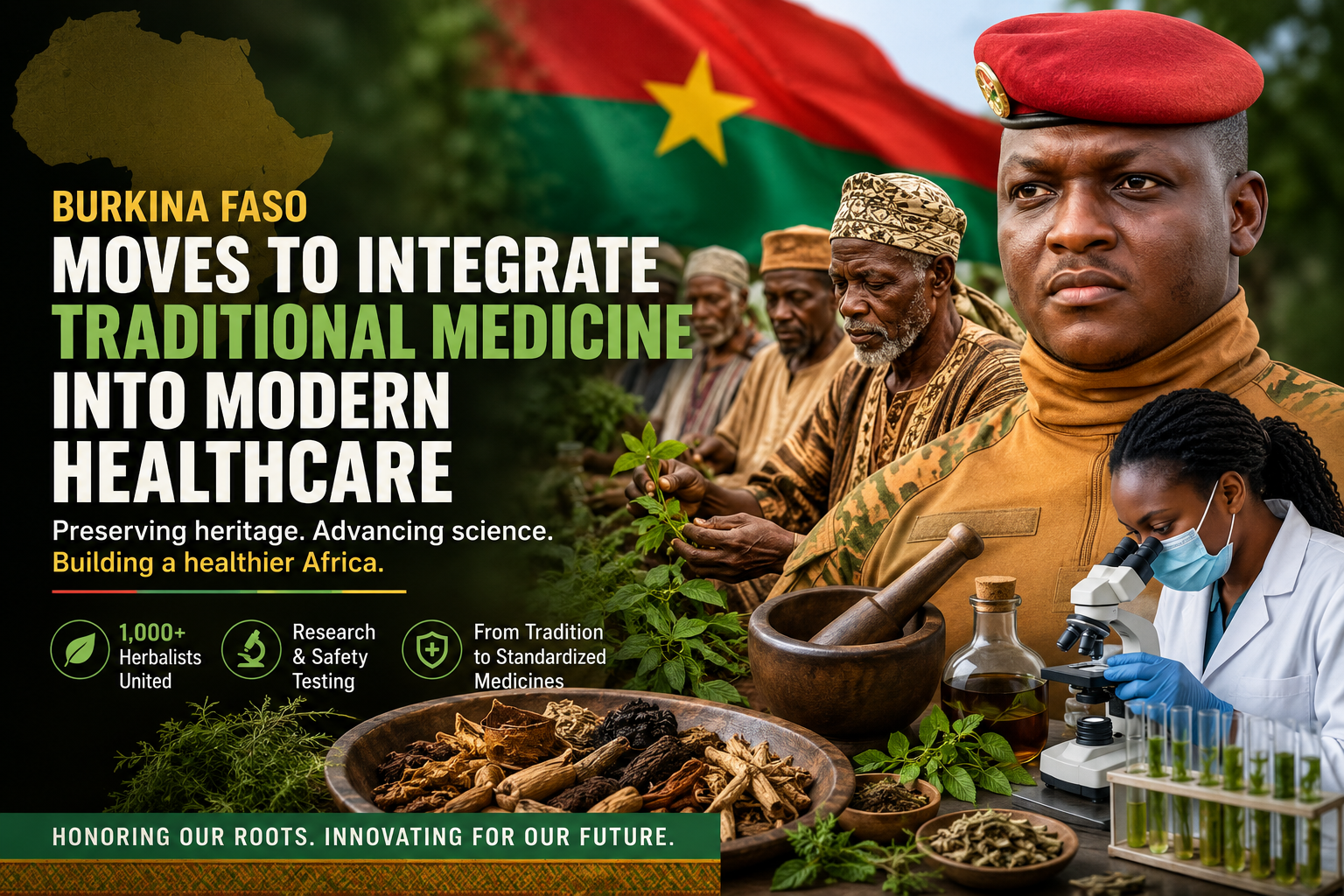
The initiative, backed by President Ibrahim Traoré, seeks to bring together more than 1,000 traditional herbalists and healers from across the country. Its primary objective is to document centuries-old knowledge of medicinal plants, evaluate traditional remedies through scientific research, and develop safe, standardized treatments that could complement modern medical care.
Traditional medicine has long been the first point of healthcare for millions of people across Africa, particularly in rural communities where access to conventional healthcare facilities remains limited. Generations of herbalists have relied on locally available medicinal plants to treat a wide range of illnesses, preserving valuable knowledge that has often been passed down orally.
Under the new program, Burkina Faso plans to systematically record this indigenous expertise before it is lost. Researchers and healthcare professionals are expected to collaborate closely with traditional practitioners to identify medicinal plants, study their therapeutic properties, assess their safety, and determine their effectiveness using modern scientific methods.
Health experts have long argued that combining traditional knowledge with evidence-based medical research can open new opportunities for pharmaceutical innovation while improving access to affordable healthcare. The initiative also aims to establish quality standards and safety protocols for traditional remedies, ensuring that any treatments adopted into the national healthcare system meet accepted medical and scientific standards.
Beyond healthcare, the project represents an important effort to preserve Burkina Faso’s cultural heritage. Indigenous knowledge has played a central role in African societies for centuries, and documenting these practices could protect valuable information for future generations while promoting local research and innovation.
If successfully implemented, Burkina Faso could become one of the leading African countries advancing collaboration between traditional medicine and modern healthcare. The initiative may also encourage other nations across the continent to invest in scientific research on indigenous medicinal plants while recognizing the important role traditional healers continue to play in community health.
As African countries increasingly seek homegrown solutions to healthcare challenges, Burkina Faso’s approach highlights the potential of combining ancestral knowledge with modern science to build a more inclusive, sustainable, and culturally relevant healthcare system.