
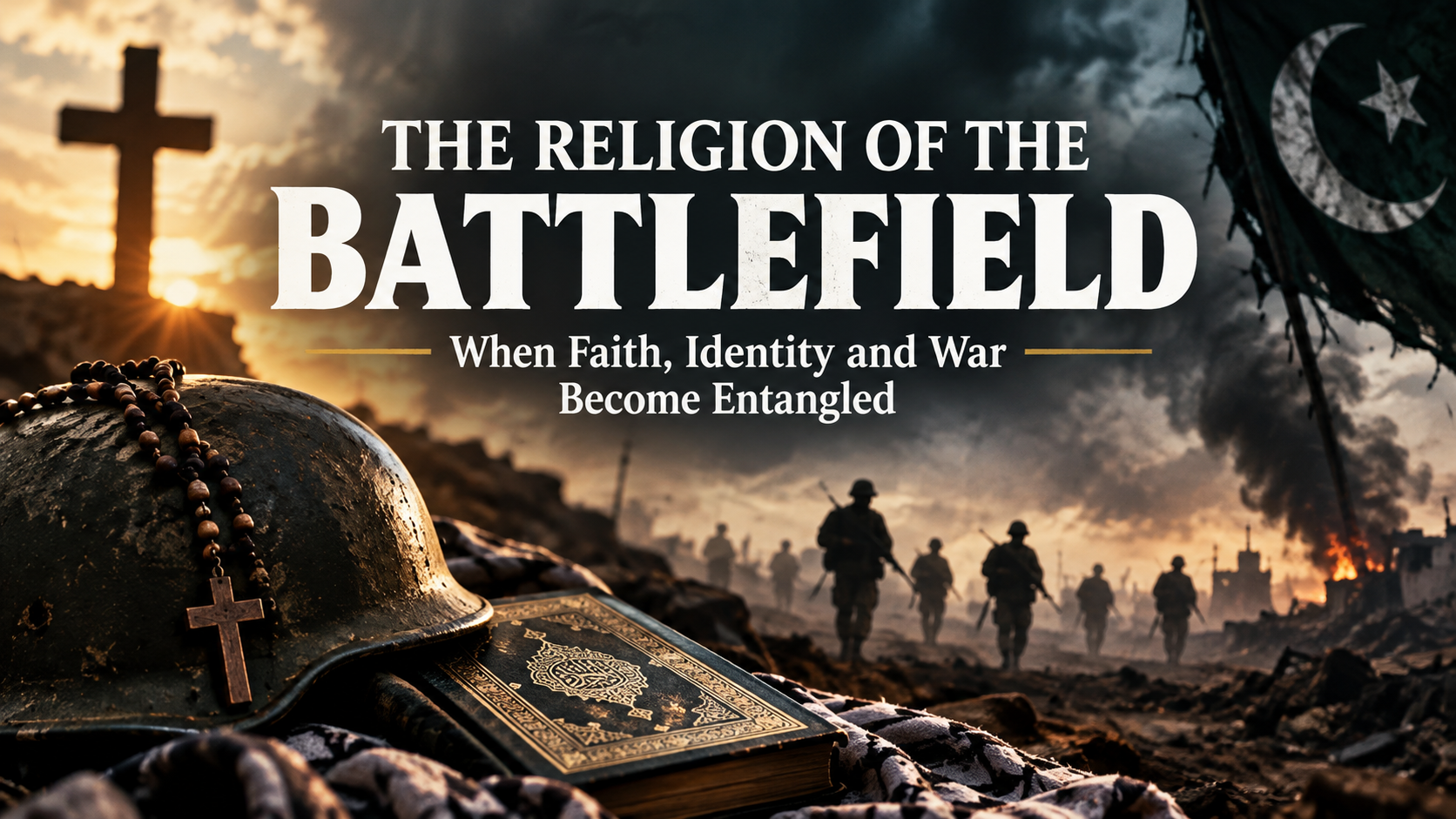
Before the first drone rises, a story has usually already been written.
Who are we? Who are they? What land is ours? Who betrayed us? Who has authority? What does God require? What does history remember?
Those questions can become more powerful than weapons because they create the emotional architecture through which people understand violence.
THE SAHEL IS NOT AN EMPTY MAP

The Sahel is a civilization zone with long histories of Islam, scholarship, trade, empires, Sufi orders, indigenous traditions, colonial borders and postcolonial state formation. Reducing today’s armed movements to a simple label such as “terrorist” can describe their legal status while telling us very little about the social environment in which they recruit, govern, intimidate or survive.
That does not excuse violence against civilians. It explains why security analysis must go deeper.
THE ENGINEERS OF BELIEF
Every organized movement has people who construct its narrative: preachers, propagandists, political organizers, financiers, recruiters, media operators and community intermediaries. Some are ideologues. Some are opportunists. Some believe sincerely. Others simply adapt to power.
Understanding those roles is essential to understanding how an organization survives.
WHAT ABOUT THE CULTURE?
African history contains traditions of initiation, sacred symbolism, esoteric knowledge, divination and secret societies. European colonial archives also frequently described African institutions through their own prejudices. Modern political movements sometimes adopt symbols from older traditions, while conspiracy narratives may exaggerate those connections.
The rule for serious journalism is simple: follow the evidence. A symbol is evidence of symbolism. It is not automatically evidence of an operational conspiracy.
That distinction allows us to investigate uncomfortable subjects without surrendering our intellectual discipline.
THE REAL WEAPON
The most dangerous weapon may not be the drone. It may be the story that convinces a population that another human being is no longer worthy of protection.
That is why counter-extremism is also a battle over history, education, identity, justice and economic opportunity.

Editorial note: panafrican.email/ distinguishes documented religious affiliation, ideology and organizational history from speculation or conspiracy claims.
Leave a Reply