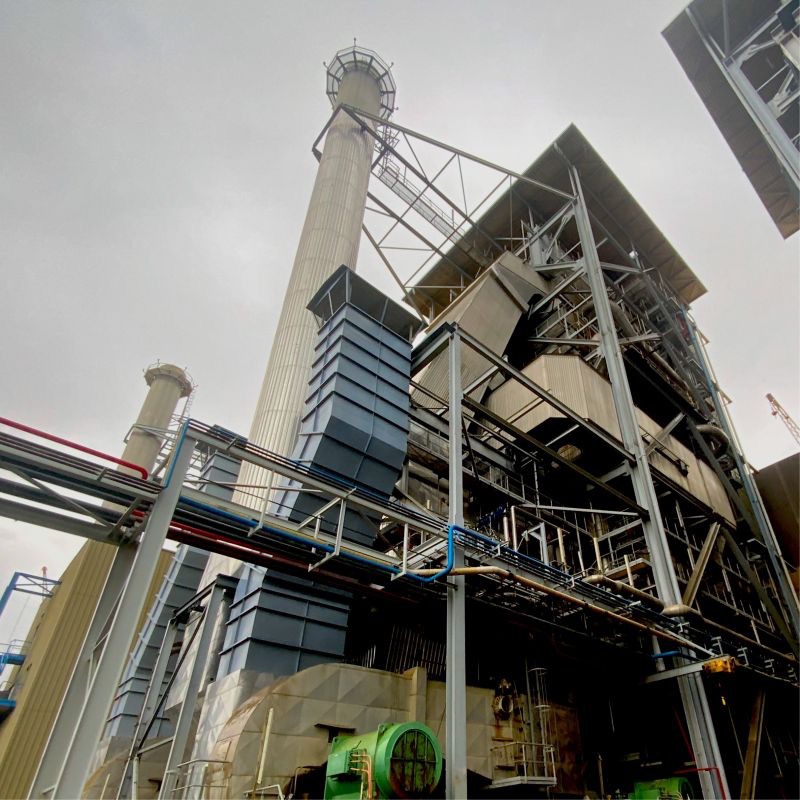
China is building the world’s next power grid, and America is left behind.
Last year, the New York Times Magazinefollowed a high-voltage transmission line passing through the mountainous provinces in northern Laos. Built by Chinese firms, it will soon send wind and solar power north into China’s grid. On paper, it’s a clean energy success. In practice, it’s a strategy that “exports not only turbines and panels”- (New York Times Magazine 2023) — but also service contracts, standards, and long-term influence.
Across Asia, Africa, and Latin America, Chinese engineers are building new solar farms, battery plants, and transmission lines expeditiously, outpacing everyone else. In 2024 alone, Chinese companies exported about 236 gigawatts of solar panels, 13 percent higher from the year before, according to PV magazine.
This isn’t just a story about trade. It’s about who gets to design the future of energy and whose systems the world depends on.
The next grid is being built elsewhere
“Most of the world’s new electricity demand will come from emerging and developing economies, not from the US or Europe” — according to the International Energy Agency (IEA) 2025 analysis and forecast to 2027.
It estimates that 85 percent of additional demand through 2027 will come from those regions.
And China is showing up to meet it. According to Wood Mckenzie, Chinese firms have completed 369 overseas power projects totaling 156GW under Belt and Road initiative (Wood Mckenzie, 2025) with their share of renewable installations in developing markets climbing up rapidly in recent years.
In Kenya, a transmission line financed by China’s Export-Import Bank now connects new renewable plants to major cities. In Pakistan, dozens of wind and solar projects operate under the China-Pakistan Economic Corridor. And in Indonesia,Chinese investment in clean energy and battery manufacturing exceeded $10 billion in 2024. These projects aren’t waiting for international pledges or development conferences. They are getting built, powering homes, and defining tomorrow’s standards.
Financing is Power
The reason China can build abroad so quickly is because of their finance capacity to fund projects at massive scale and lightning speed.
A research by ClearPath report showed that since 2015, Chinese state banks have provided roughly $446 billion in overseas energy financing, a number that is ten times more than the US’s investment, which is about $45 billion over the same period (ClearPath, 2025).

Similarly, Brookings Institution found China’s two main policy banks funded nearly $200 billion in energy projects abroad during a period between 2007 and 2016, which is “more than all Western-backed development banks combined”(Brookings Institution, 2021).
Every loan typically comes with hardware, engineers, and training. Once a project is built, maintenance and spare parts flow through Chinese companies, locking up long-term business relationships.
By contrast, the US development finance remains slow and small. The Center for Strategic and International Studies warns that without reform, America “risks ceding long-term economic and geopolitical gains” to competitors who simply move faster (CSIS, 2025).
Why it matters
The country that empowers the grid leads the world’s energy sector. When a power network runs on a single supplier’s technology, future upgrades and service contracts often come along. It’s not only about hardware, but also about trust and leverage. Leadership in clean energy will come from project developments on global scale.
The US still leads the world in innovation. But in the race to deploy and deliver, China is far ahead, and they shape the rules of the market wherever they go.
Three moves America must make:
- Build abroad, not just at home
Put real money behind clean energy projects overseas, from solar farms, batteries, microgrids, transmission lines, to future technologies in energy efficiency, carbon removal, using US companies and local workers. - Build partnerships
Partner with friendly countries to assemble and manufacture clean energy equipment locally. Shared assets to create jobs and stabilize supply chains. - Lead by example
Deliver visible, reliable projects with transparent contracts, on-time results to make lasting impacts. Build credibility by powering and meeting up global energy demand.
The US already has tools, talents, and financing capacity. But they lack determination and a sense of urgency to compete where demand is greatest.
Building a Strong Energy Legacy
In the twentieth century, power was measured in barrels of oil. Nowadays, it’s measured in megawatts and transmission lines.
The grid humming across Laos isn’t just carrying electricity but influence. If America wants to shape the future, it must get back to what it does best: building things that last.
We can still lead the worlds’ clean energy race — but only if we show up to build it abroad, not just at home.
Leave a Reply