The United States Federal Bureau of Investigation (FBI) has once again found itself at the center of major security and cybercrime discussions in Ghana this week, as reports emerged of joint operations, law enforcement training, and ongoing investigations tied to international fraud networks operating across West Africa.
Much of the activity appears connected to a broader campaign targeting cybercrime syndicates, online romance scams, financial fraud, and transnational organized crime networks that allegedly use Ghana as part of larger international operations. Ghanaian authorities, including the Ghana Police Service, the Cyber Security Authority, and the Economic and Organised Crime Office (EOCO), have increasingly partnered with American agencies as cyber-enabled fraud becomes a global concern.
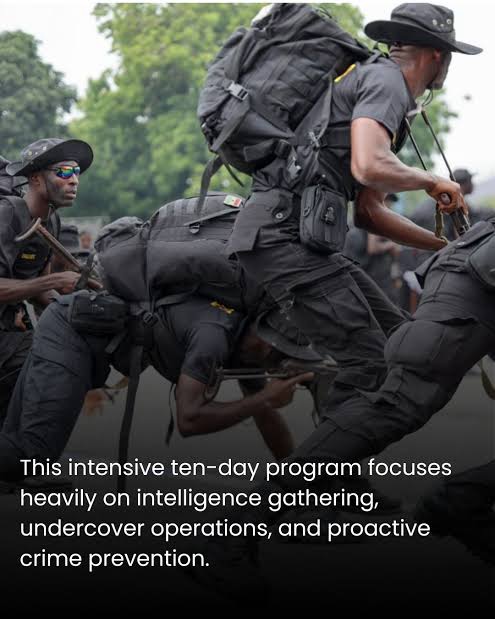
One of the biggest developments circulating this week involved reports that FBI instructors were actively training Ghanaian officers in advanced intelligence gathering, digital forensics, and counter-extremism investigations. According to social media and police-linked reports, the training focused on combating transnational crime, cyber fraud, and violent extremist threats.
The collaboration reflects a growing recognition that cybercrime in West Africa is no longer viewed as isolated internet fraud, but as part of sophisticated international criminal systems involving money laundering, cryptocurrency transfers, fake identities, phishing operations, and AI-assisted scams. Ghana’s own cybersecurity officials have warned that criminals are increasingly using artificial intelligence tools faster than governments can adapt.
At the political level, discussions intensified after reports connected an FBI-linked international fraud investigation to the detention of Ghanaian MP Ohene Kwame Frimpong in the Netherlands over alleged money laundering and romance scam activities reportedly worth tens of millions of dollars. Multiple reports indicated the investigation involved cooperation between several international agencies, including the FBI.
Meanwhile, public attention in Ghana continues to focus on a wave of arrests and investigations involving alleged “sakawa” networks — a local term commonly associated with internet fraud and cyber scams. Over the past year, Ghanaian police and international partners have reportedly intensified raids on suspected cybercrime hubs in Accra and other urban areas.

Ghana Police Service, helmed by IGP Christian Tetteh Yobuno, to receive FBI training to combat transnational crime. Photo credit: Ghana Police Service & FBI/Facebook.
Several recent crackdowns uncovered disturbing allegations involving human trafficking and coerced cybercrime labor. Reports indicated that some foreign nationals were lured to Ghana with promises of tech jobs, only to allegedly have passports confiscated and be forced into online scam operations.
The FBI’s presence in Ghana this week also highlights a larger geopolitical shift. Washington increasingly sees cybersecurity and financial fraud in Africa as matters tied not only to criminal justice, but also to international banking security, terrorism financing prevention, and digital infrastructure protection. Ghana has become an important regional partner because of its relatively advanced cyber institutions and expanding digital economy.
Cybersecurity experts in Ghana say the partnership has both benefits and risks. Supporters argue that international cooperation helps Ghana tackle sophisticated fraud networks that move money across borders faster than local agencies can track. Critics, however, warn that Africa risks becoming overly dependent on foreign intelligence systems rather than building independent continental cyber defense structures.
For many ordinary Ghanaians, the renewed FBI visibility also raises questions about reputation and economic consequences. Ghana has spent years marketing itself as a stable destination for investment, tourism, diaspora return programs, and technology startups. High-profile fraud investigations and international arrests could complicate that image if authorities fail to balance enforcement with broader economic development.
At the same time, others argue the crackdown is necessary to protect Ghana’s future digital economy. With mobile money, fintech platforms, cryptocurrency trading, and AI technologies rapidly expanding across Africa, governments face increasing pressure to prove they can secure online systems and prevent international fraud syndicates from taking root.
The FBI’s activities this week suggest Ghana is becoming a key frontline state in Africa’s cyber-security battle — one where law enforcement, technology, geopolitics, and economic sovereignty are becoming deeply interconnected.
Leave a Reply