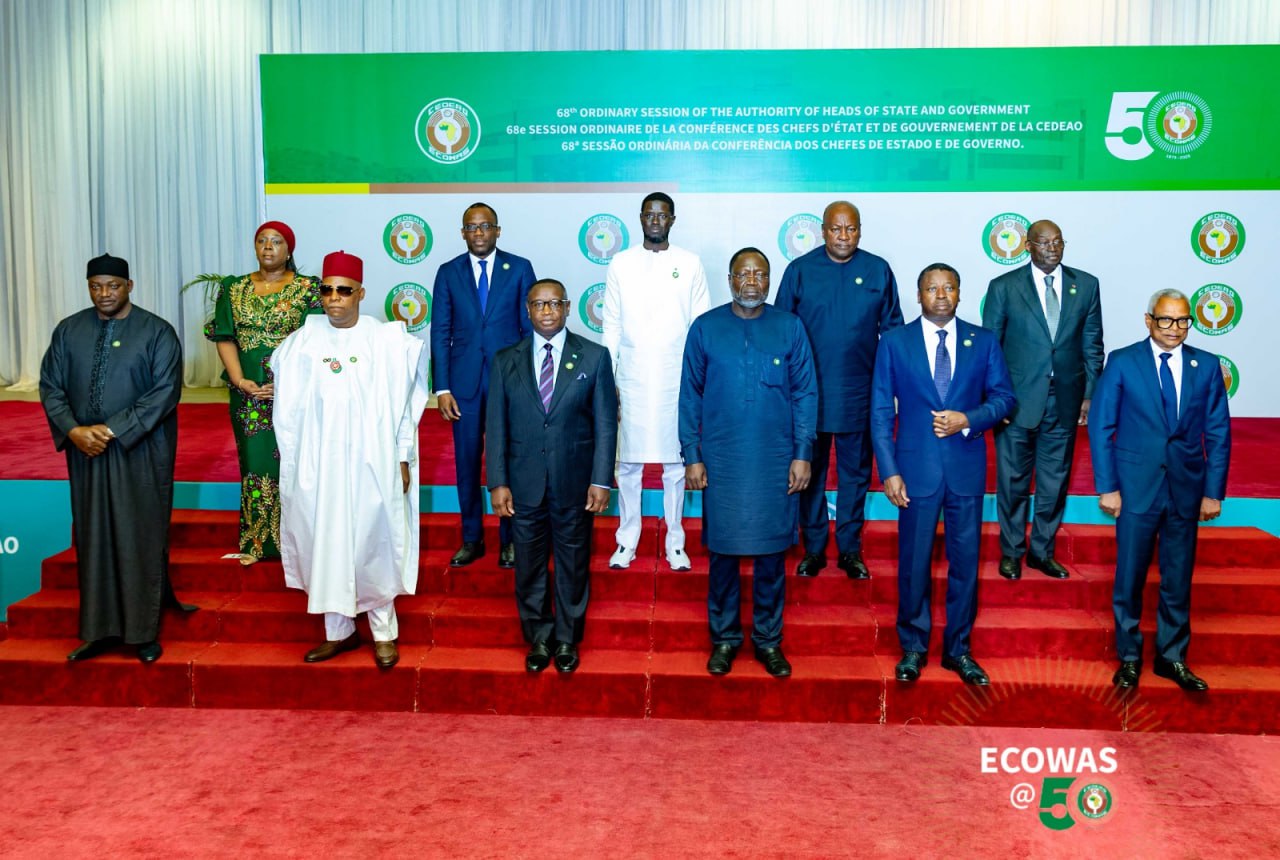
West African nations Benin, Côte d’Ivoire, Ghana, Nigeria, and Togo are set to receive immediate financial support for combating terrorism, as the Economic Community of West African States (ECOWAS) approves a major security package. The bloc has also moved to activate a formidable 260,000-strong regional counter-terrorism brigade, signaling a decisive and costly response to an insecurity crisis that is spreading from the Sahel toward the coast.
The decisions, finalized at the recent 69th Ordinary Session of the ECOWAS Authority of Heads of State and Government, come amid a stark regional reality. The Central Sahel region accounted for a staggering 51% of all global terrorism-related deaths in 2024. This epicenter of violence, driven by armed groups affiliated with al-Qaeda and the Islamic State, is now directly impacting neighbouring coastal states once considered buffers.
The Immediate Response: Emergency Funding for Frontline States
ECOWAS has directed the immediate allocation of $2.85 million each to Benin, Côte d’Ivoire, Ghana, Nigeria, and Togo from the Regional Security Fund. This targeted funding is subject to a review of each country’s approved Plan of Action and is designed to bolster national efforts against immediate threats like terrorism, banditry, and kidnappings.
The approval of this funding underscores a critical shift. Nations like Benin, Ghana, and Togo are increasingly on the frontline, experiencing direct spillover of jihadist incursions from the unstable Sahel. The funds are intended to enhance border security, intelligence capabilities, and rapid response to attacks in these vulnerable zones.
The Long-Term Strategy: A $2.5 Billion Annual Regional Brigade
Beyond immediate cash injections, ECOWAS has committed to a vastly more ambitious project: making the Regional Counter-Terrorism Brigade fully operational. This proposed rapid deployment force would consist of approximately 260,000 troops and require an estimated $2.5 billion in annual funding.
· Purpose and Function: The brigade is designed to provide logistical and financial support to frontline states and serve as a collective defense mechanism. It aims to complement the African Union’s standby force framework, creating a dedicated West African instrument to tackle asymmetric security threats.
· Financing the Force: Recognizing the monumental cost, ECOWAS leaders have thrown “the gauntlet to bilateral and multilateral partners” for support. They point to UN Security Council Resolution 2719 (2023), which pledges to fund 75% of African-led peace support operations, as a potential financial avenue. ECOWAS Finance and Defence Ministers are tasked with finalizing the complex implementation and funding modalities.
The Human Cost: A Deepening Humanitarian Crisis
The urgent need for these security measures is reflected in the devastating humanitarian situation unfolding across the region, particularly in the Central Sahel states of Burkina Faso, Mali, and Niger.
Burkina Faso alone illustrates the scale of the crisis:
· An estimated 5.9 million people will need humanitarian assistance in 2025.
· Conflict has internally displaced approximately 2 million people and forced over 42,000 to flee as refugees.
· The violence has shuttered over 5,000 schools, affecting more than 800,000 children, and closed 424 health facilities, leaving millions without access to care.
Armed groups systematically use blockades, improvised explosive devices (IEDs), and direct attacks on civilians as tactics of war, leading the Global Centre for the Responsibility to Protect to warn of ongoing war crimes and crimes against humanity. Counter-terrorism operations by state forces and associated militias have also been implicated in grave human rights violations, creating a cycle of violence and impunity.
Strategic Implications and Challenges
The ECOWAS security push is fraught with complexity and faces significant hurdles:
· The AES Factor and Regional Fragmentation: The call for collaboration with the Alliance of Sahel States (AES)—comprising Burkina Faso, Mali, and Niger—is particularly delicate. These three nations, all ruled by military juntas, formally withdrew from ECOWAS in January 2025. Their alliance with Russian military contractors (formerly the Wagner Group) and strained relations with former ECOWAS partners create a major geopolitical rift. Any meaningful collaboration would require navigating deep political and strategic divisions.
· The Financing Gap: The $2.5 billion annual price tag for the counter-terrorism brigade is a colossal sum. Securing sustainable funding from economically strained member states and uncertain international partners remains the plan’s most significant challenge.
· Balancing Security and Rights: As documented in the Sahel, a militarized approach risks exacerbating human rights abuses and inter-communal tensions if not strictly governed by international humanitarian law. ECOWAS will be under scrutiny to ensure its new force adheres to the highest standards of civilian protection.
A Region at a Crossroads
ECOWAS’s dual strategy of immediate financial aid and long-term military consolidation marks a critical juncture in West Africa’s fight against instability. The decisions reflect a clear acknowledgment that the terrorist threat is now a collective, regional emergency that no single nation can contain.
The success of this ambitious plan hinges on two fragile pillars: mending fractured political relationships within West Africa itself, particularly with the AES states, and unlocking the massive international financing required. As security ministers meet to finalize plans, the citizens of the region await a solution that can bring not only force, but lasting peace and stability to a troubled landscape.
Leave a Reply