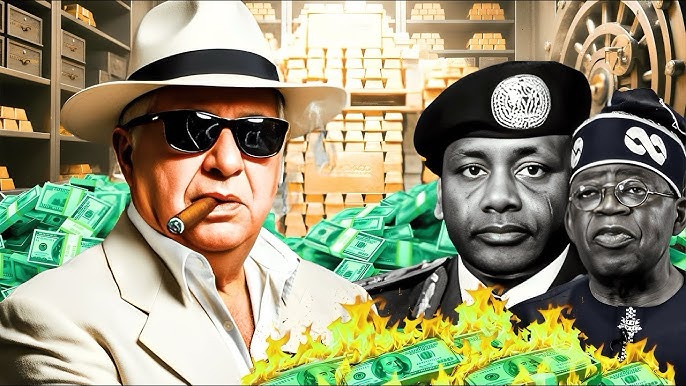
In a country where public memory often collides with political reinvention, the story of one Lebanese-Nigerian billionaire stands as a striking example of how power, wealth, and influence can reshape legacy. Once convicted for laundering billions tied to one of Africa’s most infamous dictators, he has, three decades later, emerged as Nigeria’s most dominant private infrastructure contractor—earning not only lucrative state-backed projects but also one of the nation’s highest honors.
His journey begins in the shadow of Nigeria’s military era, a time marked by vast oil wealth and even larger-scale corruption. During this period, billions of dollars were siphoned from public coffers and funneled through complex international financial networks. At the center of one such operation was this businessman, whose conviction for laundering stolen funds tied him directly to the machinery of state plunder.
While many figures associated with that era faded into obscurity or exile, his trajectory took a dramatically different turn.
Over the years, he quietly rebuilt his business empire, positioning himself at the heart of Nigeria’s construction and infrastructure boom. Today, his companies are responsible for some of the country’s most critical projects—roads, bridges, and federal developments that shape the daily lives of millions. With government contracts worth billions of dollars, his firm has become synonymous with large-scale infrastructure delivery in Nigeria.
Yet, this resurgence has not occurred in isolation. It has unfolded alongside deepening ties to Nigeria’s political elite. Most notably, the current president—who recently conferred upon him the country’s second-highest national honor—maintains a personal connection that has drawn increasing scrutiny. The president’s son is reportedly linked to a business venture with the billionaire, raising questions about the intersection of public office and private enterprise.
Critics argue that this relationship underscores a broader pattern within Nigeria’s political economy, where accountability is often eclipsed by patronage and strategic alliances. They point to the symbolism of honoring a figure with a controversial past as evidence of systemic amnesia—or, worse, deliberate indifference to historical wrongdoing.
Supporters, however, offer a different perspective. They highlight the billionaire’s role in delivering critical infrastructure in a country where such projects are frequently delayed or abandoned. To them, his efficiency and capacity outweigh the controversies of decades past, reflecting a pragmatic approach to national development.
This tension—between accountability and utility—lies at the heart of the debate.
Across Africa, similar narratives have emerged, where individuals once entangled in corruption scandals re-enter the public sphere through economic influence and political alignment. Nigeria’s case, however, is particularly stark given the scale of its infrastructure needs and the visibility of the figures involved.
As Nigeria continues its push for modernization, the question remains: can a nation build a transparent and equitable future while relying on actors whose pasts are deeply intertwined with its most troubled chapters?
For now, the billionaire’s ascent appears complete—from convicted financier of illicit wealth to decorated architect of national development. But his story serves as more than a personal transformation; it is a mirror reflecting the complexities, contradictions, and unresolved tensions within Nigeria’s governance landscape.
:::
Leave a Reply