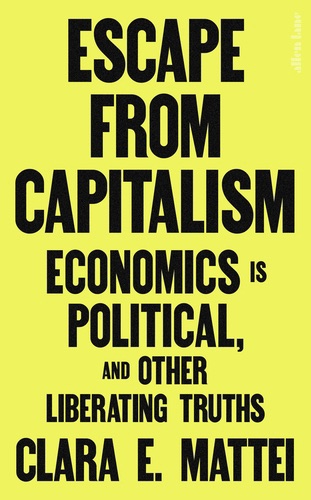
Clara Matteï’s incisive analysis reveals capitalism not as an inevitable economic law, but as a deliberate tool of social control—imposed through austerity, labor discipline, and resource extraction that have long disadvantaged African nations.
Drawing from her expertise in political economy, Matteï unpacks how colonial legacies evolved into modern neoliberal policies, trapping Global South economies in debt cycles and foreign dominance while prioritizing profit over people.
Capitalism’s African Legacy
In Africa, capitalism manifests through structural adjustment programs that gutted public services, privatized vital resources, and empowered multinational corporations over local sovereignty. Matteï highlights how these mechanisms—echoing 19th-century enclosures—dispossess communities, from Burkina Faso’s gold mines to Nigeria’s oil fields, mirroring the primitive accumulation Karl Marx critiqued.
This isn’t mere economics; it’s a class project sustaining inequality. African labor bears the cost: informal workers in Accra’s markets or Sahel farmers face precariousness while elites and foreign interests reap gains.
Ubuntu as Antidote
Matteï pivots to Ubuntu—the African philosophy of “I am because we are”—as a viable alternative. Ubuntu rejects capitalism’s individualism, emphasizing communal wealth, mutual aid, and collective decision-making rooted in pre-colonial systems like Ghana’s asafo societies or Zimbabwe’s zvimbaradzo.
She offers practical pathways: community land trusts to halt extractive mining; cooperative banking models like Kenya’s savings groups, scaled continent-wide; and barter networks bypassing IMF diktats.
Implementation Roadmap
Matteï proposes phased transitions tailored to Pan-African realities.
- Local Economies First: Revive village cooperatives for food sovereignty, as seen in Mali’s onion collectives, ensuring surplus feeds communities not commodity markets.
- Regional Alliances: AFCS-style blocs negotiate fair trade, pooling resources like the Sahel’s lithium without Western middlemen.
- Policy Shifts: Universal basic services—water, healthcare, education—funded by progressive resource taxes, dismantling debt servitude.
These steps build resilience against shocks, from climate crises to geopolitical meddling.
Pan-African Imperative
For Matteï, Ubuntu economics demands Pan-African unity. Isolated nations remain vulnerable; a federated Africa could leverage its 1.4 billion people and vast resources to dictate terms globally.
Leaders like Burkina Faso’s Ibrahim Traoré embody this shift, nationalizing assets and fostering Sahelian solidarity. Yet scaling requires mass education—workshops blending Matteï’s critique with indigenous wisdom.
Africa stands at a crossroads: perpetuate capitalism’s grind or reclaim Ubuntu’s promise of shared prosperity.
Leave a Reply