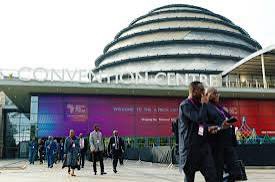
The 2026 edition of the Africa CEO Forum 2026 has officially opened in Kigali, bringing together some of the continent’s most influential business executives, investors, policymakers, and development leaders for one of Africa’s largest private-sector gatherings. Organized by Jeune Afrique Media Group in partnership with the International Finance Corporation, this year’s summit arrives at a critical moment for African economies navigating rising global uncertainty, inflationary pressures, shifting trade dynamics, and rapid technological transformation.
With the bold theme “Scale or Fail,” the forum places a spotlight on one central challenge facing African enterprises: how to build companies capable of competing at continental and global levels in an increasingly competitive economic environment.
More than 2,500 participants from approximately 75 countries are expected to attend the summit, including chief executives, government officials, financial institutions, sovereign wealth funds, startup founders, infrastructure developers, and multinational corporations. The gathering reflects Africa’s growing ambition to strengthen regional integration, industrial capacity, and private-sector leadership as the continent positions itself for long-term economic growth.
Throughout the opening ceremony, speakers emphasized that Africa can no longer rely solely on fragmented local markets or small-scale enterprise models if it hopes to unlock its full economic potential. Instead, business leaders called for accelerated investment in infrastructure, digital connectivity, manufacturing, logistics, energy systems, and cross-border trade under frameworks such as the African Continental Free Trade Area.
The “Scale or Fail” message resonates strongly across industries ranging from fintech and telecommunications to agriculture, construction, logistics, mining, and renewable energy. Many African companies continue to face barriers including limited access to capital, unstable energy supply, regulatory fragmentation, and currency volatility. Forum participants argue that overcoming these structural challenges will require stronger collaboration between governments, regional institutions, and private investors.
A major focus of the summit is expected to center on financing African growth. Development finance institutions and global investors attending the forum are examining new strategies to support high-growth African enterprises capable of expanding across borders. Discussions are also expected to address the role of artificial intelligence, data infrastructure, digital banking, and innovation ecosystems in shaping Africa’s next economic chapter.
Political leaders attending the forum highlighted the importance of economic sovereignty and regional resilience amid ongoing global geopolitical shifts. As supply chains continue to evolve worldwide, many African executives see an opportunity for the continent to emerge as a major manufacturing, technology, and industrial hub rather than remaining primarily an exporter of raw materials.
The choice of Kigali as host city further reinforces Rwanda’s growing reputation as a center for innovation, business diplomacy, and continental cooperation. Over the past decade, Rwanda has invested heavily in technology infrastructure, conference tourism, aviation, and ease-of-business reforms, positioning itself as a strategic meeting point for African and international business communities.
Observers note that the conversations taking place at the Africa CEO Forum extend beyond corporate growth alone. At stake is the broader question of whether Africa can produce globally competitive institutions capable of creating jobs, retaining talent, increasing industrial output, and accelerating economic transformation for its rapidly expanding population.
As the summit continues over the coming days, panel discussions and strategic meetings are expected to produce new investment partnerships, policy recommendations, and cross-border business initiatives aimed at strengthening Africa’s position within the global economy.
For many participants, the message emerging from Kigali is clear: in the modern global marketplace, African businesses must expand, innovate, and integrate at scale — or risk being left behind.
Leave a Reply