
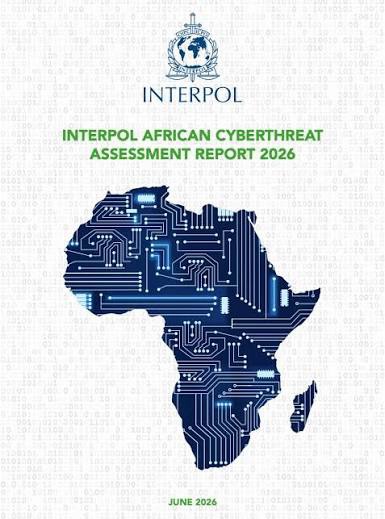
Artificial intelligence (AI) has become a major driver of cybercrime across Africa, with more than half of reported cyber-related crimes now involving AI-powered tools, according to INTERPOL’s African Cyberthreat Assessment Report 2026. The findings highlight a rapidly evolving digital threat landscape, where cybercriminals are increasingly leveraging advanced technologies to execute sophisticated attacks against individuals, businesses, and governments.
The report reveals that AI is enabling cybercriminals to automate scams, generate highly convincing phishing emails, create realistic deepfake videos and voice recordings, and develop malware capable of bypassing traditional security measures. These capabilities have significantly increased both the scale and effectiveness of cyberattacks across the continent.
According to INTERPOL, cybercriminals are using generative AI to impersonate business executives, government officials, and trusted organizations, making fraudulent communications more believable than ever before. Victims are often tricked into revealing sensitive information, transferring funds, or downloading malicious software without realizing they are being targeted.
Financial institutions, telecommunications companies, healthcare providers, educational institutions, and government agencies remain among the sectors most frequently targeted. Small and medium-sized enterprises (SMEs), many of which lack advanced cybersecurity infrastructure, have also become increasingly vulnerable to AI-assisted cyberattacks.
The report notes a sharp increase in ransomware attacks, business email compromise (BEC), identity theft, investment scams, online banking fraud, and social engineering campaigns. Criminal networks are now able to launch thousands of personalized phishing attempts simultaneously, dramatically increasing their chances of success while reducing operational costs.
INTERPOL warns that the rapid expansion of internet connectivity, mobile banking, digital payments, and e-commerce across Africa has created new opportunities for cybercriminals. While digital transformation continues to drive economic growth and financial inclusion, it also expands the attack surface for malicious actors.
Law enforcement agencies across Africa are facing growing challenges in combating these threats. The speed at which AI technologies evolve often outpaces existing legal frameworks, investigative capabilities, and cybersecurity resources. INTERPOL is urging African governments to strengthen regional cooperation, invest in cybersecurity training, modernize digital crime legislation, and enhance intelligence sharing among member states.
The organization also emphasizes the importance of public awareness campaigns to educate citizens about recognizing phishing attempts, verifying online communications, protecting personal information, and using multi-factor authentication to secure digital accounts.
Cybersecurity experts believe that artificial intelligence itself can become part of the solution. AI-powered threat detection systems are increasingly being deployed to identify suspicious network activity, detect fraudulent transactions, and respond to cyber incidents in real time. However, experts stress that defensive technologies must continue evolving to keep pace with increasingly sophisticated criminal tactics.
As Africa accelerates its digital transformation, the INTERPOL report serves as a stark reminder that cybersecurity must become a central pillar of the continent’s digital economy. Governments, businesses, financial institutions, technology providers, and citizens all have a critical role to play in strengthening digital resilience and safeguarding trust in online services.
With AI reshaping both innovation and criminal activity, experts agree that proactive collaboration, investment in cybersecurity infrastructure, and continuous public education will be essential in reducing cyber risks and ensuring Africa’s digital future remains secure.
Source: INTERPOL African Cyberthreat Assessment Report 2026.
🚨 INTERPOL report finds AI linked to more than half of cybercrime in Africa
Cyberattacks are becoming faster, more scalable, and increasingly difficult for victims and platforms to detect, according to INTERPOL’s African Cyberthreat Assessment Report 2026.
The report points to… pic.twitter.com/0fhwhthU5V
— INTERPOL (@INTERPOL_HQ) August 3, 2026