
panafrican.email · Horn of Africa ·
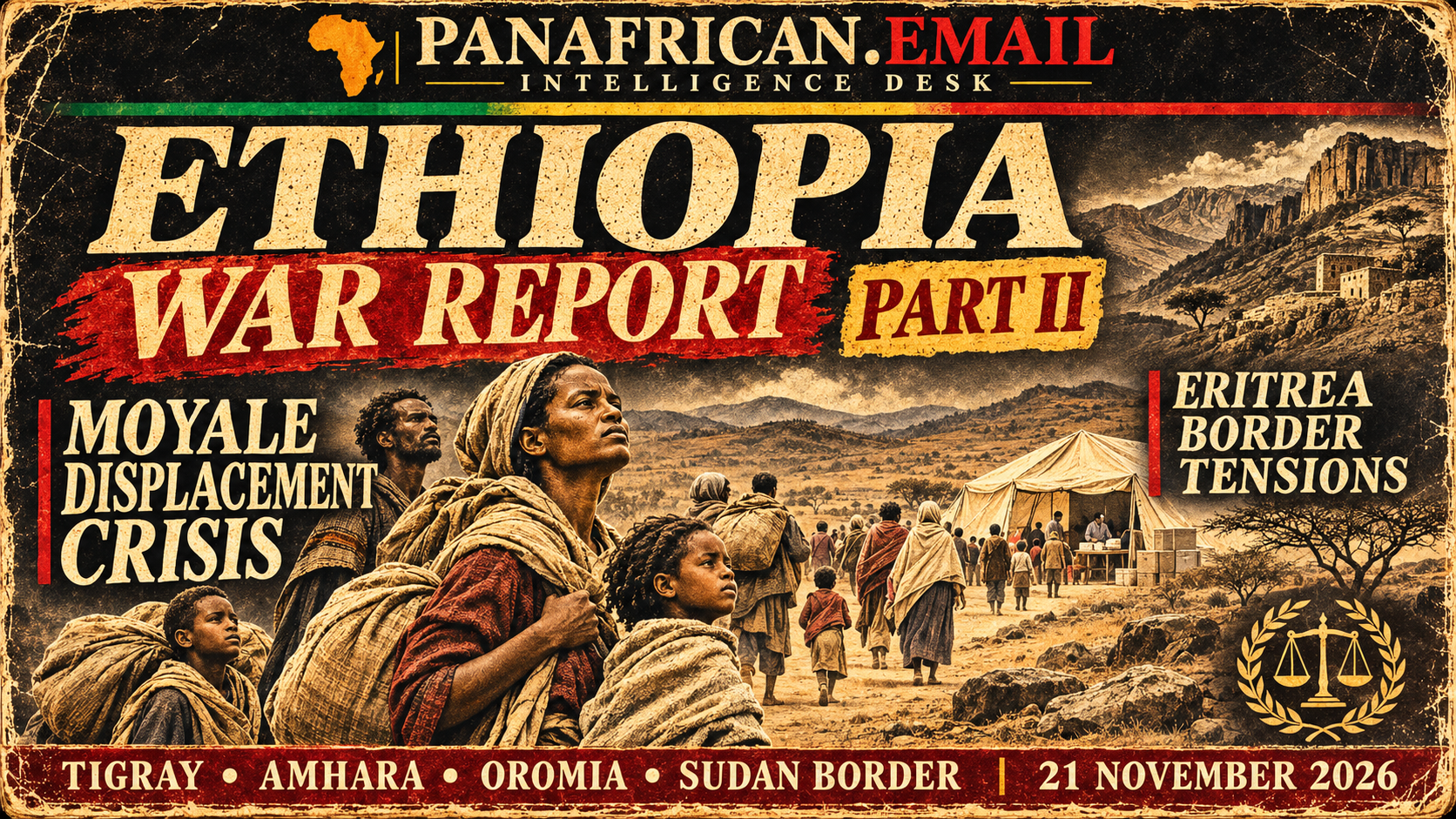
Moyale displacement reaches an estimated 689,000 inside Ethiopia as tensions persist along the Eritrean border and civilian needs mount across Oromia.
Read the November 10 baseline report
Moyale and the Kenya border
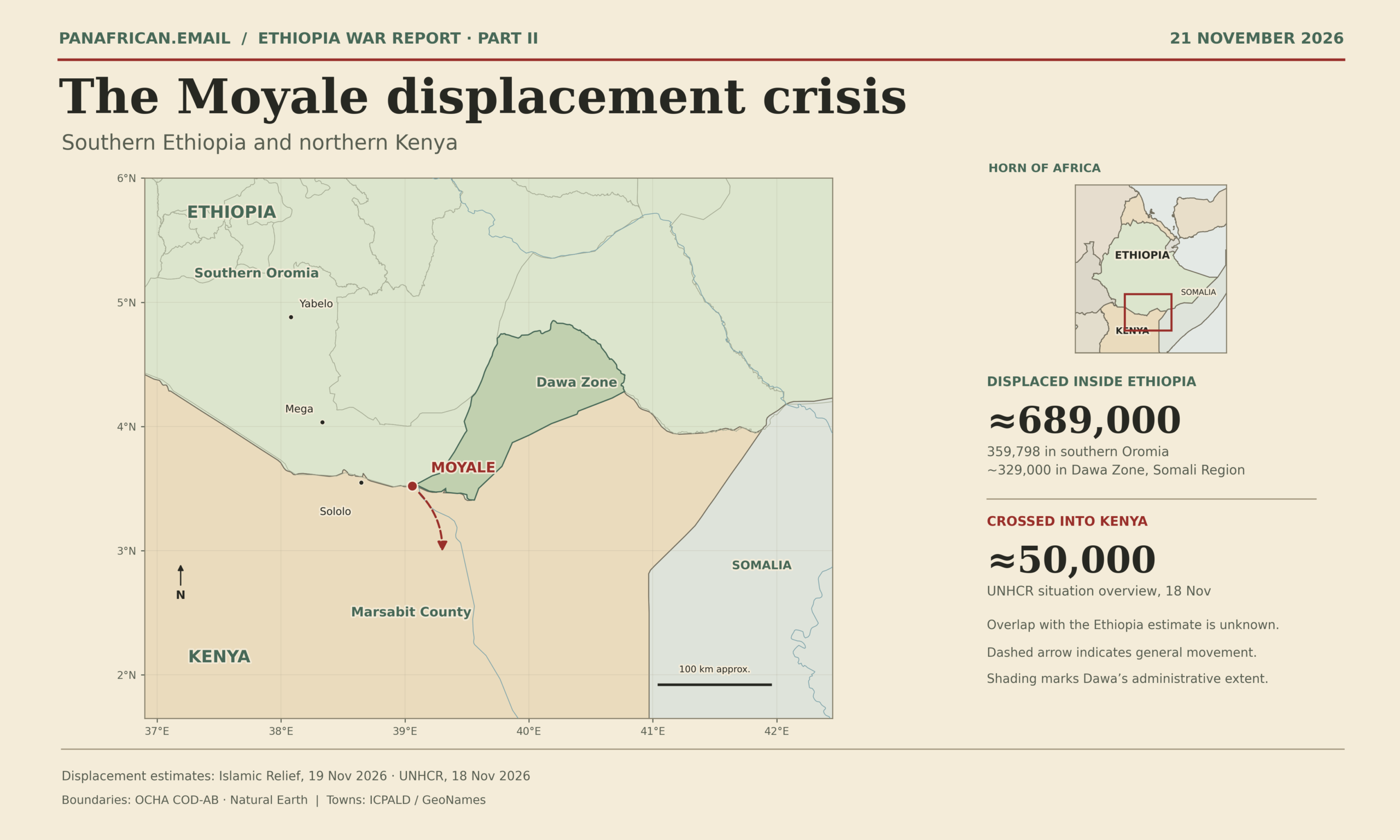
Fighting tied to a territorial dispute between Ethiopia’s Oromia and Somali regions displaced families around Moyale, a town on the Kenya border. Islamic Relief reported widespread damage to homes and businesses and disruption to health, nutrition, water and sanitation services. Cross-border movement into Kenya is corroborated by UN agencies. [1] [2] [3]
Estimated displacement inside Ethiopia
About 689,000 people
Kenya is sheltering tens of thousands
On October 30, UNHCR relayed a local estimate of roughly 50,000 Ethiopians crossing into Kenya. On November 20, Jesuit Refugee Service separately cited a November 11 Kenya Red Cross estimate of 58,883 displaced people. The figures describe different reporting dates and populations. Overlap with the Ethiopian estimate is unclear, so a combined total cannot be calculated from these reports. [3] [4]
Islamic Relief relayed local reports of a lull and said UN teams were travelling to assess needs. A reported November 17 ceasefire remains fragile. [1] [5]

What changed across the fronts
| Front | Latest sourced development | What remains uncertain |
|---|---|---|
| Moyale · Southern Oromia and Somali Region | Islamic Relief reported large-scale displacement and service disruption on November 19. Africanews covered the estimate on November 21. [1] [2] | How many people remain displaced and whether the reported lull holds. |
| Tigray and Eritrea | Reuters reported a military buildup along the shared border on November 18. ACLED reported a November 19 strike in Badme that forced residents to flee. Critical Threats reported continuing U.S. diplomatic engagement through November 20. [6] [7] [8] | Reuters could not independently confirm reports of direct Ethiopian–Eritrean clashes. The extent of civilian displacement near Badme is unclear. |
| Amhara · Fano | The November 17 Critical Threats review reported renewed clashes between federal forces and the Amhara Fano National Movement in Amhara. [9] | The latest civilian toll and degree of disruption to transport and services. |
| Oromia · Wollega and Guji | On November 18, the ICRC described work with the Ethiopian Red Cross in conflict-affected areas including East and West Wollega, Horo Guduru Wollega and Guji, as well as Borana. [10] | Access remains uneven. The ICRC’s report documents humanitarian needs and aid delivery across several zones. |
| Sudan border · Blue Nile | On November 20, Sudan Tribune reported rival claims over Bau and a Sudanese local official’s accusation that Ethiopia and South Sudan were involved in destabilizing Blue Nile. [11] | The claims over Bau and the allegation of Ethiopian involvement remain unverified in this brief. |
The Moyale violence involves groups affiliated with two regional administrations and a local territorial dispute. Other areas of Oromia face insurgency and overlapping armed violence. The available reporting gives no basis to attribute the Moyale displacement to the Oromo Liberation Army. [10] [12]
November 17–21
Video and photographs


Sources
- Islamic Relief Worldwide, southern Ethiopia displacement estimate
- Africanews, November 21 coverage
- UN Geneva briefing, October 30
- Jesuit Refugee Service, November 20 humanitarian update
- Frontlines.et, reported November 17 ceasefire
- Reuters, November 18 Ethiopia–Eritrea border reporting
- ACLED Ethiopia conflict alerts, November 19–20
- Critical Threats, November 20 Ethiopia review
- Critical Threats, November 17 Ethiopia review
- ICRC, November 18 Oromia humanitarian response
- Sudan Tribune, November 20 Blue Nile reporting
- Al Jazeera, November 17 Moyale reporting
Leave a Reply