
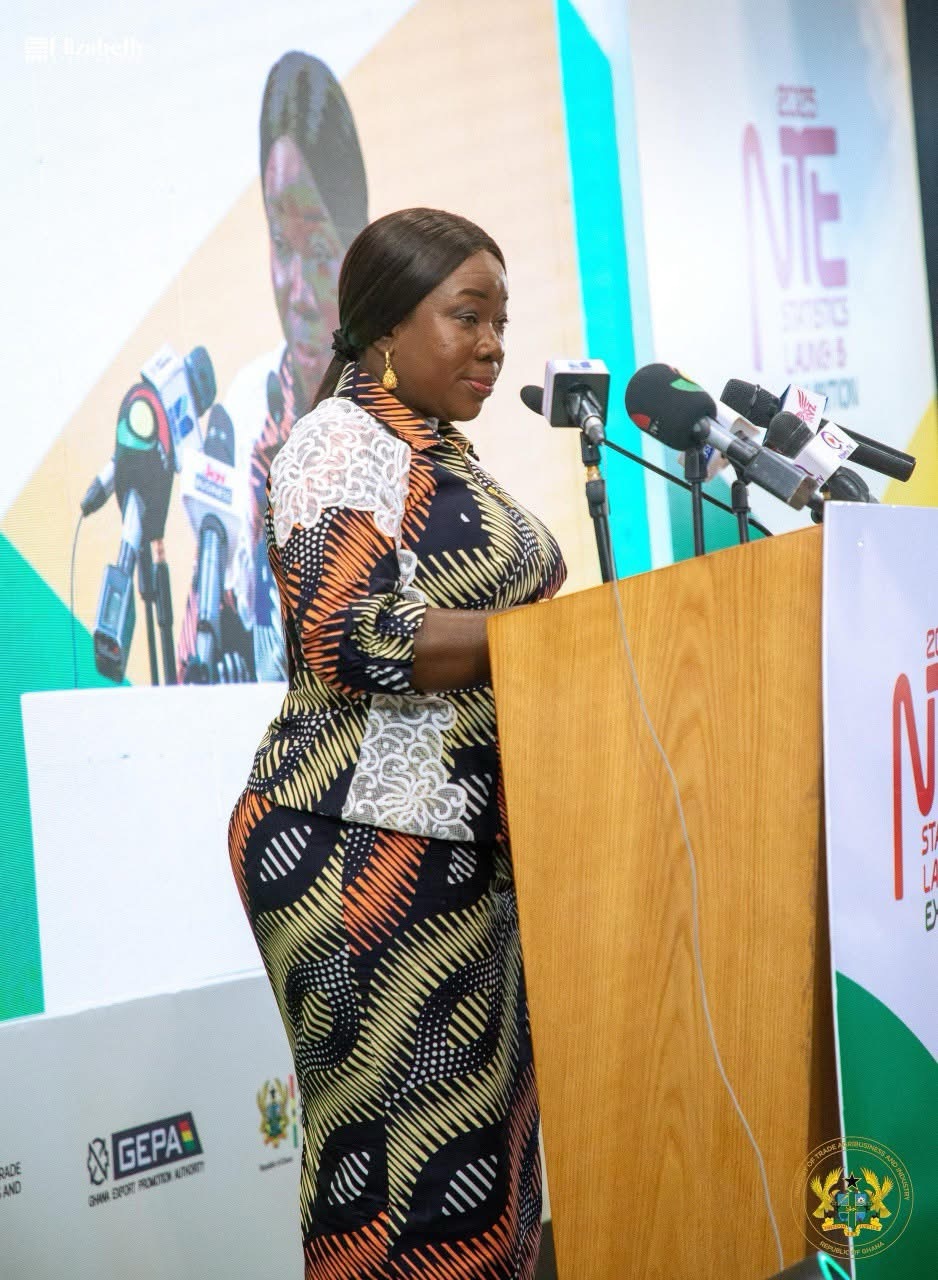
Accra, Ghana — Ghana’s Minister for Trade, Agribusiness and Industry, Elizabeth Ofosu-Adjare, has encouraged Ghanaians to explore opportunities in the country’s emerging regulated cannabis industry, describing the medicinal use of cannabis as a business opportunity rooted in healing.
“Dealing in cannabis is Christian, because this one is going to be used for the manufacture of medicine. We all want healing,” Ofosu-Adjare said, while encouraging citizens to enter the sector and benefit financially while contributing to the production of medicinal products. (Ghanaguardian.com |)
The comments represent a striking attempt to reframe the public conversation around cannabis in Ghana. Rather than presenting the crop primarily through the lens of narcotics and recreational consumption, the minister highlighted its potential applications in medicine, agribusiness, manufacturing and economic development.
Ofosu-Adjare currently serves as Ghana’s Minister for Trade, Industry and Agribusiness and is also the Member of Parliament for Techiman North. Government records describe her portfolio as focused on strengthening trade and industrial development, promoting agribusiness and expanding private-sector participation in Ghana’s economy. (The Presidency, Republic of Ghana)
Ghana’s Emerging Cannabis Economy
Ghana has established a legal framework for regulated cannabis cultivation following the Narcotics Control Commission (Amendment) Act, 2023 (Act 1100), and the Narcotics Control Commission (Cultivation and Management of Cannabis) Regulations, 2023 (L.I. 2475).
The framework is important because it does not amount to unrestricted legalization of recreational cannabis. The regulated programme focuses on low-THC cannabis, with cultivation restricted to varieties containing no more than 0.3 percent tetrahydrocannabinol (THC) on a dry-weight basis for approved industrial and medicinal purposes. (Ghanaguardian.com |)
Interior Minister Muntaka Mohammed-Mubarak has also stressed that cannabis above the permitted THC threshold is outside the programme, underscoring that prospective participants must operate within Ghana’s licensing and regulatory requirements. (Ghanaguardian.com |)
From Stigma to Agribusiness
The minister’s remarks could signal a broader effort to move cannabis away from its traditional association with illicit drug markets and toward a regulated agricultural and industrial commodity.
For Ghanaian farmers and entrepreneurs, the potential opportunity extends beyond simply cultivating the plant. A developed cannabis value chain could encompass farming, processing, pharmaceutical manufacturing, research, industrial applications, packaging, logistics and potentially export markets where Ghanaian products meet applicable international requirements.
That opportunity, however, depends heavily on regulation, investment, technical expertise and access to legitimate markets. Participation in the sector does not mean that individuals can freely cultivate or sell cannabis without authorization.
Ofosu-Adjare’s message therefore combines two arguments: cannabis can potentially become an economically valuable agricultural commodity, and its medicinal applications can contribute to healthcare.
A New Conversation About Wealth and Healing
Her appeal also reflects a larger question confronting African economies: how can agricultural resources be transformed into higher-value industries rather than exported or left underdeveloped?
If Ghana succeeds in building a transparent and properly regulated cannabis industry, the economic benefits could potentially extend beyond farmers to processors, manufacturers, researchers, entrepreneurs and other businesses throughout the supply chain.
For the minister, the central message is that legitimate cannabis-related enterprise should be viewed through the lens of both economic opportunity and public benefit.
The challenge now is implementation. Ghana will need to ensure that licensing remains transparent, farmers understand the rules, investors have access to reliable information, and the industry develops within the limits established by national law.
For Ghanaians considering the sector, the opportunity may be significant—but so is the responsibility to operate legally.
As Ghana positions itself within Africa’s emerging medicinal and industrial cannabis economy, Ofosu-Adjare’s comments have placed an unusual question at the centre of the debate: can cannabis become not merely a new agricultural commodity, but a source of wealth, medicine and industrial transformation?
Leave a Reply