
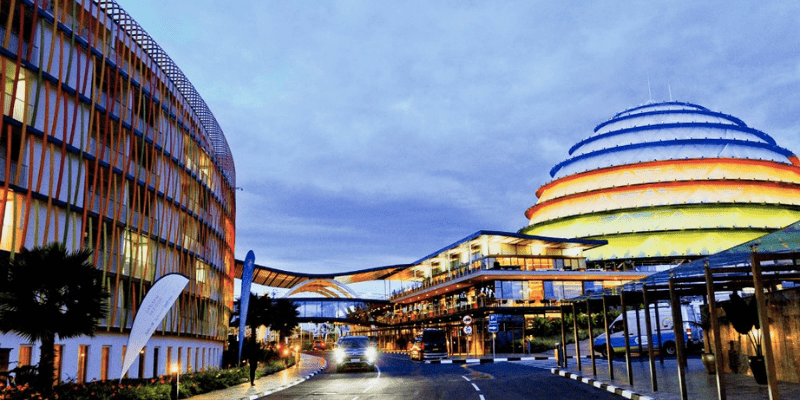
KIGALI, RWANDA — Rwanda has positioned itself as one of Africa’s most business-friendly destinations for international entrepreneurs, investors and companies looking to establish operations on the continent. For foreign entrepreneurs, one of the country’s biggest advantages is that 100% foreign ownership is permitted in companies registered in Rwanda.
Contrary to a common misconception, a foreign investor does not have to find a Rwandan partner simply to establish a company. Rwanda’s Office of the Registrar General states that shareholders can be Rwandan nationals, foreigners or legal entities, and 100% non-local shareholding is allowed.
Can a foreigner own 100% of a company in Rwanda?
Yes. A foreign investor can establish a Rwandan company and own 100% of its shares, subject to any sector-specific licensing or restrictions that may apply to the particular business activity.
There is also no minimum share capital required for company incorporation under Rwanda’s general company-registration rules. The registered share capital can be increased after incorporation.
This distinction is important because foreign entrepreneurs sometimes hear figures such as US$250,000 and assume that this is the minimum amount required to own a company in Rwanda.
It is not.
The US$250,000 figure is associated with certain investment facilitation and immigration incentives, rather than a general minimum capital requirement for establishing a 100%-foreign-owned company. Rwanda’s investment framework also provides incentives for qualifying investors at different investment levels.
How much capital do you actually need?
For ordinary company incorporation, there is no statutory minimum share capital requirement.
That means an entrepreneur could theoretically establish a company without depositing US$250,000 simply to obtain ownership.
However, the amount of money required to actually operate a business will depend on the industry, premises, employees, equipment, inventory, licenses and working capital.
For example, a technology consulting company may require considerably less startup capital than a manufacturing plant, hotel, logistics company or mining operation.
Foreign investors seeking formal investment incentives should look separately at Rwanda’s investment-registration requirements. The Rwanda Development Board says investment projects are evaluated on factors including job creation, skills transfer, use of local raw materials, export potential, innovation and economic linkages.
What documents does a foreigner need?
The exact documentation depends on whether the investor is establishing a new Rwandan company, a subsidiary or a branch of an existing foreign company.
For a foreign individual establishing a company, a valid passport is among the principal identification documents required.
For a foreign company establishing a subsidiary or branch, Rwanda’s registration authorities may require documents including:
- A notarized certificate of incorporation or registration
- Notarized Articles of Association
- A shareholders’ or board resolution authorizing the Rwandan operation
- Details concerning the company’s shareholders and management
- Passport copies for relevant shareholders and directors
- A list of directors residing in Rwanda, where applicable
Foreign corporate documents may need authentication/notarization and translation into an accepted language where necessary.
One of Africa’s simplest business-registration systems
Rwanda has created a centralized business-registration process through the Rwanda Development Board (RDB) and Office of the Registrar General.
Business registration is conducted online and is free of charge. The registration process also connects company incorporation with tax identification and social-security registration.
The RDB says the process can be completed rapidly, with business registration potentially taking as little as six hours when the application and documentation are in order.
For foreign entrepreneurs, this means that establishing a legal business presence does not necessarily require the lengthy incorporation procedures found in some other jurisdictions.
What taxes will a business pay?
Owning 100% of a Rwandan company does not mean the business is tax-free.
A company operating in Rwanda is generally subject to the country’s tax laws.
Corporate Income Tax
Rwanda’s standard Corporate Income Tax rate is 28% on taxable business profits under the current rate identified by the Rwanda Revenue Authority. Certain qualifying investors and sectors can receive preferential tax treatment under Rwanda’s investment-incentive framework.
Value Added Tax
The standard VAT rate is 18% on taxable goods and services, although certain goods and services can be zero-rated or otherwise treated differently under the tax law.
VAT registration is required once a taxable business reaches the applicable statutory turnover threshold. The Rwanda Revenue Authority currently states that businesses exceeding RWF 20 million in annual turnover in the previous fiscal year, or RWF 5 million in the preceding quarter, are required to register for VAT within the prescribed period.
Withholding tax
Certain payments can trigger withholding-tax obligations.
For example, Rwanda’s tax authority states that dividends are generally subject to 15% withholding tax, with exceptions provided under the law. Withholding taxes can also apply to interest, royalties, certain service fees and other payments.
Employee taxes
If the company employs workers, it also becomes responsible for applicable employment-income tax and other payroll obligations. Rwanda’s current employment-income tax structure includes progressive rates, with the applicable rate depending on the employee’s income bracket.
Local taxes and business fees
Businesses may also face decentralized taxes and fees, including trading-license fees, fixed-assets tax and rental-income-related obligations depending on the company’s circumstances.
Does a foreign owner need a Rwandan partner?
Not simply to satisfy an ownership requirement.
Rwanda explicitly allows foreign shareholders to hold 100% of the shares in a company. This makes Rwanda particularly attractive to entrepreneurs who want to maintain control over their African operations rather than creating a mandatory local-equity partnership.
Nevertheless, a foreign entrepreneur may still choose to work with Rwandan partners, employees, consultants, distributors or investors for commercial reasons.
The difference is that such a relationship is generally a business decision rather than a blanket requirement for foreign ownership.
What about an investment certificate?
A foreign investor may also consider registering an investment project with the Rwanda Development Board.
Investment registration can provide access to investment facilitation and, where eligibility requirements are met, fiscal and non-fiscal incentives.
The RDB lists requirements such as an application, business plan or feasibility study, proof of the company’s legal personality and any sector-specific license.
The RDB also identifies US$250,000 as an important investment threshold for certain investor-related immigration benefits, including the ability for a qualifying registered investor to recruit up to three foreign employees without having to demonstrate that their skills are unavailable in Rwanda.
This should not be confused with the minimum capital needed to incorporate a company.
What industries should foreign entrepreneurs consider?
Rwanda’s investment environment provides opportunities across numerous sectors, including:
- Technology and digital services
- Tourism and hospitality
- Manufacturing
- Agriculture and agro-processing
- Logistics and transportation
- Construction
- Financial services
- Education
- Healthcare
- Renewable energy
- Export-oriented businesses
- Professional and business services
However, certain industries require additional government approvals, licenses or regulatory compliance. Entrepreneurs should therefore determine the applicable sector requirements before beginning operations.
A practical roadmap for a foreign entrepreneur
For someone outside Rwanda who wants to establish a business, the process can generally be approached in the following order:
1. Choose the business structure.
Determine whether a Rwandan private company, subsidiary or branch is most appropriate.
2. Select and reserve the company name.
The company name must be approved before incorporation.
3. Prepare shareholder and director information.
Foreign shareholders should have valid passport documentation and corporate investors should prepare authenticated corporate documents where applicable.
4. Register the company online.
Business registration is handled through Rwanda’s online registration system.
5. Obtain the company’s registration and tax identification.
The registration process integrates the company’s registration with tax and social-security registration.
6. Obtain sector-specific licenses.
Businesses operating in regulated industries may need additional approvals before trading.
7. Establish banking and accounting systems.
The company should establish appropriate financial records, accounting procedures and tax-compliance systems.
8. Register for VAT when required.
Businesses reaching the applicable statutory threshold must register for VAT.
9. Consider investment registration.
Larger or strategic projects may benefit from applying for investment registration and exploring available incentives.
The bigger opportunity
For African diaspora entrepreneurs and international investors, Rwanda’s model presents an important proposition: foreign ownership does not automatically require surrendering equity to a local shareholder.
A foreign entrepreneur can establish a company with 100% non-local ownership, while the country’s online registration system and integrated government services are designed to reduce administrative barriers.
The key issue is therefore not whether a foreigner can own 100% of a Rwandan company—the answer is generally yes—but rather how much capital is commercially necessary to make the business viable and whether the proposed project qualifies for specific investment incentives.
For a small service company, the legal incorporation requirement may involve no minimum share capital. For a major manufacturing, technology, tourism or export project, substantially more capital may be necessary to qualify for particular incentives and to successfully operate the business.
Foreign entrepreneurs should also obtain professional legal and tax advice before investing, particularly when the business involves regulated activities, foreign employees, cross-border transactions or substantial capital.
Rwanda’s message to global entrepreneurs
Rwanda’s approach sends a clear message to international business: you can come to Rwanda, establish a company, retain full ownership and build from there.
For entrepreneurs looking for an entry point into the East African market, Rwanda is increasingly positioning itself not merely as a destination for investment, but as a platform from which businesses can serve Rwanda, the wider East African Community and international markets.
This article is for general informational purposes and is not legal or tax advice. Investment, immigration, licensing and tax requirements can change, and investors should verify the rules applicable to their specific business with the Rwanda Development Board, Office of the Registrar General and Rwanda Revenue Authority before committing capital.
Leave a Reply