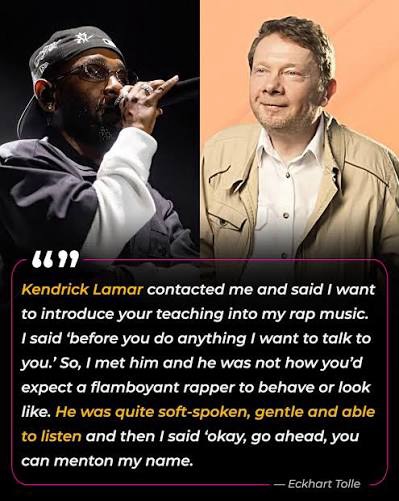
When Kendrick Lamar released Mr. Morale & The Big Steppers in 2022, many listeners expected another politically charged hip-hop masterpiece in the tradition of To Pimp a Butterfly or DAMN. Instead, Kendrick delivered something more personal, spiritual, and psychologically intense — an album centered on trauma, healing, ego, therapy, and self-accountability.

One of the most unexpected aspects of the album was the presence of spiritual teacher Eckhart Tolle, whose voice appears throughout the project as a narrator and philosophical guide. (Wikipedia)
For many hip-hop fans, Tolle’s appearance was surprising. The German-born author is best known for books like The Power of Now and A New Earth, works that focus on mindfulness, ego death, consciousness, emotional suffering, and spiritual awakening. His teachings became globally popular through figures such as Oprah Winfrey and the broader self-help movement.
But for Kendrick Lamar, Tolle’s philosophy appeared to serve as a framework for understanding personal pain, generational trauma, celebrity pressure, and the emotional contradictions inside modern Black life.
Therapy, Trauma, and Breaking Cycles

Mr. Morale & The Big Steppers functions almost like a therapy session placed into musical form. The album explores subjects rarely discussed openly in mainstream rap: addiction, infidelity, family wounds, fatherhood, emotional suppression, and inherited trauma. (Wikipedia)
Throughout the project, Eckhart Tolle’s narration acts as a spiritual counterbalance to Kendrick’s confessions. On songs like “Savior (Interlude),” Tolle discusses how people often build identities around suffering and victimhood — themes directly connected to Kendrick’s reflections on fame, violence, and emotional burden.

The album repeatedly challenges the idea that celebrities are supposed to be saviors or perfect moral leaders. Kendrick openly rejects that role, telling listeners that healing begins with self-awareness rather than idol worship. (The New Yorker)
For many African and diaspora listeners, these themes resonated deeply because they touched on issues often left unspoken inside Black communities worldwide: mental health struggles, unresolved historical trauma, masculinity, silence, and spiritual exhaustion.
African Spirituality, Consciousness, and Modern Healing
Although Eckhart Tolle’s teachings emerge primarily from Buddhist, Christian, and New Age spiritual traditions, many listeners noticed parallels between his ideas and long-standing African spiritual philosophies.
Across numerous African traditions, healing has historically involved self-reflection, ancestral awareness, balance, emotional cleansing, and understanding one’s place within the collective community. Kendrick’s album indirectly mirrors these ideas by focusing on inner transformation rather than external validation.

Some fans online interpreted the album as Kendrick attempting to place “the culture” itself into therapy. (Reddit)

Others connected the project to Tolle’s concepts of ego and presence, arguing that Kendrick used the album to separate his true self from the public image forced onto him by fame and industry expectations. (Reddit)
The album’s structure — split into “Big Steppers” and “Mr. Morale” — has even been interpreted by fans as representing two different states of consciousness: the wounded public identity versus the healing internal self. (Reddit)
A Different Kind of Hip-Hop Album
Kendrick Lamar’s decision to include Eckhart Tolle marked a major shift for mainstream hip-hop. While rap music has always included spiritual themes — from Five Percent Nation teachings to Islam, Christianity, Rastafarianism, and Kemetic symbolism — Kendrick approached spirituality through psychological vulnerability and therapeutic introspection.
Rather than presenting himself as untouchable, Kendrick exposed his flaws openly. Critics described the album as his most vulnerable and confessional project to date. (Wikipedia)
This honesty divided some listeners. Some praised the album’s emotional depth and willingness to challenge toxic masculinity and celebrity culture, while others found its themes uncomfortable or difficult to process. Producer Sounwave later admitted the team knew the project would be a “tough listen” because of its emotional intensity. (GQ)
Still, the album’s impact continued to grow over time, especially among listeners interested in spirituality, mental wellness, and conscious art.
Kendrick Lamar’s Evolving Message
Kendrick Lamar has long balanced political commentary with spiritual symbolism. Earlier albums explored systemic racism, survivor’s guilt, temptation, and Black identity. But Mr. Morale & The Big Steppers shifted the focus inward.
Instead of trying to save the world, Kendrick focused on healing himself first.
In many ways, the album reflected a broader cultural shift happening globally, including across Africa and the diaspora, where younger generations are increasingly discussing therapy, emotional intelligence, spiritual healing, and generational trauma more openly than previous generations.
By incorporating Eckhart Tolle’s teachings into one of the most anticipated hip-hop albums of the decade, Kendrick Lamar helped push conversations about consciousness and mental health further into mainstream Black culture.
The result was not simply a rap album, but a deeply layered exploration of pain, accountability, ego, spirituality, and liberation.
Leave a Reply