
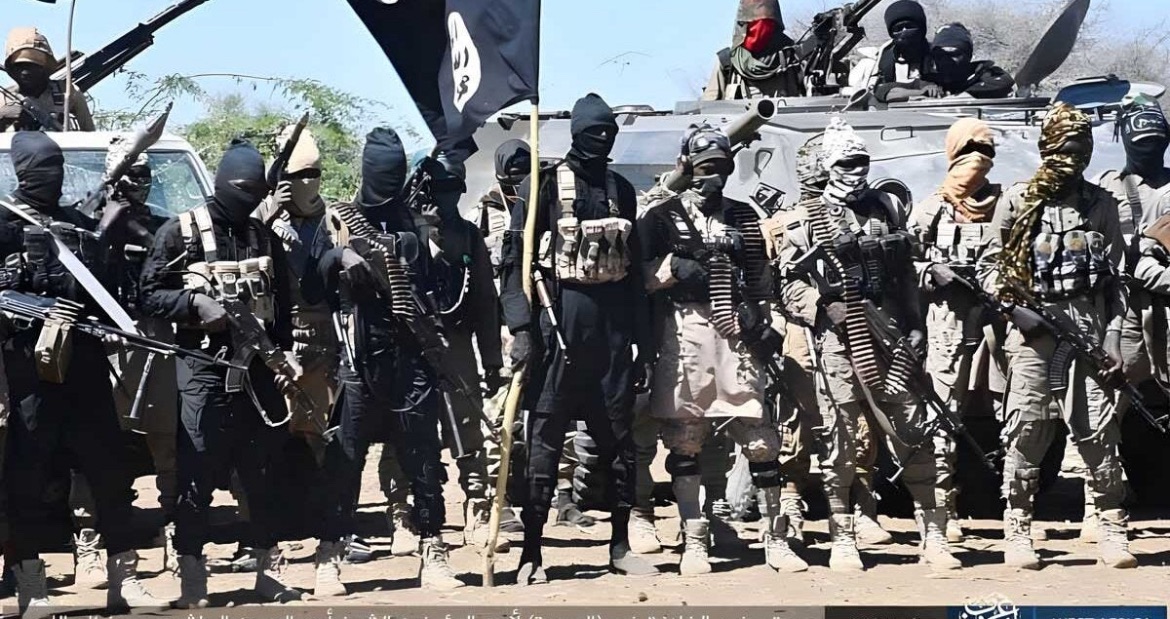
The Islamic State West Africa Province (ISWAP) has developed one of the most sophisticated propaganda operations among armed extremist groups operating in the Lake Chad Basin. Since its emergence from the factional split within Boko Haram in 2016, the organization has increasingly used media to communicate with communities, promote its ideological message and portray itself as an alternative governing authority.
The evolution of ISWAP’s media strategy reflects a broader shift within the Islamic State network. Rather than relying exclusively on battlefield violence, the organization has invested heavily in information operations designed to influence how local populations understand its activities.
Analysts have identified Al-Buhaira Media Foundation as an important component of that ecosystem.
The name Al-Buhaira, meaning “the lake” in Arabic, evokes Lake Chad, an area central to ISWAP’s operations and identity. The outlet has operated primarily as a Hausa-language propaganda platform associated with ISWAP, helping distribute and translate Islamic State material for audiences in West Africa.
A Media Operation Built Around Decentralization

Al-Buhaira occupies a distinctive position within the Islamic State’s broader media architecture. It is generally described as a supporter media foundation rather than an official production arm of the Islamic State’s central media apparatus.
That distinction is significant.
The decentralized structure allows affiliated media operations to continue functioning even when individual members are identified, arrested or killed. Contributors frequently operate under pseudonyms, making the network more difficult for security agencies to dismantle through the targeting of individual propagandists.
The organization has also adapted material produced elsewhere within the Islamic State’s media ecosystem for Hausa-speaking audiences.
Among its activities has been the translation and audio presentation of material associated with Al-Naba, the Islamic State’s weekly publication, alongside the distribution of standardized statements claiming responsibility for attacks.
Rather than functioning simply as a news outlet, such platforms form part of the group’s broader information strategy. Their objective is to shape perceptions, reinforce ideological narratives and demonstrate that the organization remains operational despite military pressure.
The Lake Chad Connection

Lake Chad has long been strategically important to armed groups operating across the borders of Nigeria, Niger, Chad and Cameroon.
For ISWAP, the region is not only an operational environment but also an important part of its propaganda identity. References to the lake help reinforce the organization’s connection to the communities and territory where it seeks influence.
The use of Hausa is equally significant. Hausa is widely spoken across West Africa, particularly in northern Nigeria and neighboring countries. Communicating in a major regional language enables extremist organizations to reach audiences that might otherwise be excluded from Arabic- or English-language material.
This makes localized media an important component of modern insurgent activity.
Propaganda Despite Military Pressure
ISWAP’s media infrastructure has continued to operate despite sustained military pressure.
Nigerian security forces have conducted air operations against suspected ISWAP positions, while international cooperation has increased in efforts to disrupt the group’s leadership and operational capabilities.
In November 2025, Nigerian military operations targeted ISWAP positions. Further international cooperation followed in 2026, including a U.S.-Nigeria operation that U.S. Africa Command said resulted in the deaths of several senior Islamic State figures.
Despite such setbacks, the continued appearance of propaganda demonstrates one of the challenges facing counterterrorism campaigns: degrading an armed group’s physical infrastructure does not necessarily eliminate its ability to communicate.
Information Warfare as a Strategic Tool
The persistence of Al-Buhaira illustrates how contemporary extremist organizations increasingly treat propaganda as a strategic capability rather than a secondary activity.
Digital media can allow groups to rapidly distribute claims, ideological material and battlefield narratives to audiences across national borders. It can also create the impression of organizational resilience even when military operations have disrupted leadership structures or territorial control.
For governments across the Lake Chad Basin, this creates a challenge extending beyond conventional military operations.
Countering extremist propaganda requires disrupting the networks responsible for producing and distributing it while simultaneously addressing the social, political and economic conditions that can make vulnerable communities receptive to extremist messaging.
The Continuing Challenge
The survival of ISWAP’s propaganda ecosystem after repeated military operations highlights the adaptability of decentralized extremist networks.
While Al-Buhaira should not be viewed simply as an independent media organization, its continued activity demonstrates the importance that ISWAP places on controlling its narrative and maintaining communication with its intended audiences.
For security agencies, journalists and researchers, understanding this media infrastructure remains important for assessing the group’s capabilities and intentions. At the same time, responsible reporting requires avoiding the uncritical reproduction of extremist claims or imagery that could amplify the organization’s messaging.
ISWAP’s experience demonstrates a broader reality of modern conflict in Africa: military power can disrupt an insurgency’s physical infrastructure, but information networks can survive, adapt and continue operating across borders.
The struggle over territory in the Lake Chad Basin is therefore accompanied by another contest — the struggle over information, narratives and public perception.
Leave a Reply