
INTELLIGENCE ASSESSMENT
Event: Suspension of DR Congo’s artisanal mining agency chief
Assessment: LOW
Region: Democratic Republic of Congo
Category: Mining / Governance / Natural Resources
Status: Unverified
Source: Mining Weekly, citing an order seen by Reuters
Location: Kinshasa, Democratic Republic of Congo
Government Moves Against Mining Regulator
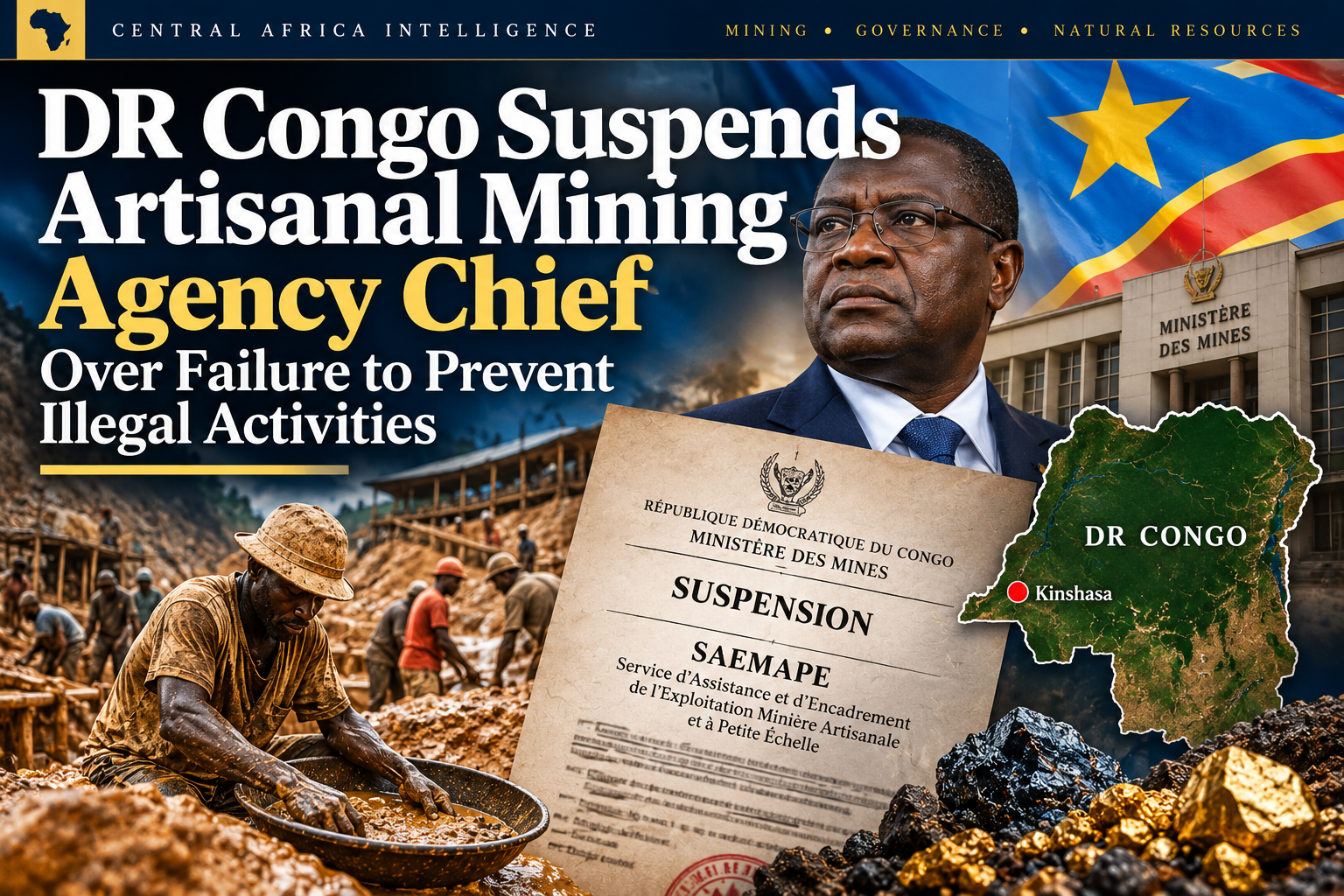
The Democratic Republic of Congo has suspended the head of the state agency responsible for overseeing artisanal and small-scale mining, accusing him of failing to prevent illegal mining activities on licensed mining concessions.
Mines Minister Louis Kabamba Watum suspended Jean-Paul Kadiobo Kapongo, director general of the Service d’Assistance et d’Encadrement de l’Exploitation Miniere Artisanale et a Petite Echelle (SAEMAPE), according to an order dated October 21 and reported by Mining Weekly, citing Reuters.
The action places renewed attention on one of the most difficult areas of Congo’s mineral governance system: controlling artisanal mining activity while simultaneously attempting to formalize a sector that provides livelihoods for large numbers of people.
The allegation is significant because SAEMAPE’s mandate places the agency at the center of efforts to organize, supervise and support artisanal and small-scale mining.
What Is SAEMAPE?
SAEMAPE is the government agency responsible for providing assistance and oversight to artisanal and small-scale miners in the Democratic Republic of Congo.
Its role includes helping bring informal mining into a more regulated framework, improving technical practices and supporting the organization of artisanal mining operations.
The agency therefore occupies an important position between the Congolese state, mining communities, licensed concession holders and the broader mineral supply chain.
The suspension of its director general signals that Kinshasa is increasingly prepared to hold senior officials accountable for failures in controlling unauthorized mining activity.
Illegal Mining on Licensed Concessions
The central allegation is that illegal mining was taking place on concessions that had already been legally licensed to mining operators.
This creates a particularly sensitive governance problem.
A mining concession represents a legally recognized right to explore or exploit mineral resources within a defined area. Unauthorized extraction inside such concessions can create disputes between artisanal miners, industrial operators and government authorities.
It can also introduce serious questions about:
- mineral ownership and licensing;
- security around mining concessions;
- revenue collection;
- environmental compliance;
- community relations;
- mineral traceability;
- corruption and regulatory enforcement.
For industrial mining companies, unauthorized artisanal activity can result in operational disruption and conflict. For artisanal miners, meanwhile, exclusion from formally controlled concessions can push activity further into informal or unauthorized areas.
A Wider Challenge for Congo’s Mining Sector
The Democratic Republic of Congo is one of the world’s most strategically important mineral jurisdictions.
Its mining sector is particularly important for cobalt, copper, gold, tin, tantalum and other minerals used in global manufacturing and energy technologies.
Yet the country’s enormous mineral wealth also creates persistent governance challenges.
Artisanal and small-scale mining remains an important source of employment and income. At the same time, informal production can operate outside the licensing, environmental and taxation systems established by the state.
The government therefore faces a difficult balancing act: formalize artisanal mining without destroying livelihoods while protecting legally licensed concessions and increasing state oversight of mineral production.
The SAEMAPE suspension appears to fit within that broader effort.
Why the Suspension Matters
The removal of a senior mining official can have consequences beyond the individual agency.
It may indicate a stronger enforcement posture from the Ministry of Mines and could lead to increased scrutiny of regional mining officials and concession areas where unauthorized extraction has been reported.
It could also affect relationships between government regulators and mining companies operating in areas with significant artisanal activity.
For investors, the development is a reminder that regulatory and security conditions remain important variables in the Congolese mining environment.
For mineral traders and downstream companies, enforcement actions can also affect questions surrounding provenance and supply-chain traceability.
Governance Signal
The most important intelligence signal may not be the suspension itself but what follows it.
If Kinshasa begins replacing senior officials, conducting additional inspections or launching investigations into specific concessions, the current action could represent the beginning of a broader regulatory campaign.
Conversely, if the suspension remains an isolated personnel decision, its significance may be more limited.
The next developments should therefore be monitored for evidence of:
- Additional SAEMAPE leadership changes.
- Investigations into specific mining concessions.
- Government enforcement operations against unauthorized miners.
- New rules governing artisanal mining zones.
- Disputes between artisanal miners and industrial concession holders.
- Changes to mineral traceability or licensing procedures.
- Official explanations from SAEMAPE or the Ministry of Mines.
Intelligence Assessment
Confidence: LOW
The reported suspension is based on an official order reportedly seen by Reuters and cited by Mining Weekly. However, the underlying allegations concerning SAEMAPE’s failure to prevent illegal mining should be treated as unverified until additional official documentation or independent reporting establishes the circumstances.
The development nevertheless represents a potentially meaningful governance signal.
The Democratic Republic of Congo is under continuing pressure to demonstrate stronger control over its mineral resources, particularly where artisanal production intersects with industrial concessions and international supply chains.
If the government follows the suspension with broader enforcement measures, it could indicate a significant tightening of oversight across the artisanal and small-scale mining sector.
Intelligence outlook: Watch for further personnel changes, concession-level enforcement operations and new measures aimed at controlling unauthorized artisanal mining.
Leave a Reply