
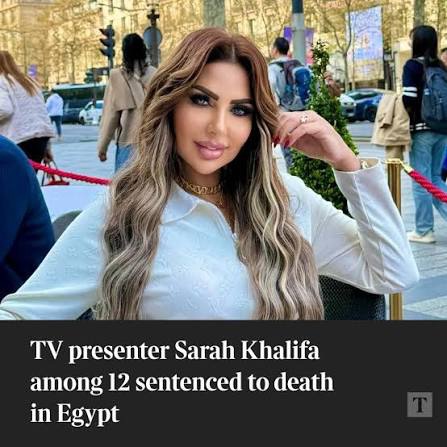
CAIRO, Egypt — Egyptian television presenter Sarah Khalifa and 11 other defendants have been sentenced to death by hanging following a major drug-related criminal case in Egypt.
According to Egypt’s state-owned Al-Ahram newspaper, Khalifa and the other defendants were accused of belonging to a criminal organization involved in importing chemical ingredients used in the manufacture of illegal drugs, allegedly with the intention of producing and selling narcotics.
Khalifa, 39, is known to Egyptian television audiences for presenting “Mission Impossible,” a programme that focused on crime-related issues and cases. Despite the allegations against her, Khalifa has denied the charges.
The death sentences represent the most severe punishment available under Egyptian law and remain subject to the country’s judicial procedures before they can be carried out. Egyptian courts can impose capital punishment in serious criminal cases, including certain drug-trafficking offenses.
The case has attracted particular attention because of Khalifa’s public profile and her previous work covering crime-related stories. Her transition from television presenter to defendant in a high-profile criminal prosecution has generated widespread interest in Egypt.
Authorities alleged that the defendants were part of an organized criminal network operating around the importation of substances that could be used in the production of narcotics. Prosecutors argued that the materials were intended for illegal drug manufacturing and distribution.
Khalifa has rejected the accusations against her, maintaining her innocence throughout the proceedings. The case therefore places renewed attention on the evidence presented by prosecutors, the defendants’ legal rights and the judicial process surrounding capital punishment in Egypt.
The verdict is also likely to draw attention from human-rights organizations and international observers because of Egypt’s continued use of the death penalty. Capital punishment remains a highly contested issue across Africa, with governments, courts and civil-society organizations divided over its use.
For Khalifa, the ruling marks a dramatic turn in the career of a presenter whose television work centered on investigating and discussing crime. The case will now move through the remaining stages of Egypt’s judicial process, with the death sentences subject to the procedures required before execution.
Further developments are expected as the defendants pursue their available legal options and Egyptian authorities continue to address the allegations surrounding the alleged drug-importation network.
Leave a Reply