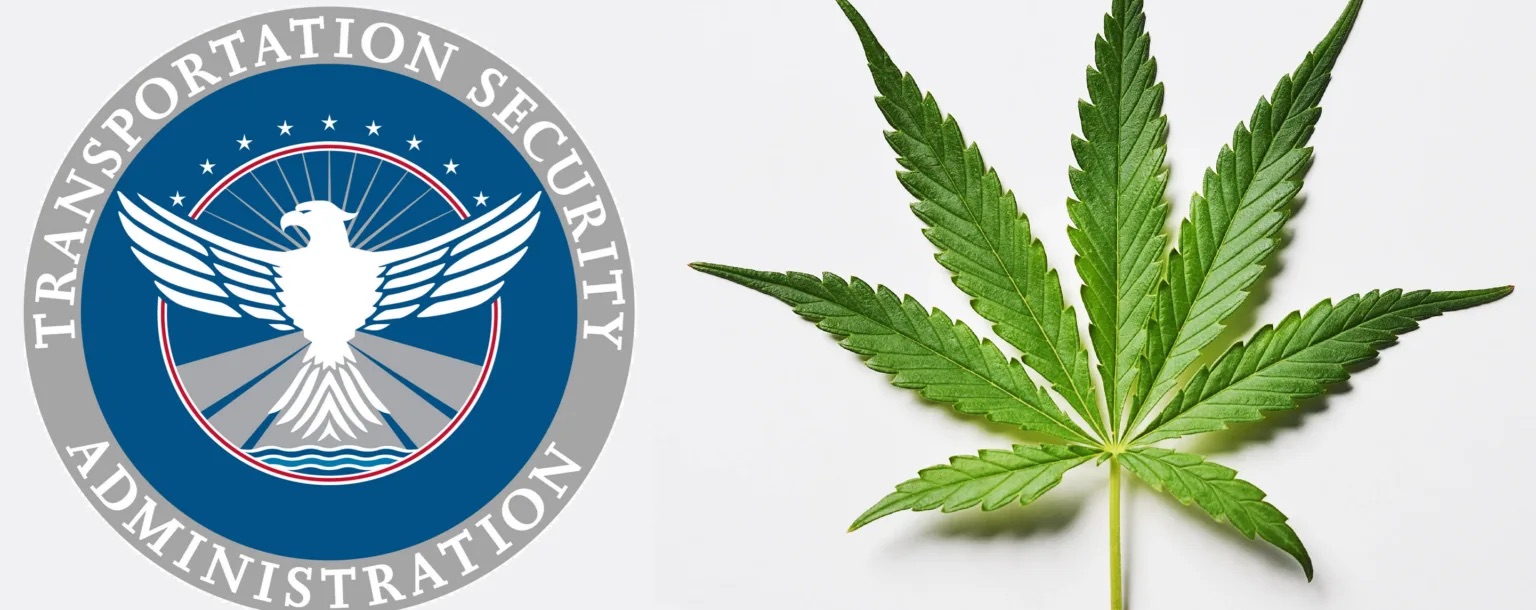
In a development that has sparked debate across travel, legal, and cannabis communities, reports suggest that the U.S. Transportation Security Administration (TSA) has updated its public guidance to be more permissive toward medical marijuana in passenger luggage, signaling a shift in how airport screening interacts with evolving cannabis laws.
While marijuana remains federally restricted in the United States, the updated guidance appears to reflect a more practical reality: TSA officers are focused on aviation security, not drug enforcement, and enforcement decisions often fall to local law authorities rather than federal screening agents.
What Changed in the TSA Policy?
The Transportation Security Administration has long stated that its primary role is to detect threats to aircraft safety—not to enforce drug laws.
Under older guidance:
- Marijuana was treated as illegal under federal law
- Any cannabis discovered during screening could be referred to law enforcement
- Medical marijuana cards did not guarantee protection at airports
However, updated public-facing language (as reported in recent policy summaries) now indicates a more flexible stance on medical marijuana carried in small, personal amounts, especially where state laws permit its use.
Official TSA reference on prohibited items still notes federal constraints:
TSA What Can I Bring – Medical Marijuana
Important Reality Check: It Is Not Full Legalization
Despite the perception of change, key legal facts remain:
- Marijuana is still classified as a controlled substance under U.S. federal law
- Airport security screening does not override federal law
- Law enforcement at airports can still intervene depending on jurisdiction
- Rules may vary depending on the state you are entering or departing from
In other words:
The “allowance” is not full legalization—it is a shift in enforcement emphasis, not a legal exemption.
Why This Matters Now
The change reflects three major trends:
1. State-level legalization pressure
Dozens of U.S. states have legalized medical or recreational cannabis, creating inconsistency between federal and state law.
2. Airport decriminalization reality
TSA officers increasingly encounter medical cannabis patients traveling legally within their states.
3. Policy pragmatism
Rather than escalating minor cannabis cases, TSA focuses on:
- weapons
- explosives
- aviation threats
What This Means for Pan-African Travelers
For travelers from Africa—especially those flying from hubs like Accra, Lagos, Nairobi, Johannesburg, or Monrovia—this policy shift is significant but often misunderstood.
1. Transit complexity increases risk
Many pan-African travelers pass through U.S. airports via:
- JFK (New York)
- Atlanta (ATL)
- Washington Dulles (IAD)
- Chicago O’Hare (ORD)
Even if medical marijuana is legal in the U.S. state you land in, federal airport law still applies during transit.
2. Different legal cultures collide
In many African countries:
- Cannabis remains strictly illegal (though reform is emerging in places like South Africa, Ghana’s industrial hemp discussions, and Rwanda’s medical research frameworks)
In contrast, in parts of the U.S.:
- Medical cannabis is legally prescribed
- Recreational cannabis is legal in multiple states
This creates confusion for travelers who assume “legal in destination = safe in airport.”
3. Risk is not uniform
For pan-African travelers, risk depends on:
- Departure country laws (often strict)
- U.S. federal airport screening rules
- Final destination state laws
- Quantity and packaging of cannabis
Even medical documentation may not guarantee clearance if inconsistencies arise.
4. Diaspora travel and medical access
Some African diaspora travelers use medical cannabis legally in the U.S. and then:
- attempt to travel domestically with prescriptions
- misunderstand cross-state rules
- assume airport policy equals national legality
This policy shift may reduce anxiety for domestic U.S. travel, but it does not simplify international travel compliance.
Broader Implications for Africa–U.S. Mobility
This development indirectly raises questions for African policymakers:
- Should African countries develop clearer medical cannabis frameworks?
- How should airports in Africa handle travelers legally prescribed cannabis abroad?
- Will global aviation standards eventually harmonize cannabis policy?
For now, the answer remains fragmented.
Key Takeaway
The TSA’s updated stance reflects a softening of enforcement priorities, not a full legalization of cannabis in air travel.
For pan-African travelers, the most important rule remains:
What is legal in one country—or even one U.S. state—is not automatically legal in an international airport or federal transit zone.
Leave a Reply