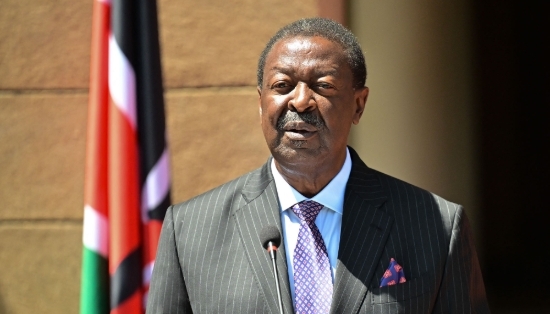
Kenya’s government is heading into a tense diplomatic showdown with Moscow as it confronts a scandal over Kenyan citizens recruited to fight on the Ukrainian front for the Russian army.[1][2] At the heart of this effort is Prime Cabinet Secretary and Foreign Minister Musalia Mudavadi, who is preparing a mid‑March trip to the Russian capital with one overriding goal: to ensure that Kenyans can no longer be drawn—legally or clandestinely—into Russia’s war.[1][3][4]
A shadowy recruitment pipeline
An intelligence report tabled in Kenya’s parliament has revealed a sprawling recruitment network funnelling Kenyan men into Russia’s war against Ukraine.[5][2] According to this report, agencies operating as overseas job brokers colluded with rogue airport staff, immigration officers, security agents and officials from the National Employment Authority to move recruits out of the country.[5][2]
Initially, most of the men left Jomo Kenyatta International Airport on tourist visas, often transiting through hubs such as Turkey and the United Arab Emirates before reaching Russia.[5][2] As scrutiny at Nairobi’s main airport intensified, the routes shifted, with smugglers sending recruits through South Africa, Uganda, the Democratic Republic of Congo and other regional gateways to evade detection.[5][2]
The recruiters’ targets were typically ex‑soldiers, former police officers and unemployed men between 20 and 50 years old, many of whom were enticed by promises of lucrative contracts.[5][2] Investigations and media exposés have documented offers of high monthly salaries and generous bonuses for supposed “security” or “bodyguard” work, only for the recruits to be dispatched to frontline positions in Ukraine once they arrived in Russia.[5][6]
Human cost and public outrage
The precise scale of Kenyan involvement remains contested, but both official and media estimates point to a disturbing pattern.[7][2][4] Nairobi initially spoke of roughly 200 Kenyans recruited to fight for Russia, though subsequent intelligence assessments suggest the true number may exceed 1,000.[5][7][2] A separate report cited by Kenyan media and international outlets has noted that more than 1,400 Africans from 36 countries have joined Russia’s ranks, situating Kenyan fighters within a wider continental phenomenon.[7][4]
Families in Kenya have mounted protests demanding the safe return of their relatives, accusing both their own government and the Russian authorities of failing to provide clear information.[5][8] Some families say they learned of their loved ones’ fate only after the men went missing or after images emerged from the battlefield.[9][5] Kenyan officials have confirmed at least one death among the recruits, while dozens more have reportedly been injured, hospitalized or listed as missing in action.[9][2]
In parliament, the revelations were described as “deeply disturbing,” highlighting not only human trafficking and deception but also complicity by elements within the Kenyan state itself.[2][6] For many citizens, the scandal has crystallized broader anxieties about unemployment, corruption and the vulnerability of young Kenyans to predatory networks promising a quick escape from poverty.[5][2]
Moscow’s denials and legal grey zones
The Russian embassy in Nairobi has firmly rejected accusations that it is running or backing illegal recruitment networks in Kenya.[5][2] In public statements, Russian diplomats have called the allegations “dangerous and misleading propaganda,” insisting that embassy staff have not been involved in any “rogue schemes” or unlawful enlistment.[5][2]
At the same time, Moscow points to its domestic legislation, which allows foreign nationals who are legally present in Russia to voluntarily join the Russian armed forces.[5][2] This legal framework creates a grey zone: while Russia may deny that it actively recruits abroad, it nonetheless permits foreigners to sign up once they reach Russian territory.[5][2] Kenyan intelligence reports suggest that intermediaries exploited exactly this gap, using tourist or work‑visa cover to bring recruits to Russia, where they could then be channeled into military service.[5][2]
For Nairobi, this combination of official denials and permissive laws has become untenable.[7][2][8] Kenyan leaders argue that, regardless of technical legality, the effective outcome has been the funneling of vulnerable citizens into a distant war, often under false pretenses.[9][5][2]
Mudavadi’s Moscow mission
Musalia Mudavadi has emerged as the key figure tasked with defusing the crisis and reshaping the bilateral relationship.[1][3][4] As prime cabinet secretary and foreign minister, he has publicly condemned the recruitment of Kenyans into Russia’s war as “unacceptable,” vowing to pursue what he calls a “diplomatic approach” to rein in those taking advantage of Kenyans.[9][3][8]
Mudavadi has already overseen the shutdown of roughly 600 recruitment agencies accused of misleading Kenyans with bogus overseas job offers.[7][2][4] Over the past several months, Kenyan authorities say they have also managed to evacuate more than 30 citizens from Russia, providing them with medical care and psychological support on their return.[7][3][4] Officials describe this assistance as both a humanitarian necessity and a step toward “de‑radicalizing” those who may have been exposed to intense propaganda or combat trauma while at the front.[3][4]
The visit to Moscow, scheduled for mid‑March, has become a diplomatic flashpoint.[1][10][11] According to reporting on the planned trip, Nairobi and Moscow have struggled to agree on the exact agenda, reflecting divergent priorities and sensitivities around the recruitment scandal.[1][10] For the Kenyan side, Mudavadi’s central aim is crystal clear: he wants a formal understanding that Kenyan citizens will no longer be able to join the Russian army.[1][2][4]
What Nairobi wants on the table
Kenya’s government has outlined several key points it intends to raise with Russian officials.[7][2][4][8] At the core is a demand for explicit guarantees that Russian institutions will not facilitate or tolerate the enlistment of Kenyan nationals into the conflict in Ukraine.[7][4][8] That includes:
- Negotiating visa policies that make it harder for recruitment networks to disguise their activities as tourism or employment schemes.[2][4][8]
- Crafting bilateral labour agreements that specifically exclude military conscription or combat roles for Kenyan workers in Russia.[3][4][8]
- Sharing intelligence on suspected recruiters, intermediaries and officials involved in trafficking Kenyans into the war zone.[2][6][11]
- Clarifying legal responsibilities for any Russian entities or individuals found to have collaborated with illegal networks in Kenya.[5][2][4]
In parallel, Mudavadi is expected to press for the release and safe repatriation of Kenyans held as prisoners of war in Ukraine or still in Russian military facilities.[9][7][3] Kenyan diplomats have indicated that the Moscow talks will also be used to check on the condition of injured fighters and to coordinate future evacuations.[9][7][4]
Geopolitics and the African dimension
The Kenyan scandal is unfolding against a broader shift in Russia’s engagement with Africa, which has included military cooperation, mercenary deployments and soft‑power initiatives across the continent.[7][4][12] Ukrainian intelligence estimates that Russia has drawn recruits from dozens of African states, highlighting how economic hardship and weak regulation create fertile ground for such networks.[7][4][11]
For Nairobi, this raises difficult diplomatic questions.[1][2][8] Kenya has traditionally tried to maintain a balanced foreign policy, engaging with both Western states and emerging powers such as Russia and China, while positioning itself as a principled voice on international law and sovereignty.[7][4][8] Public anger over the recruitment scandal, however, is pushing the government to take a firmer stand, even at the risk of straining relations with Moscow.
Mudavadi’s mid‑March visit thus carries significance beyond the of individual recruits. It will test whether Kenya can translate domestic outrage into concrete diplomatic outcomes, and whether Russia is willing to curb practices that, while perhaps technically “voluntary,” have become politically toxic for African partners.
What is at stake for Kenyans
For Kenyan families, the stakes are immediate and personal: the lives and futures of their sons, brothers and husbands. Many of those who left did so out of economic desperation, only to find themselves trapped in a brutal war thousands of kilometres from home. Nairobi’s response—shutting down recruitment agencies, opening investigations and preparing for high‑level talks in Moscow—is an attempt to close the door on this pathway to the battlefield.
Yet the underlying drivers remain: high unemployment, persistent inequality and the allure of quick money abroad. Without addressing these deeper socio‑economic pressures, Kenya risks seeing new versions of the same trafficking networks emerge, even if the current scandal leads to tighter controls and new agreements with Russia.
As Musalia Mudavadi heads to the Russian capital, the Kenyan public will be watching closely to see whether his diplomacy can secure binding protections for citizens and accountability for those who profited from this deadly trade. The outcome of the visit will shape not only Kenya–Russia relations but also the broader debate over how African states protect their people in an era of outsourced wars and globalized conflict.
Leave a Reply