






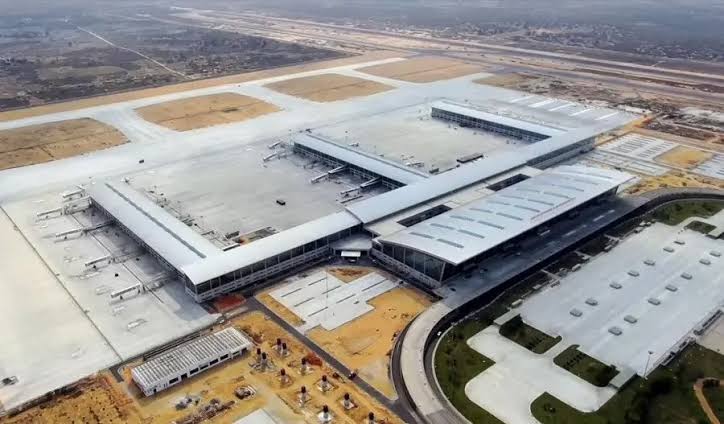

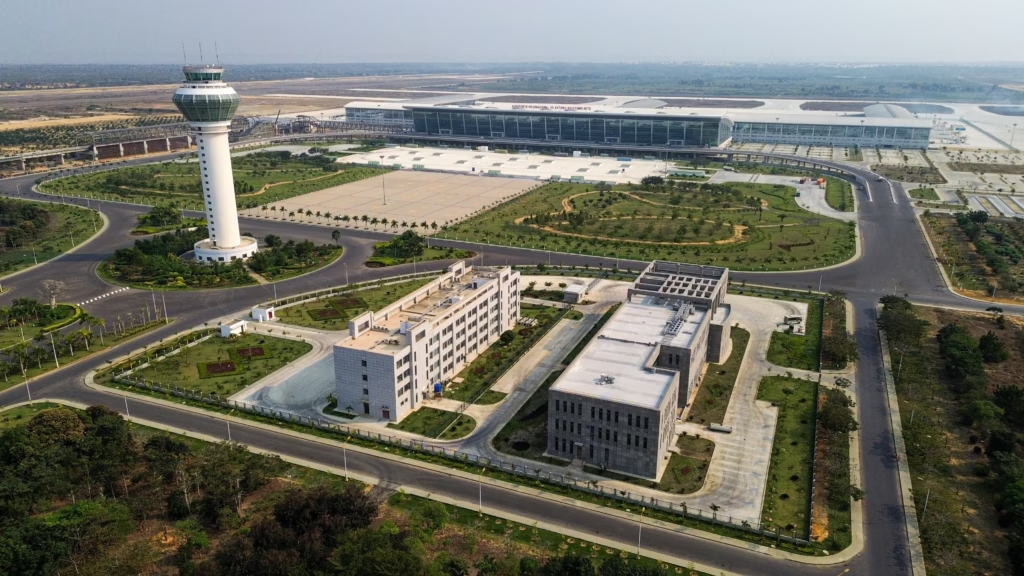
Exterior view of Dr. António Agostinho Neto International Airport terminal, aircraft parked at gates, or an aerial view showcasing the airport’s scale.
Angola has taken a significant step toward strengthening its role in African aviation with the successful transition of commercial airline operations to Dr. António Agostinho Neto International Airport. The new airport, located outside Luanda, represents one of the continent’s largest aviation infrastructure investments and signals Angola’s determination to become a major gateway for passengers, cargo, and international trade.
The transfer marks more than the opening of a modern airport. It reflects Angola’s broader strategy to diversify its economy, improve regional connectivity, and position itself as a key player in Africa’s rapidly expanding aviation sector.
“Modern airports are more than transportation hubs—they are engines of economic growth, investment, and regional integration.”
A World-Class Aviation Facility
Built to international standards, Dr. António Agostinho Neto International Airport has been designed to accommodate growing passenger numbers while supporting large-scale cargo operations. Its expanded runways, modern terminals, and advanced air traffic infrastructure provide Angola with the capacity to serve both regional and long-haul international routes.
The airport is expected to ease congestion previously experienced at Luanda’s older airport while creating opportunities for airlines to expand services throughout Africa, Europe, the Middle East, and the Americas.
As African economies become more connected, modern aviation infrastructure will play an increasingly important role in supporting trade, tourism, and investment.
— Panafrican.email (@panafricanemail)
Supporting Angola’s Economic Transformation
For decades, Angola’s economy has relied heavily on oil exports. Investments in transport infrastructure such as the new international airport form part of a wider effort to diversify economic activity by encouraging tourism, logistics, manufacturing, and international business.
Improved air connectivity makes it easier for investors to reach Angola, enables exporters to access overseas markets, and strengthens links between Southern Africa, Central Africa, and the wider world.
A Strategic Location
Luanda occupies a strategic position along Africa’s Atlantic coast. As demand for intra-African travel continues to grow under the African Continental Free Trade Area (AfCFTA), Angola hopes to capitalize on its geographic location by becoming a preferred transit point for passengers and cargo moving across the continent.
Modern airport infrastructure is expected to complement investments in ports, railways, and highways, creating an integrated transport network that supports regional commerce.
“The future of African trade depends not only on what countries produce, but on how efficiently people and goods can move between them.”
Creating New Opportunities
Large-scale airport developments typically generate employment far beyond the aviation industry itself. Construction, hospitality, retail, logistics, aircraft maintenance, customs services, security, and tourism all stand to benefit from increased passenger traffic.
As airlines expand their operations into Angola, local businesses may also gain improved access to regional and international markets.
Part of Africa’s Aviation Renaissance
Angola’s investment reflects a broader trend across the continent. Countries including Ethiopia, Rwanda, Morocco, Egypt, and South Africa continue to expand airport infrastructure and strengthen national airlines in response to growing passenger demand.
These investments are helping reshape Africa’s aviation landscape, making travel within the continent faster, more efficient, and increasingly competitive.
Looking Ahead
The successful transition to Dr. António Agostinho Neto International Airport represents more than a change of location for commercial flights. It is a statement of confidence in Angola’s future.
As passenger numbers increase and new international routes are added, the airport is expected to become an important gateway connecting Angola with the rest of Africa and the global economy.
For travelers, businesses, and investors alike, Angola’s newest international airport signals that the country is preparing to play a larger role in the continent’s next chapter of economic growth and regional integration.
Watch: Inside Angola’s New International Airport


