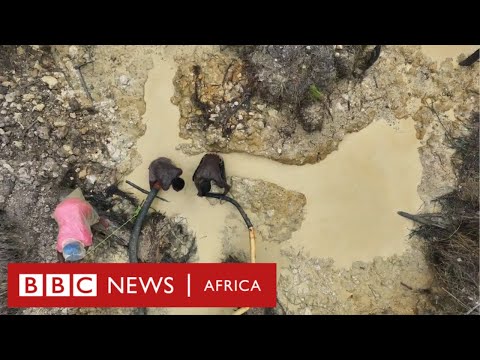






Ghana’s Western Region has become the epicenter of one of the country’s most pressing environmental and public health crises—illegal gold mining, locally known as galamsey. Once viewed by many as a means of survival and economic opportunity, galamsey has evolved into a nationwide challenge that is devastating forests, contaminating rivers, and threatening the livelihoods of millions.
As the crisis deepens, citizens have taken to the streets demanding stronger action, while the issue has emerged as a defining topic in Ghana’s presidential election campaign.
Rivers Turned Toxic
One of the most alarming consequences of illegal mining is the widespread pollution of Ghana’s rivers and streams. Communities that depend on these water sources for drinking, cooking, fishing, and farming are increasingly exposed to dangerous levels of contamination.
Recent investigations by the BBC found that water samples collected near illegal mining sites contained around 500 times more mercury than the World Health Organization’s recommended guideline for safe drinking water. Such levels pose severe health risks, particularly to children and pregnant women.
Many rivers that once supplied clean water have become muddy, polluted, and unsafe, forcing water treatment facilities to spend more on purification or suspend operations altogether.
Why Mercury Is Used in Galamsey
Despite knowing its harmful effects, many illegal miners continue to use mercury because it is one of the cheapest and simplest ways to extract gold from ore.
The process involves mixing mercury with crushed rock, allowing the metal to bind with tiny particles of gold to form an amalgam. The amalgam is then heated to evaporate the mercury, leaving behind the gold.
While effective and inexpensive, this method releases toxic mercury into rivers, soil, and the atmosphere. Without proper safety equipment or regulation, miners, nearby residents, and downstream communities are all exposed to its dangerous effects.
The Human Cost of Mercury Pollution
Mercury is a highly toxic heavy metal that attacks the nervous system and can cause permanent damage to the brain, kidneys, and lungs. Long-term exposure has been linked to memory loss, developmental disorders in children, impaired vision, and reproductive health problems.
Communities living near illegal mining operations face daily exposure through contaminated drinking water, fish, and agricultural land. The environmental damage often continues for decades after mining activities have ceased.
Forests Under Threat
Beyond water pollution, galamsey is rapidly destroying Ghana’s forest reserves. Vast areas of protected forests are cleared to access gold deposits, leaving behind barren landscapes, abandoned pits, and eroded soil.
The destruction of forests reduces biodiversity, accelerates climate change, and increases the risk of flooding and soil degradation. Wildlife habitats are disappearing, while farming communities struggle with declining agricultural productivity.
Public Anger and Political Pressure
The scale of environmental destruction has sparked nationwide concern. Civil society groups, environmental activists, students, religious leaders, and ordinary citizens have organized protests calling for stronger enforcement against illegal mining.
Many Ghanaians argue that successive governments have failed to adequately address the problem despite repeated promises. As a result, galamsey has become a central issue in national political debates, with voters demanding concrete solutions rather than campaign rhetoric.
Balancing Livelihoods and Environmental Protection
The galamsey crisis highlights a difficult reality. Thousands of people depend on small-scale mining for income in areas where employment opportunities are limited. Poverty, unemployment, and rising living costs continue to drive many into illegal mining.
Experts argue that solving the crisis requires more than law enforcement. Sustainable alternatives such as formalizing small-scale mining, creating jobs, strengthening environmental regulations, and investing in community development are essential to reducing dependence on illegal operations.
The Road Ahead
Ghana stands at a crossroads. As one of Africa’s leading gold producers, the country faces the challenge of balancing economic opportunity with environmental protection. Without decisive action, continued illegal mining threatens not only forests and rivers but also public health, food security, and future generations.
The fight against galamsey will require political will, stronger institutions, community participation, and sustainable economic alternatives. Protecting Ghana’s natural resources is no longer just an environmental issue—it is a national priority that will shape the country’s future.