
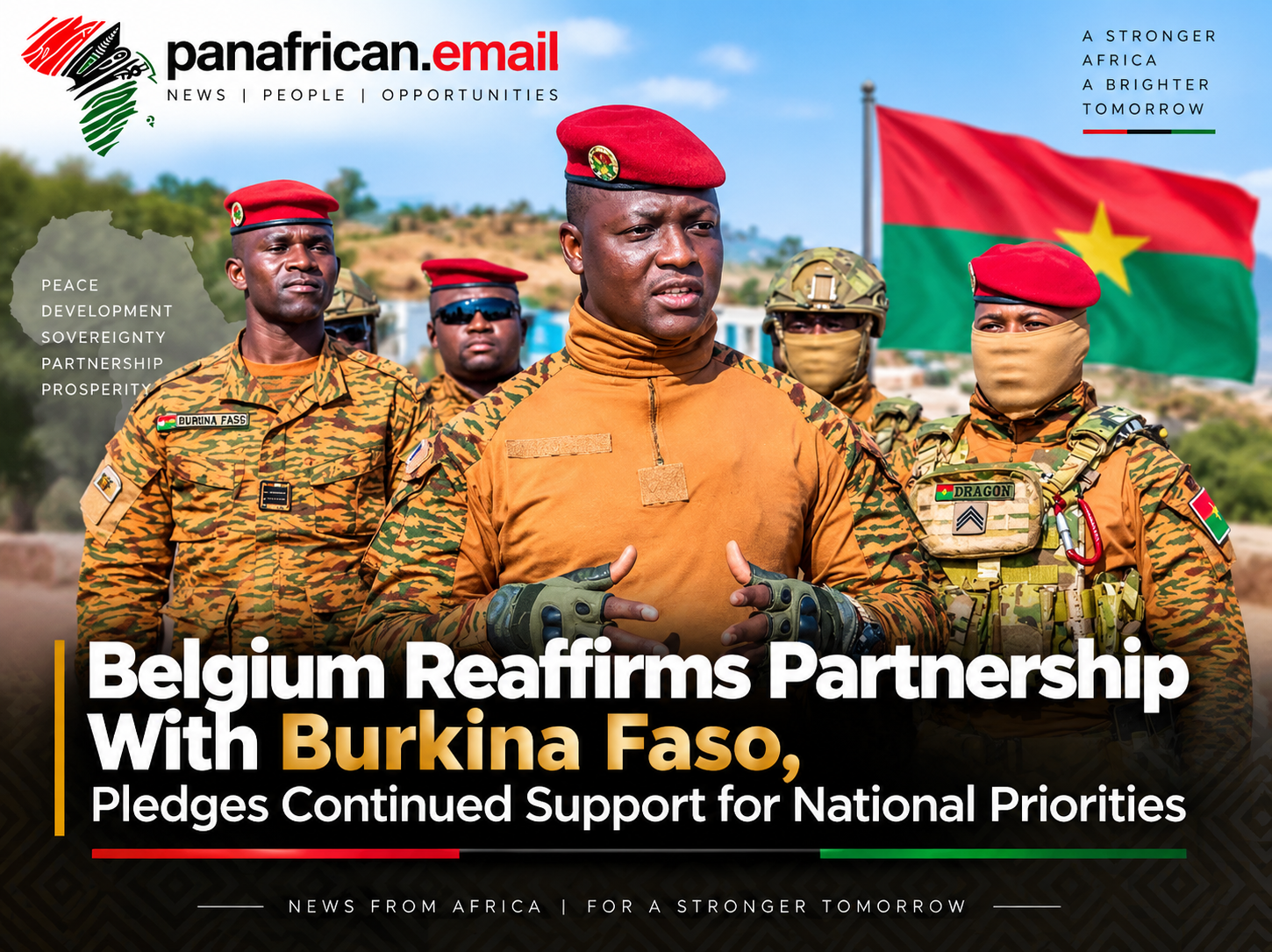
OUAGADOUGOU, BURKINA FASO — Belgium has reaffirmed its commitment to maintaining cooperation with Burkina Faso, emphasizing that its role is to support the country’s development priorities rather than dictate them.
The message was delivered during a Belgian delegation’s visit to Ouagadougou and other parts of Burkina Faso, where officials highlighted more than five decades of cooperation between the two countries.
Belgium’s renewed engagement comes at a sensitive moment in Burkina Faso’s relations with Western partners. The West African nation has increasingly emphasized national sovereignty and the right to determine its own political, economic and security priorities.
Against this backdrop, Belgium’s emphasis on supporting Burkina Faso’s own priorities represents an attempt to preserve dialogue despite differences between the two countries.
More Than 50 Years of Cooperation
Belgian officials pointed to the long history of cooperation between the two countries, noting that Belgian assistance has extended across multiple sectors and involved government institutions, private companies, non-governmental organizations and humanitarian actors.
Rather than limiting cooperation to direct government-to-government assistance, Belgium’s engagement has included development programmes and initiatives implemented through civil society and private-sector partners.
The Belgian side said the relationship has evolved over more than 50 years and remains relevant despite the significant political and security changes Burkina Faso has experienced in recent years.
€40 Million in Potential Direct Support
One of the most significant elements of Belgium’s renewed commitment is a proposed five-year cooperation programme that could provide approximately €40 million in direct support to the Burkinabe government.
Additional funding would continue to be made available through non-governmental organizations and other development partners.
The proposed assistance could provide resources for programmes identified as priorities by Burkina Faso, while Belgium maintains that the country’s own development agenda should remain central to the partnership.
For Burkina Faso, external development financing can provide additional resources for public services and economic development at a time when the government faces considerable fiscal and security pressures.
Health and Education Remain Priorities
Health and education were among the sectors highlighted during discussions.
Belgian cooperation has historically supported programmes designed to improve access to essential services, strengthen institutional capacity and address development challenges affecting communities across Burkina Faso.
Investment in these areas is particularly important as Burkina Faso works to maintain social services amid the pressures created by insecurity and displacement.
Education, in particular, has become an increasingly important issue in areas affected by armed violence, where insecurity can disrupt schools and limit children’s access to education.
Developing Burkina Faso’s Agro-Food Sector
Agriculture and agro-food development were also identified as areas of potential cooperation.
Burkina Faso’s economy is closely connected to agriculture, which provides livelihoods for a large portion of the population.
Belgian support for agro-food development could contribute to efforts to improve agricultural productivity, strengthen processing capacity and create greater value within the country.
For Burkina Faso, developing domestic processing industries is part of a broader effort to move beyond dependence on exporting agricultural and natural resources in relatively unprocessed forms.
The development of agro-industrial value chains could create employment while strengthening food security and domestic economic activity.
Security Challenges
The discussions also acknowledged the serious security challenges confronting Burkina Faso.
The country has been affected by attacks from terrorist armed groups for years, particularly in northern and eastern regions. The violence has resulted in deaths, displacement and significant disruption to communities and public services.
Belgium recognizes the difficult environment in which Burkina Faso is attempting to pursue economic and social development.
Security remains closely connected to development. Communities facing persistent violence can struggle to maintain schools, healthcare facilities, agricultural production and commercial activity.
Maintaining Dialogue Despite Differences
Perhaps the most politically significant element of Belgium’s message is its willingness to continue dialogue despite disagreements.
Relations between Burkina Faso and several Western governments have become increasingly complicated as the country’s authorities have asserted a stronger independent foreign policy and reconsidered traditional security and diplomatic partnerships.
Burkina Faso has also deepened cooperation with new international partners while placing greater emphasis on national sovereignty and regional solidarity.
Belgium’s position suggests that disagreements do not necessarily have to end development cooperation.
The Belgian representative emphasized the idea of a mature partnership in which both sides can acknowledge differences while continuing to identify areas where cooperation is mutually beneficial.
A Changing Relationship With Africa
The Burkina Faso-Belgium relationship reflects a broader transformation in how African countries are approaching relationships with European partners.
Across the continent, governments and citizens are increasingly demanding partnerships based on equality, mutual respect and clearly defined national interests.
The traditional donor-recipient model is facing growing scrutiny, with African governments seeking relationships that emphasize investment, technology transfer, local value creation and institutional capacity rather than permanent dependence on external assistance.
Belgium’s declaration that it intends to support Burkina Faso’s priorities rather than dictate them reflects this changing diplomatic environment.
The Future of Cooperation
The proposed five-year programme could provide an important opportunity for Belgium and Burkina Faso to redefine their relationship around practical development priorities.
Health, education, agriculture and agro-food development offer areas where cooperation can produce tangible benefits for communities.
At the same time, the partnership will likely continue to be influenced by broader questions surrounding sovereignty, security and Burkina Faso’s evolving international alliances.
For Belgium, maintaining dialogue provides an avenue for continued engagement with a strategically important West African country.
For Burkina Faso, cooperation with Belgium can potentially provide additional development resources while allowing the country to maintain its stated commitment to determining its own priorities.
The future of the relationship may therefore depend on whether both sides can translate diplomatic commitments into a partnership built around mutual respect, national ownership and measurable development outcomes.
After more than five decades of cooperation, the next chapter between Belgium and Burkina Faso appears likely to be defined not by the absence of disagreements, but by how effectively both countries manage those differences while working together where their interests converge.
Leave a Reply