
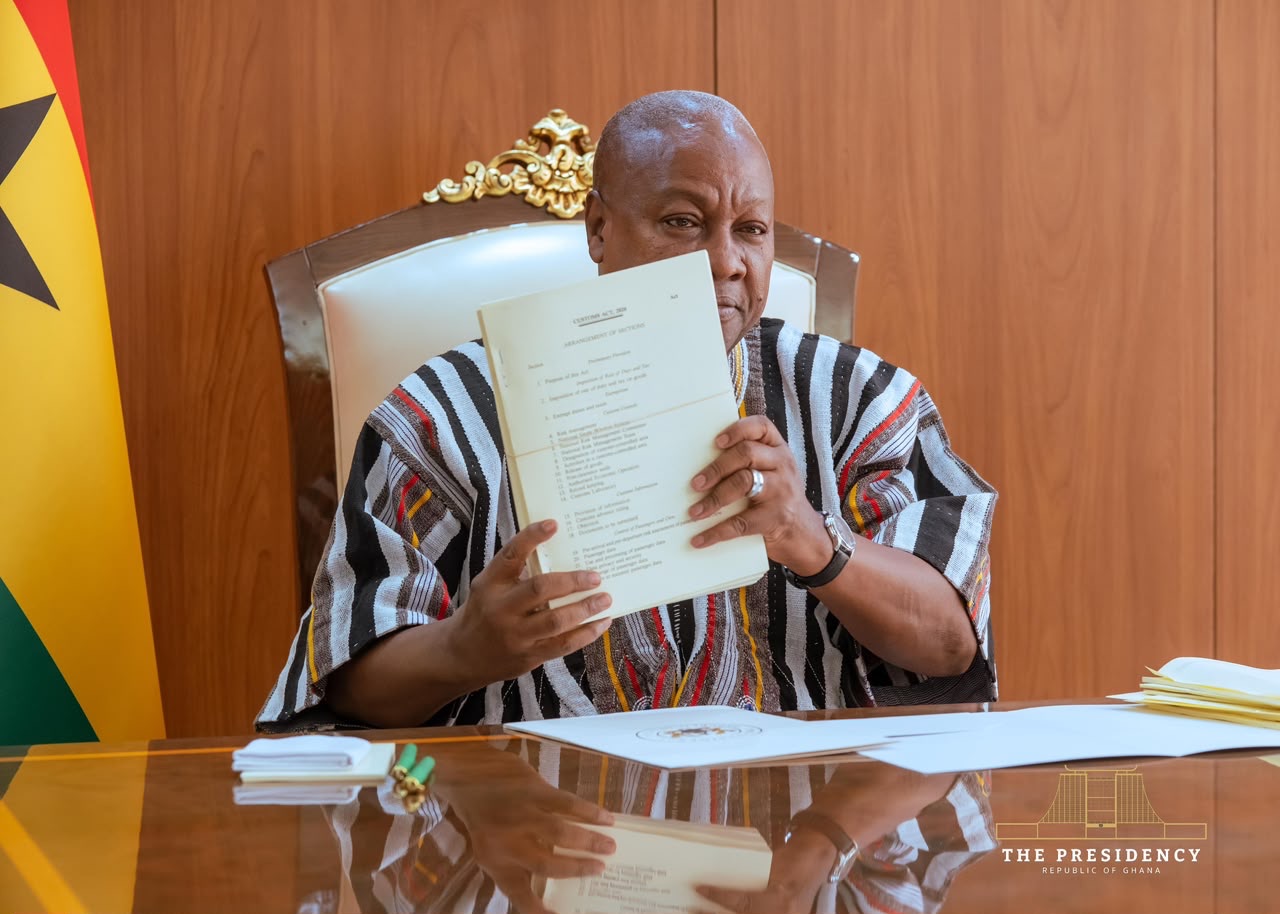
ACCRA, GHANA — President John Dramani Mahama has signed 10 Bills into law, marking another significant step in the government’s efforts to strengthen Ghana’s legal and economic framework while improving public revenue mobilisation, reforming aspects of the justice system and supporting domestic industry.
The legislation forms part of a broader government agenda aimed at addressing structural weaknesses within Ghana’s economy and public institutions. By converting the Bills into law, the administration has moved several proposed reforms from the legislative process into the country’s statutory framework.
The measures are expected to contribute to efforts to close revenue leakages, improve accountability, strengthen the administration of justice and create a more supportive environment for Ghanaian businesses and industries.
Strengthening Ghana’s Legal Framework
The signing of the 10 Bills demonstrates the government’s focus on using legislative reform as a tool for institutional and economic transformation.
Effective legislation provides the foundation for government agencies, businesses and citizens to operate within clear rules. For Ghana, strengthening that framework is particularly important as the country continues to confront economic pressures, public-finance challenges and demands for greater institutional accountability.
The new laws are intended to address specific gaps while improving the capacity of the state to implement policy and enforce regulations.
Plugging Revenue Leakages
One of the central themes behind the reforms is the government’s effort to reduce revenue losses.
Revenue mobilisation remains a critical issue for Ghana as the government seeks to finance public services, infrastructure, social programmes and economic development without placing excessive pressure on borrowing.
Leakages can occur through weak enforcement, inefficient collection systems, loopholes in legislation and other weaknesses within public revenue administration.
By strengthening the legal framework surrounding revenue collection and economic activity, the government is seeking to ensure that resources generated within the Ghanaian economy are more effectively captured and directed toward national development.
The reforms also fit into the broader objective of improving fiscal discipline and strengthening Ghana’s ability to finance its own development.
Reforming the Justice System
The legislation also includes measures aimed at supporting reforms within Ghana’s justice system.
A functioning justice system is essential to economic development because businesses and citizens require confidence that contracts can be enforced, disputes can be resolved and laws can be applied fairly.
Justice-sector reforms can therefore have implications beyond the courtroom. Stronger institutions can improve the investment environment, strengthen public confidence and enhance the ability of the state to enforce economic regulations.
For Ghana, improving the efficiency and effectiveness of the justice system is part of a wider effort to strengthen democratic institutions and the rule of law.
Supporting Local Industry
Another important dimension of the legislative programme is support for domestic production.
Ghana, like many African economies, has faced the longstanding challenge of exporting raw materials while importing significant quantities of finished goods.
Building stronger local industries could help Ghana retain more value within its economy, create employment and develop domestic manufacturing capacity.
Government policies supporting local industry are therefore increasingly connected to the broader conversation about economic sovereignty across Africa.
Rather than relying exclusively on imports, Ghana’s long-term economic strategy requires greater investment in production, processing, manufacturing and value addition.
Economic Sovereignty and African Development
The reforms come at a time when African countries are increasingly debating how to achieve greater economic independence.
Across the continent, governments are seeking ways to increase domestic revenue, develop local manufacturing, process natural resources locally and strengthen intra-African trade.
Ghana’s position gives it particular importance in this conversation. As one of West Africa’s major economies and a host of the African Continental Free Trade Area Secretariat, the country’s domestic economic policies have implications beyond its national borders.
Strengthening Ghana’s economy could contribute to the broader development of regional supply chains and increase opportunities for African businesses to trade with one another.
A Legislative Agenda With Broader Implications
The signing of the 10 Bills represents more than the formal completion of a legislative process. It signals the government’s intention to use law as an instrument for economic restructuring and institutional reform.
The effectiveness of the legislation, however, will ultimately depend on implementation.
Passing laws is only the first stage. Government institutions must have the resources and capacity to enforce them, businesses must understand the new regulatory environment and citizens must be able to see tangible improvements in public services and economic opportunity.
The success of the reforms will therefore be measured not simply by the number of Bills signed, but by whether they help Ghana collect revenue more efficiently, reduce waste, strengthen institutions and expand productive economic activity.
Looking Ahead
President Mahama’s signing of the 10 Bills adds to the government’s ongoing legislative and economic agenda as Ghana seeks to strengthen its financial position and build a more resilient domestic economy.
The emphasis on revenue protection, justice reform and local industry reflects a broader question facing many African states: how can governments build institutions and economies capable of financing development from within?
For Ghana, the answer will depend on effective implementation, institutional accountability and continued investment in productive sectors.
The newly enacted laws provide part of that foundation. Their long-term significance will ultimately be determined by how successfully they translate legislative reform into stronger institutions, greater economic opportunity and improved national prosperity.
Leave a Reply