
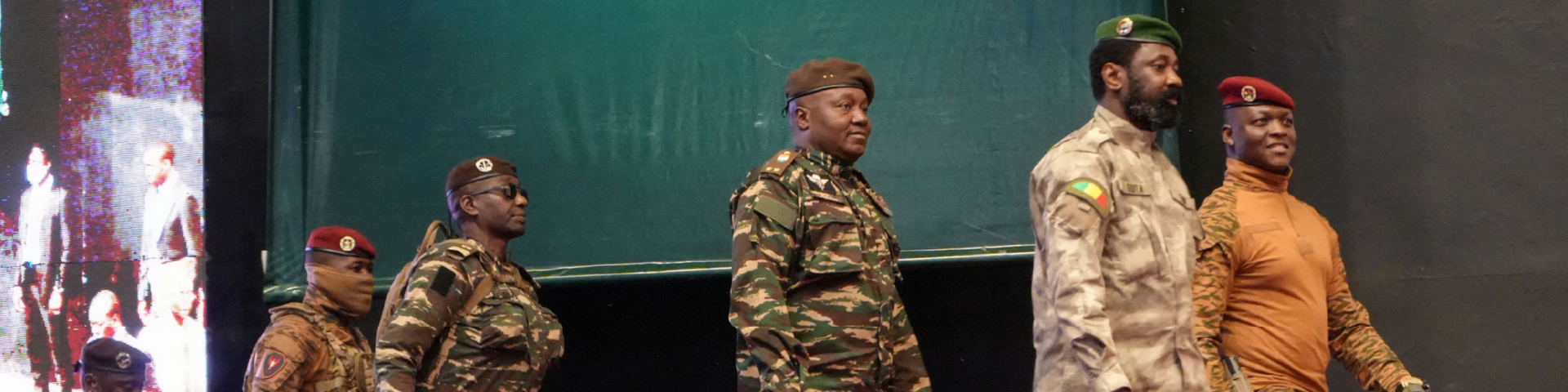
NIAMEY, Niger — Niger is facing renewed political and security pressure after an attempted mutiny in the capital targeted a strategic military facility at Diori Hamani International Airport, bringing fresh attention to the country’s fragile security environment—and to the enormous geopolitical importance of its natural resources.
The latest incident occurred on August 29, 2026, when mutinous soldiers attacked sites around the airport, the presidential palace and state broadcaster in Niamey. Nigerien authorities said the rebellion was eventually contained, with Russian Africa Corps personnel reportedly assisting government forces in retaking the airport complex.
The episode is particularly significant because the airport houses Base 101, a strategically important military facility. The base has previously been targeted amid Niger’s worsening security situation, while jihadist violence continues to place enormous pressure on the country’s armed forces.
Uranium at the Center of Niger-France Dispute

The military turmoil comes against the backdrop of one of the most consequential disputes between Niger and its former colonial power, France: control over uranium.
In June 2025, Niger announced the nationalization of Somaïr, the uranium-mining company previously controlled by French nuclear giant Orano. Orano held approximately 63.4 percent of the company, while Niger’s state mining company, Sopamin, held the remainder.
Niger’s military government accused Orano of irresponsible and unlawful conduct and argued that nationalization was necessary to ensure greater national control over the country’s mineral wealth. Orano rejected the accusations and pursued legal avenues in response.
The dispute represents a dramatic change from decades of French involvement in Niger’s uranium industry. Somaïr had been producing uranium in the Arlit region since 1971, and the mine became an important part of the relationship between Niger and the French nuclear sector.
France remains heavily dependent on nuclear power for its electricity system, making secure access to uranium an important strategic issue. However, it would be an overstatement to suggest that Niger is the sole source of uranium for France’s nuclear industry or that France has no alternatives. The loss of Niger as a uranium supplier nevertheless represents a significant geopolitical and commercial setback.
A Pattern That Demands Questions
The timing of Niger’s resource dispute and its growing political instability has inevitably generated speculation about outside interests.
The argument advanced by some observers is straightforward: Niger has taken greater control of its natural resources, expelled French military forces, strengthened relations with Russia and joined Mali and Burkina Faso in rejecting the traditional French security framework in the Sahel.
At the same time, the government led by General Abdourahamane Tiani continues to face serious internal and external security challenges.
But there is an important distinction between asking questions about motive and establishing responsibility.
There is currently no publicly established evidence demonstrating that France orchestrated the recent mutiny or jihadist attacks in order to regain access to Niger’s uranium. Such an allegation requires evidence, not simply the existence of a potential economic motive.
What can be established is that France and Niger have undergone an extraordinary deterioration in relations since the 2023 military coup. Niger has deliberately moved away from Paris, while French companies have lost influence over important mining assets.
The Tiani Government Under Pressure
The attempted mutiny also exposes another reality: Niger’s instability cannot automatically be explained through foreign interference.
Jihadist organizations affiliated with Islamic State and al-Qaeda continue to operate across the Sahel, while dissatisfaction within Niger’s armed forces has reportedly grown because of continuing attacks, battlefield losses and concerns about military conditions.
That internal pressure is politically significant.
General Tiani came to power after the July 2023 coup that removed President Mohamed Bazoum. His government justified the takeover partly on the grounds that the previous government had failed to protect Niger from insecurity.
Three years later, the junta remains in power—but the security crisis has not disappeared.
The August 2026 mutiny therefore presents Tiani with a challenge from two directions: armed groups operating outside the state and discontent within the military itself.
Who Benefits From Niger’s Resource Sovereignty?
The larger question is not simply whether France wants Niger’s uranium back.
It is whether Niger can successfully transform control over its natural resources into genuine economic sovereignty.
Nationalization alone does not guarantee prosperity. Niger must still develop the technical capacity, financing, infrastructure and international partnerships required to operate its mining sector effectively.
That makes the country’s future partnerships particularly important.
Russia has already expanded its security relationship with Niger through the Africa Corps, while Niger has increasingly coordinated with Mali and Burkina Faso through the Alliance of Sahel States.
The result is a major geopolitical realignment in West Africa.
For decades, France occupied a privileged position in the region’s political, military and economic affairs. That relationship is now being challenged by governments demanding greater control over strategic resources and foreign policy.
Follow the Evidence
Niger’s uranium dispute deserves scrutiny.
So does the country’s growing political instability.
So do the interests of every foreign power operating in the Sahel—including France, Russia, the United States and regional actors.
But responsible analysis requires separating facts from allegations.
There is documented evidence that Niger nationalized Somaïr and that the move significantly escalated its dispute with Orano and France. There is documented evidence that Niger has experienced continuing jihadist violence and that an internal military mutiny recently targeted strategic sites in Niamey.
What remains unproven is whether those events form part of a coordinated foreign-backed effort to remove Tiani and reopen Niger’s uranium sector to French interests.
That question should not be dismissed—but neither should it be declared answered without evidence.
For Niger, the stakes are enormous. Uranium, gold, oil and other resources have the potential to transform the country’s economic future if managed transparently and in the interests of its population.
The central question now is whether Niger can maintain control over its resources while building a stable political and security system capable of protecting them.
The uranium question is therefore bigger than France.
It is about who controls Africa’s resources, who benefits from them, and whether African states can turn political sovereignty into lasting economic independence.
Leave a Reply